REMOTE / OFF-GRID / SATELLITE
Solar LoRaWAN Gateways for Off-Grid Sites (UK)
The assets that most need watching are often the ones with no power and no coverage. Terrestrial-only IoT stops at the edge of the network.
Talk through your site ● Answered within one working day
Live simulation of a monitored floor
Deployed for







The solar LoRaWAN gateway kit we deploy
Full catalogue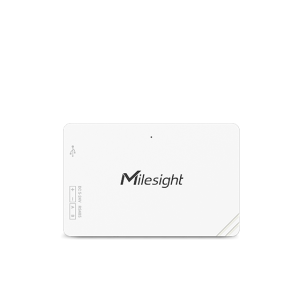 Milesight UC100 IoT Controller
£38.90 ex VAT
Milesight UC100 IoT Controller
£38.90 ex VAT
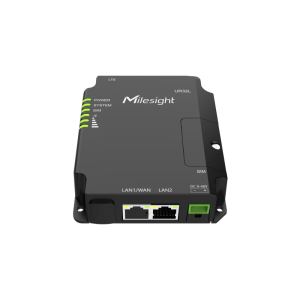 Milesight UR32 Lite Industrial Cellular Router
£86.04 ex VAT
Milesight UR32 Lite Industrial Cellular Router
£86.04 ex VAT
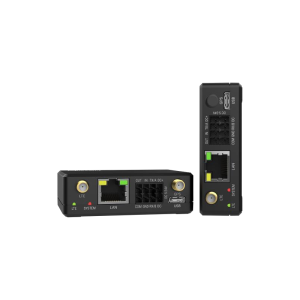 Milesight UR41 Mini Cellular Router
£86.04 ex VAT
Milesight UR41 Mini Cellular Router
£86.04 ex VAT
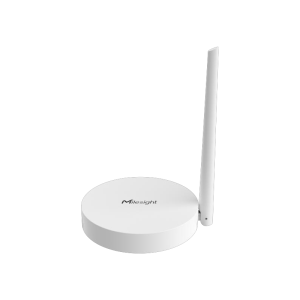 Milesight UG63 Mini LoRaWAN® Gateway
£98.76 ex VAT
Milesight UG63 Mini LoRaWAN® Gateway
£98.76 ex VAT
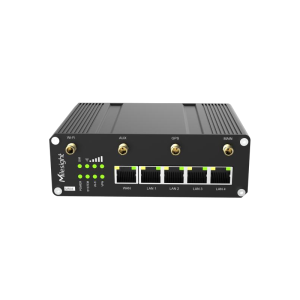 Milesight UR35 Industrial Cellular Router
£149.63 ex VAT
Milesight UR35 Industrial Cellular Router
£149.63 ex VAT
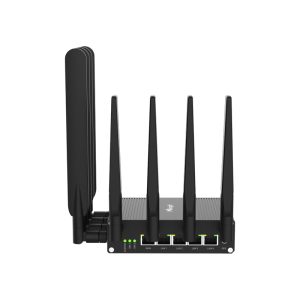 Milesight UR75 5G Cellular Router
£460.12 ex VAT
Milesight UR75 5G Cellular Router
£460.12 ex VAT
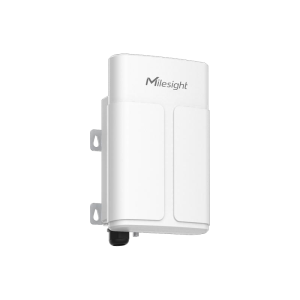 Milesight UG67 Outdoor LoRaWAN Gateway
£658.39 ex VAT
Milesight UG67 Outdoor LoRaWAN Gateway
£658.39 ex VAT
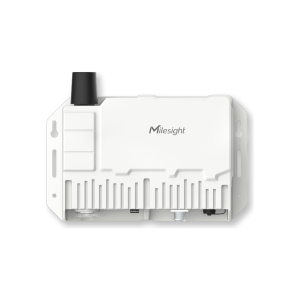 Milesight SG50 Ultra Low Power Solar LoRaWAN® Gateway
£683.83 ex VAT
Milesight SG50 Ultra Low Power Solar LoRaWAN® Gateway
£683.83 ex VAT
Brands in this kit: Milesight
The blind spot
Coverage runs out long before the assets do.
- 01
Pipelines across open country, remote pumping stations, maritime points and field deployments sit past the last mast.
- 02
A site with no mains cannot host a gateway that assumes a socket, so it never gets one.
- 03
Failures are discovered late, and crews get sent to check things that did not need checking.
The sites with the highest consequence of failure end up the least instrumented, which is exactly the wrong way round.
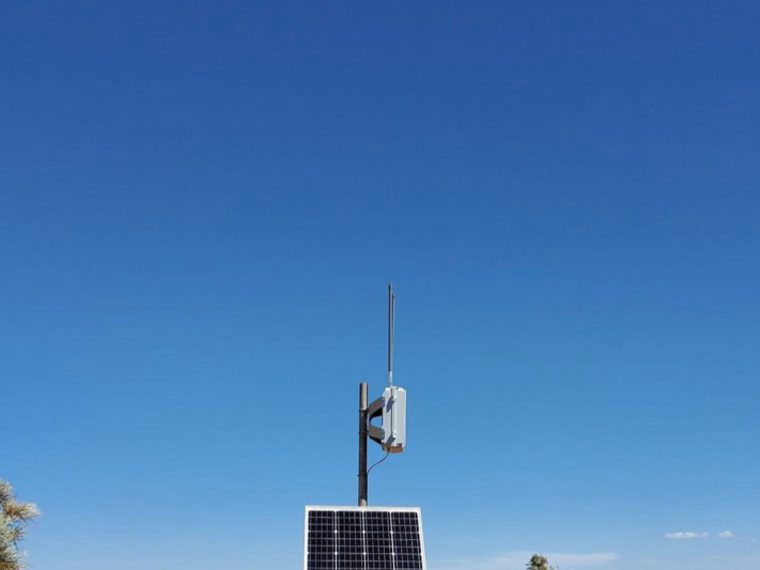
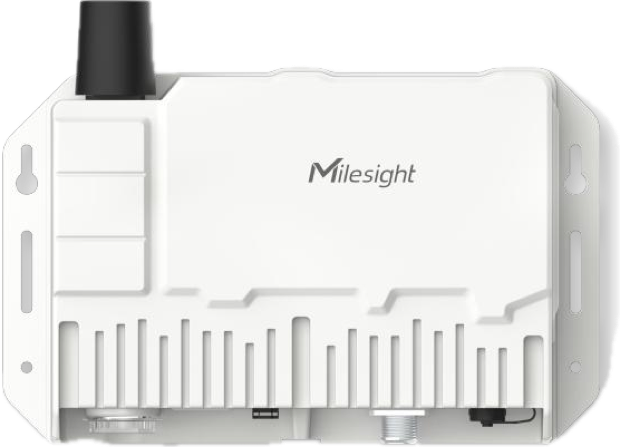 Solar LoRaWAN gateway
Pump station 7 six hours of readings stored through the outage, forwarded on reconnect.
Honest about the constraints
Terrestrial first, satellite only when needed
Satellite is the fall-back, not the default, because it costs more and carries less. The link uses LoRaWAN or cellular wherever it can reach.
- Store and forwardReadings survive a coverage gap and arrive when the link returns, so an outage is a delay rather than a hole.
- Solar where there is no mainsField gateways run off a panel and battery, so a site with no power is still a site you can instrument.
- Latency-aware alertingDashboards account for store-and-forward rather than assuming every reading is live.
What your team sees
A site that reports on its own terms
Power, link and queue, so alerting is set to the connection you actually have.
-
01
Which link is up
Terrestrial or satellite, right now.
-
02
Solar and battery
Charge in hand, so a winter week is a number and not a hope.
-
03
What is queued
Readings held locally, waiting for the link to return.
-
04
Latency and signal
Round-trip and SNR, because store-and-forward is not live.
Where it lands
Four places the network stops
-
01
Pipelines
Long runs across open country with no mast and no mains.
-
02
Remote pumping
High-consequence assets that nobody visits between failures.
-
03
Maritime points
Fixed positions past the edge of terrestrial coverage.
-
04
Field deployments
Temporary sites that must instrument themselves on arrival.
The difference
Solar LoRaWAN gateway: what changes the day it goes live
The remote, high-consequence sites are the ones with no mains and no coverage, so they are exactly the sites nobody is monitoring.
- A hybrid link that uses terrestrial LoRaWAN or cellular first and satellite only when needed
- Store-and-forward, so readings survive coverage gaps and arrive when a link returns
- Solar-powered field gateways for sites with no mains at all
- One honest design that states the constraints up front rather than over-promising
- Field sites
- 27–
- Satellite uplink
- OK–
- Store-forward queue
- 12–
- Solar battery
- 87%–
What goes on the pole
A site that makes its own power and its own link
Panel, battery, gateway and antenna on one pole. Sensors report in over LoRaWAN; the backhaul takes the cheapest route that is actually available.
- SENSE
Level, pressure, temperature and asset sensors built for outdoor and harsh environments
- CONNECT
Terrestrial LoRaWAN and cellular with NTN satellite fall-back over LR-FHSS, solar where there is no power
- MANAGE
Dashboards and alerting that account for store-and-forward latency, not live-only assumptions
Terrestrial first, satellite only when needed. The constraints are stated up front.
- EU868
- LR-FHSS
- NTN
- IP67 / IP68
The full stack, applied here
A ping from an asset beyond the network edge
Every Indiott build runs all five layers as one accountable system. Follow a single off-grid ping from the sensor that catches it to the report that proves it.
Level, pressure and temperature sensors built for harsh outdoor sites read a remote pipeline or pumping station that never had power or coverage.
Hands a field reading to CONNECT ↓
Terrestrial LoRaWAN and cellular carry the reading where coverage exists, with satellite NTN fall-back over LR-FHSS and solar power where there is none at all.
Hands a store-and-forward hop to SECURE ↓
A VPN router isolates the site and tunnels its data encrypted, so a link over public cellular or satellite reaches you without exposing the asset network.
Hands a trusted stream to CONTROL ↓
The stack acts locally where nobody can: remote IO can start a pump or close a valve on a threshold and hold that logic through a satellite outage.
Hands an action and proof to MANAGE ↓
Dashboards and alerting built for store-and-forward latency, so a late-arriving satellite reading is read correctly rather than treated as a live-only feed.
The loop is closed ✓
How teams start
From a single pilot to the whole portfolio
You do not boil the ocean. Nearly every rollout runs the same four moves, and you own a working, evidenced result at the end of the first one.
Scope & risk map
We walk the sites, list the assets and pin the one constraint that matters, then agree what a good result looks like before a single sensor is bought.
Pilot on one site
A focused set of sensors goes onto one site or asset group, live on our telemetry and dashboards, wired to the people who need the alert.
Validate & standardise
We tune thresholds, kill false positives, confirm the integration into your SCADA, BMS or CAFM, and write the standard design down so it repeats.
Scale the portfolio
The proven design rolls out across the estate, reusing the same hardware standards and data models so every site reads the same way.
Compliance this answers to
| Standard | What it requires |
|---|---|
| EU868 LoRaWAN and LR-FHSS, the modulation that lets the same sub-GHz devices reach low-earth-orbit satellites | |
| IP67 and IP68 ratings for outdoor and submersible field deployment | |
| Honest NTN constraints | store-and-forward, limited payloads and revisit latency, stated in every design |
What it costs, roughly
Satellite-extended monitoring carries a connectivity cost on top of hardware, which is why the pattern is terrestrial first and satellite only for the points that need it. For a handful of genuinely off-grid assets that is usually still far cheaper than manual inspection visits. We model the right mix for your sites within one working day.
The short answer
What does a solar LoRaWAN gateway cost in the UK?
A solar LoRaWAN gateway costs £683.83 ex VAT in the UK. The Milesight SG50 runs entirely on its own solar panel and battery, so a remote site needs no mains supply and no trenching. For sites with power but no coverage, the UG63 mini gateway is £98.76 and the UR35 cellular router from £149.63.
Frequently asked questions
How do you power an IoT gateway at a site with no mains?
The SG50 ultra low power solar LoRaWAN gateway (£683.83 ex VAT) runs from built-in rechargeable batteries topped up by an accessorial solar panel, in an IP67 enclosure with GPS for remote management. Its power management design holds the link for up to four days without charge, so a spell of winter cloud does not take the site offline.
Do I need satellite, or will cellular or LoRaWAN reach the site?
Test terrestrial first, because it is far cheaper. One private LoRaWAN gateway covers several kilometres of open ground, and an industrial cellular router such as the UR35 (from £149.63 ex VAT) with dual SIM will roam between UK networks. Satellite backhaul is worth specifying only for sites a survey proves have neither, and we size it per site.
What is store-and-forward and why does it matter off-grid?
Store-and-forward means the gateway or controller writes readings to local memory while the uplink is down and replays them when it returns. Off-grid links do drop, and without it you lose data from exactly the period you most need to explain. Dashboards must then timestamp on capture rather than arrival, or a late batch reads as a live spike.
Can a remote site keep controlling equipment during an outage?
Yes. The UC300 IoT controller (£104.74 ex VAT) holds trigger conditions and actions locally, with analogue and digital inputs, relay outputs, a serial port and PT100 RTD input, reporting over LoRaWAN or 3G and 4G. It will start a pump or switch a valve on a threshold and keep doing so while the backhaul is down.
Which sensors survive a remote outdoor site?
Pick IP-rated battery sensors on EU868 LoRaWAN. For level, the EM500-SWL submersible sensor is £251.38 ex VAT and the EM500-UDL ultrasonic sensor £202.01, both built for chambers and wet wells. Mains pressure uses the EM500-PP at £197.52. All report on a fixed interval to the gateway, so no field cabling or local power is needed.
How does off-grid data reach our SCADA or dashboard securely?
The gateway forwards north over MQTT or HTTP to your platform, and the SG50 carries an embedded network server and MQTT API so it needs no separate host. Where the hop crosses public cellular or satellite, a Milesight UR series router tunnels it over a VPN, so the asset network is never exposed to the open internet.
Related
Buying this in the UK
- Solar LoRaWAN gateways from £683.83 ex VAT; mains and cellular gateways from £98.76.
- Supplied by Indiott, a trading name of PSI Technologies Limited (Companies House 03689664, VAT GB 730 2340 83), Hampshire, United Kingdom.
- Every price is published ex VAT at indiott.com — no quote needed to see it.
- Typically dispatched within 14 working days from the UK, on a VAT invoice.
- Call 023 9223 3611 or request a quote.
Compare the models
Next step
Scope it against the real site
Tell us where it is, what power exists and what coverage you get there. You get a design that states its constraints, and a straight answer within one working day.
- Coverage checked before anything is promised, not after
- Solar and battery sized for a British winter, not a datasheet average
- Priced ex VAT, UK entity, no login wall
- Satellite specified only where terrestrial genuinely will not reach
Rather talk it through? Call 023 9223 3611
Received. An engineer has it.
You will hear back within one working day with the parts, the prices and the lead time. A confirmation is on its way to your inbox.
If it is urgent, call 023 9223 3611.