REMOTE & SMART CITY / HIGHWAYS
Street light fault monitoring
Find the dark column without driving the network
Councils and highways teams find failed street lights in two ways: someone drives the network at night looking for dark columns, or a resident reports one. Both are slow and both are expensive. Night scouting is a labour-intensive exercise that covers a fraction of the network per shift, and resident reporting is heavily biased toward busy roads with engaged residents, so failures on quiet lanes and footpaths can persist for months. LED conversion has, if anything, made the problem harder: LEDs rarely fail cleanly to dark, so a driver failing or a luminaire running at reduced output is invisible from a moving vehicle but still a lighting-level failure against the design standard.
Talk through your site ● Answered within one working day
The difference
Street light monitoring: what changes the day it goes live
Councils and highways teams find failed street lights in two ways: someone drives the network at night looking for dark columns, or a resident reports one. Both are slow and both are expensive. Night scouting is a labour-intensive exercise that covers a fraction of the network per shift, and resident reporting is heavily biased toward busy roads with engaged residents, so failures on quiet lanes and footpaths can persist for months. LED conversion has, if anything, made the problem harder: LEDs rarely fail cleanly to dark, so a driver failing or a luminaire running at reduced output is invisible from a moving vehicle but still a lighting-level failure against the design standard.
- Current draw per column, so a failed or degraded driver is identified electrically instead of visually
- Faults raised as a work order the morning after they occur rather than after the next night scouting round or a resident complaint
- Night scouting reduced to verification, freeing the labour it currently consumes across a whole network
- Evidence of lighting availability against the standard, which matters for both road safety and any claim arising from an unlit section
What you get
- 01
Current draw per column, so a failed or degraded driver is identified electrically instead of visually
- 02
Faults raised as a work order the morning after they occur rather than after the next night scouting round or a resident complaint
- 03
Night scouting reduced to verification, freeing the labour it currently consumes across a whole network
- 04
Evidence of lighting availability against the standard, which matters for both road safety and any claim arising from an unlit section
The full stack, applied here
All five layers, one accountable system
Every Indiott build runs all five layers as one accountable system. Follow a single live signal from the sensor that catches it to the report that proves it.
Turnkey LoRaWAN and industrial sensors read the physical world at the edge, on battery, without rewiring the site.
Hands a reading to CONNECT ↓
Gateways, industrial routers and serial device servers carry every reading back over LoRaWAN, 4G, 5G, Ethernet or satellite, so the far edge reports as reliably as the plant room.
Hands a signed stream to SECURE ↓
OT security by design: managed switching, VPN and firewall routers, protocol gateways and hardware data diodes keep the network segmented and the data tamper-evident to IEC 62443.
Hands a trusted stream to CONTROL ↓
When you want the system to act, remote IO, wireless valves and the bespoke Indiott Engineering line close the loop, dose, switch, isolate or interlock, with no human in the middle.
Hands an action to MANAGE ↓
The software layer turns it into decisions: live dashboards, mapping, alarming and analytics, with one-tap reports and clean feeds into your SCADA, BMS or existing platform.
The loop is closed ✓
How teams start
From a single pilot to the whole portfolio
You do not boil the ocean. Nearly every rollout runs the same four moves, and you own a working, evidenced result at the end of the first one.
Scope & risk map
We walk the sites, list the assets and pin the one constraint that matters, then agree what a good result looks like before a single sensor is bought.
Pilot on one site
A focused set of sensors goes onto one site or asset group, live on our telemetry and dashboards, wired to the people who need the alert.
Validate & standardise
We tune thresholds, kill false positives, confirm the integration into your SCADA, BMS or CAFM, and write the standard design down so it repeats.
Scale the portfolio
The proven design rolls out across the estate, reusing the same hardware standards and data models so every site reads the same way.
The street light monitoring kit we deploy
Full catalogue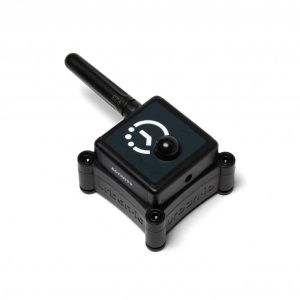 Urban.io Activity Sensor
Request a price
Urban.io Activity Sensor
Request a price
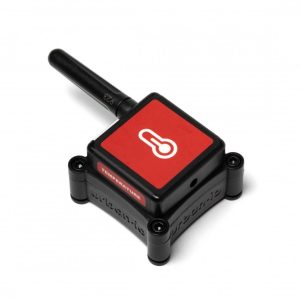 Urban.io Ambient Temperature Sensor
Request a price
Urban.io Ambient Temperature Sensor
Request a price
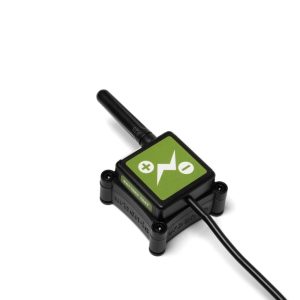 Urban.io Battery Test Sensor
Request a price
Urban.io Battery Test Sensor
Request a price
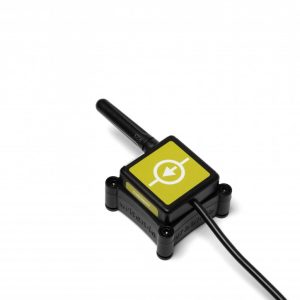 Urban.io Current Sensor
Request a price
Urban.io Current Sensor
Request a price
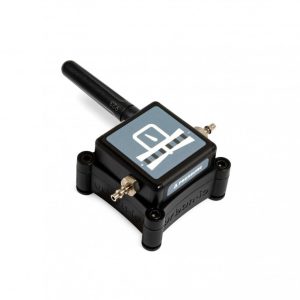 Urban.io Delta Pressure Sensor
Request a price
Urban.io Delta Pressure Sensor
Request a price
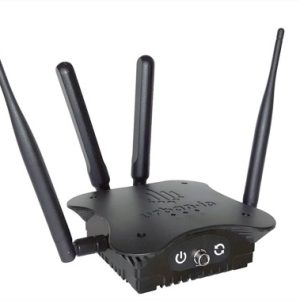 Urban.io Gateway
Request a price
Urban.io Gateway
Request a price
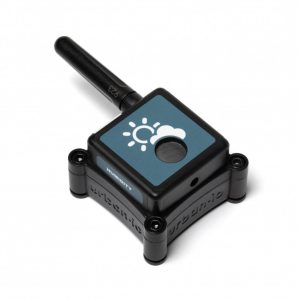 Urban.io Humidity Sensor
Request a price
Urban.io Humidity Sensor
Request a price
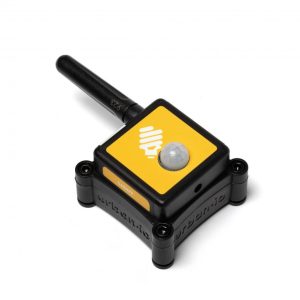 Urban.io Light Sensor
Request a price
Urban.io Light Sensor
Request a price
| Model | Key specification | Price ex VAT | Availability |
|---|---|---|---|
| Urban.io Activity Sensor | — | Price on request | Quote only |
| Urban.io Ambient Temperature Sensor | — | Price on request | Quote only |
| Urban.io Battery Test Sensor | — | Price on request | Quote only |
| Urban.io Current Sensor | — | Price on request | Quote only |
| Urban.io Delta Pressure Sensor | — | Price on request | Quote only |
| Urban.io Gateway | — | Price on request | Quote only |
| Urban.io Humidity Sensor | — | Price on request | Quote only |
| Urban.io Light Sensor | — | Price on request | Quote only |
Brands in this kit: Urban.io
Why Indiott
A specialist stack, not a box-shifter
Brand-agnostic by design
We pick the best of each brand for the layer and the environment, not one vendor catalogue. Milesight, AquaIoT, Atop, Browan, SpecSens and Urban.io, chosen on merit.
The whole stack, one supplier
Sensing, connectivity, OT security, control and the dashboard come from one accountable team, so there is no finger-pointing when something needs to talk to something else.
Specified and supported in Britain
UK-based engineers scope the site, quote the kit and stand behind it, with compliance mapped to the regimes your auditors actually cite.
Honest kit, honest pricing
Prices are shown where we can, quoted fast where we cannot, and you get a straight answer and a bill of materials within one working day.
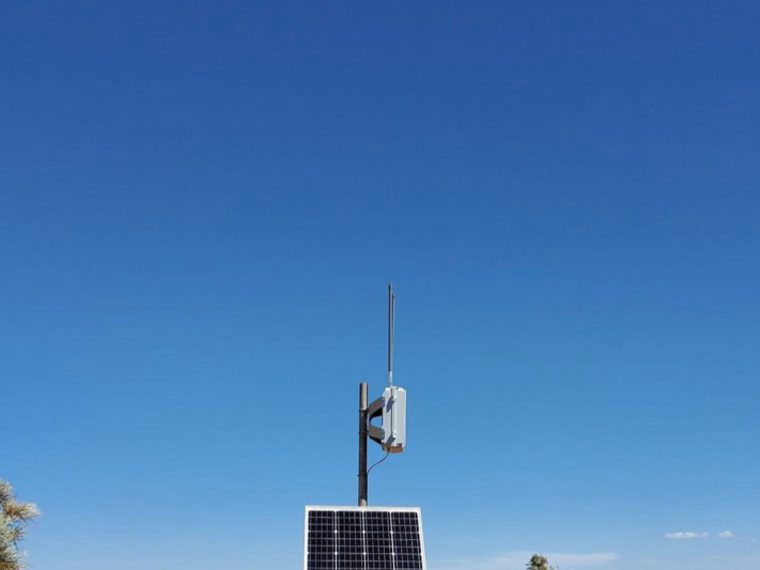 DEPLOYED IN THE FIELD
Compliance this answers to
| Standard | What it requires |
|---|---|
| Highways Act 1980 s.97 | the highway authority power and duty framework within which lighting is maintained |
| BS 5489-1 | code of practice for road lighting design, against which maintained lighting levels are assessed |
| Well-managed Highway Infrastructure code of practice | a risk-based asset regime supported by condition and availability data |
What it costs, roughly
A monitored column is one current sensor plus a share of a corridor gateway, which is among the lowest cost-per-point applications on this page. The economics turn on column density: a dense urban run is strong, a scattered rural network much weaker, and we will model your actual layout rather than quoting a per-column figure that flatters us.
Street light monitoring: asked before buying
Do we need to monitor every column?
Usually not, and a supplier who says yes is selling hardware rather than solving the problem. Many networks get most of the benefit from monitoring feeder pillars and a sample of columns per circuit, then targeting full instrumentation on problem routes and unlit-complaint hotspots. We will help you work out where the line sits for your network.
Does the sensor need power from the column?
No. It is battery powered with around two years on a replaceable cell, and the CT simply clips around the existing conductor without breaking it. That said, the column base is a live electrical enclosure, so fitting is work for a competent electrician under your own permit and isolation arrangements.
Can it distinguish a failed lamp from a failed circuit?
In large part, yes, and that is much of the value. A single column drawing nothing while its neighbours on the same circuit draw normally points at that luminaire. A whole run going to zero together points at the circuit or the feeder. That distinction is what stops you sending a lamp crew to an electrical fault.
Next step
Scope it with an engineer.
Tell us the site, the assets and the constraint. You get a bill of materials and a straight answer within one working day.
- A bill of materials sized to your site
- Priced ex VAT, UK entity, no login wall
Rather talk it through? Call 023 9223 3611
Received. An engineer has it.
You will hear back within one working day with the parts, the prices and the lead time. A confirmation is on its way to your inbox.
If it is urgent, call 023 9223 3611.