COMPLIANCE / LEGIONELLA
Legionella Temperature Monitoring (ACoP L8)
Turn legionella temperature checks into evidence that records itself
The short answer
How do you monitor legionella temperatures for ACoP L8 compliance?
You monitor legionella temperatures by fitting LoRaWAN sensors to sentinel outlets, calorifier flow and return, and TMV blends. They report hot and cold readings over EU868 radio to a gateway every few minutes, log every reading automatically, and alert the moment a sentinel drifts below 50°C hot or above 20°C cold under ACoP L8.
Legionella control under L8 and HSG274 means logging water temperatures at sentinel outlets and calorifiers, month after month, by hand. Manual rounds are slow, easy to miss and impossible to prove at audit beyond a clipboard. A missed flush or a calorifier drifting below temperature is exactly the gap an inspector or an outbreak exposes.
Talk through your site ● Answered within one working day
The difference
Legionella temperature monitoring: what changes the day it goes live
Legionella control under L8 and HSG274 means logging water temperatures at sentinel outlets and calorifiers, month after month, by hand. Manual rounds are slow, easy to miss and impossible to prove at audit beyond a clipboard. A missed flush or a calorifier drifting below temperature is exactly the gap an inspector or an outbreak exposes.
- Continuous temperature evidence at sentinel taps, calorifier flow and return, replacing manual rounds
- Automatic alerts when an outlet drifts out of the safe band, not at the next monthly visit
- An audit trail that exports on demand instead of being transcribed from paper
- Coverage of care homes, NHS estates and multi-site portfolios from one dashboard
What you get
- 01
Continuous temperature evidence at sentinel taps, calorifier flow and return, replacing manual rounds
- 02
Automatic alerts when an outlet drifts out of the safe band, not at the next monthly visit
- 03
An audit trail that exports on demand instead of being transcribed from paper
- 04
Coverage of care homes, NHS estates and multi-site portfolios from one dashboard
Temperature is the whole regime
Legionella control is a temperature problem before it is a paperwork problem.
Legionella bacteria stop multiplying outside a narrow temperature band. The entire ACOP L8 and HSG274 regime exists to keep water either cold enough or hot enough that the band is never met at an outlet — and to prove it was. Continuous sensors hold every sentinel point inside the safe range and record the evidence automatically, so a cold drift is caught in minutes, not at the next monthly round.
- Cold water< 20°CStored and delivered below 20°C — under the growth range.
- Growth range20–45°CLegionella multiplies, fastest near 37°C. The band to avoid.
- Hot at the outlet≥ 50°CWithin one minute (55°C in healthcare). Calorifier flow ≥ 60°C.
- Pasteurisation60°CLegionella is killed. Hot water is stored at or above this.
One cold drift. Two ways to find it.
A sentinel outlet slips into the growth range on day 12. The monthly clipboard round doesn’t reach it until day 30. A sensor sees it the same afternoon.
The short answer
Automated legionella temperature monitoring uses LoRaWAN sensors on sentinel outlets and calorifier flow/return to log temperatures continuously, alert the moment a reading leaves the ACOP L8 safe range, and hold a tamper-proof record for audit — replacing the monthly clipboard round with evidence that records itself.
The full stack, applied here
One cold drift, logged before the monthly round finds it
Every Indiott build runs all five layers as one accountable system. Follow a single sentinel cold drift from the sensor that catches it to the report that proves it.
Insertion and surface temperature probes sit on sentinel outlets, calorifier flow and return and TMVs, reading the safe band continuously in place of a clipboard round nobody trusts.
Hands a timestamped temp to CONNECT ↓
One LoRaWAN gateway covers a whole building including the plant room, so a care home or an NHS estate reports every sentinel point without rewiring occupied space.
Hands a logged reading to SECURE ↓
A VPN router and managed access keep the compliance record isolated and tamper-evident across a multi-site portfolio, so L8 evidence cannot be quietly altered between audits.
Hands a trusted record to CONTROL ↓
The stack is ready to act, not just watch: Remote IO can trigger an automated flush or a TMV cycle on a stagnant leg, closing the loop L8 asks you to manage.
Hands an action and proof to MANAGE ↓
Logged temperature history, out-of-band alerting and one-tap ACoP L8 and HSG274 records that export on demand, or feed a housing or estates system over standard protocols.
The loop is closed ✓
How teams start
From a single pilot to the whole portfolio
You do not boil the ocean. Nearly every rollout runs the same four moves, and you own a working, evidenced result at the end of the first one.
Scope & risk map
We walk the sites, list the assets and pin the one constraint that matters, then agree what a good result looks like before a single sensor is bought.
Pilot on one site
A focused set of sensors goes onto one site or asset group, live on our telemetry and dashboards, wired to the people who need the alert.
Validate & standardise
We tune thresholds, kill false positives, confirm the integration into your SCADA, BMS or CAFM, and write the standard design down so it repeats.
Scale the portfolio
The proven design rolls out across the estate, reusing the same hardware standards and data models so every site reads the same way.
The legionella temperature monitoring kit we deploy
Full catalogue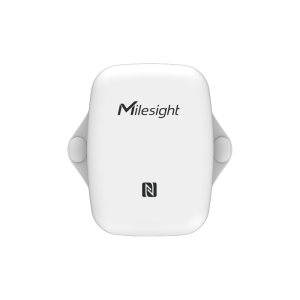 Milesight EM300-TH Temperature and Humidity Sensor
£38.90 ex VAT
Milesight EM300-TH Temperature and Humidity Sensor
£38.90 ex VAT
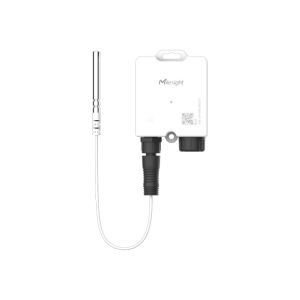 Milesight TS201 Temperature Sensor
£44.89 ex VAT
Milesight TS201 Temperature Sensor
£44.89 ex VAT
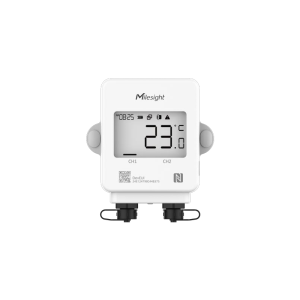 Milesight TS302 Temperature Sensor
£64.34 ex VAT
Milesight TS302 Temperature Sensor
£64.34 ex VAT
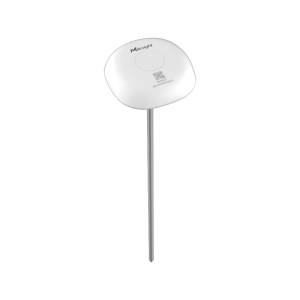 Milesight TS101 Insertion Temperature Sensor
£74.82 ex VAT
Milesight TS101 Insertion Temperature Sensor
£74.82 ex VAT
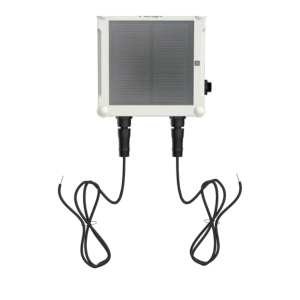 Milesight UC511 Solenoid Valve Controller
£119.71 ex VAT
Milesight UC511 Solenoid Valve Controller
£119.71 ex VAT
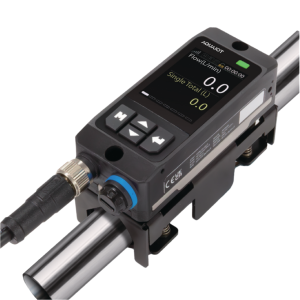 AquaIoT Clamp-on Ultrasonic Flow Meter
Request a price
AquaIoT Clamp-on Ultrasonic Flow Meter
Request a price
Legionella temperature monitoring costs between £38.90 and £119.71 ex VAT in the UK. Indiott published prices, September 2026. Delivery is charged by weight; VAT is added at checkout.
| Model | Key specification | Price ex VAT | Availability |
|---|---|---|---|
| Milesight EM300-TH Temperature and Humidity Sensor EM300-TH-868M | Temperature measuring range: -30°C to +70°C | £38.90 ex VAT (£46.68 inc. VAT) | In stock, UK · dispatched within 14 working days |
| Milesight TS201 Temperature Sensor TS201 | Probe temperature measuring range: -40°C ~ 125°C | Price range: £44.89 through £52.37 ex VAT (£53.87 – £62.84 inc. VAT) | In stock, UK · dispatched within 14 working days |
| Milesight TS302 Temperature Sensor | Connector Number: TS302: 2 × Connectors for two Temperature/Humidity Sensors or Temperature/Humidity Probe + Magnet Switch Sensor (TS301: 1 × Connector) | Price range: £64.34 through £73.32 ex VAT (£77.21 – £87.98 inc. VAT) | In stock, UK · dispatched within 14 working days |
| Milesight TS101 Insertion Temperature Sensor TS101 | Detecting Range: -30°C ~ +70°C (probe Ф 7 × 400 mm) | Price range: £74.82 through £143.65 ex VAT (£89.78 – £172.38 inc. VAT) | In stock, UK · dispatched within 14 working days |
| Milesight UC511 Solenoid Valve Controller UC511-DI | Power Supply: Embedded solar power (6V, 1.7W) plus 2 × 2550 mAh ICR18650 chargeable batteries — UC512 instead uses 3 × 9000 mAh replaceable ER26500 Li-SOCl2 batteries | Price range: £119.71 through £131.68 ex VAT (£143.65 – £158.02 inc. VAT) | In stock, UK · dispatched within 14 working days |
| AquaIoT Clamp-on Ultrasonic Flow Meter | — | Price on request | Quote only |
Why Indiott
A specialist stack, not a box-shifter
Brand-agnostic by design
We pick the best of each brand for the layer and the environment, not one vendor catalogue. Milesight, AquaIoT, Atop, Browan, SpecSens and Urban.io, chosen on merit.
The whole stack, one supplier
Sensing, connectivity, OT security, control and the dashboard come from one accountable team, so there is no finger-pointing when something needs to talk to something else.
Specified and supported in Britain
UK-based engineers scope the site, quote the kit and stand behind it, with compliance mapped to the regimes your auditors actually cite.
Honest kit, honest pricing
Prices are shown where we can, quoted fast where we cannot, and you get a straight answer and a bill of materials within one working day.
 DEPLOYED IN THE FIELD
Compliance this answers to
| Standard | What it requires |
|---|---|
| ACoP L8 and HSG274 Parts 1 and 2 | the legal duty to monitor and record hot and cold water temperatures |
| CQC fundamental standards | continuous evidence supports safe-premises requirements in care settings |
| HTM 04-01 for healthcare premises water safety, where automated logging eases the monitoring burden | |
What it costs, roughly
Instrumenting the sentinel outlets and calorifiers of a single care home is typically low thousands of pounds in sensors and a gateway, against the recurring cost and risk of manual rounds. The compliance saving is the audit trail itself plus the staff hours returned. We quote your outlet schedule within one working day.
Frequently asked questions
What temperatures does ACoP L8 require you to record?
HSG274, the technical guidance under ACoP L8, sets the checkpoints. Hot water at sentinel outlets should reach 50°C within one minute, cold water should stay below 20°C after two minutes, and stored hot water should leave the calorifier at 60°C and return at 50°C or above. Sentinel outlets are checked monthly, calorifiers quarterly.
Which sensor suits sentinel outlets and calorifiers?
For calorifier flow and return, the TS302 resistance temperature sensor (£64.34 ex VAT) takes A-class or B-class probes on extendable leads, so one node logs both pipes. The TS101 insertion sensor (£74.82) and the EM500-PT PT100 sensor (£116.71) with a three-wire probe suit boiler and pipe-surface points where high accuracy matters.
How often do the sensors report and how long do batteries last?
The reporting interval is configurable, typically every few minutes for a live view or hourly to save power. The sensors use LoRaWAN, a low-power radio, so the TS101 runs up to ten years on a 4,000 mAh cell and the EM500-PT up to ten years on a 19,000 mAh replaceable battery. Longer intervals extend life.
Does continuous monitoring replace the manual monthly round?
It supplements it. HSG274 still expects physical inspections, TMV servicing and periodic sampling, with a responsible person reviewing results. What continuous sensors remove is the blind spot between rounds: a calorifier drifting below 60°C is caught in minutes, not at the next monthly visit, and every reading is timestamped rather than hand-written on a clipboard.
What connectivity and gateway does the system need?
The sensors use LoRaWAN on the EU868 band, so one gateway covers a large building or campus. A semi-industrial UG65 gateway is £279.82 ex VAT and the compact UG63 is £98.76. The gateway forwards readings over MQTT or HTTP into your BMS, CAFM or compliance platform, so data lands where your team already works.
How does it prove compliance at an audit?
Every reading is stored with a timestamp and outlet ID, so you export a continuous temperature record for any outlet or date range instead of transcribing a logbook. Out-of-range readings raise an alert and are flagged in the history, giving an inspector or the CQC clear evidence that sentinel and calorifier temperatures were held and acted on.
Related
Buying this in the UK
- Supplied by Indiott, a trading name of PSI Technologies Limited (Companies House 03689664, VAT GB 730 2340 83), Hampshire, United Kingdom.
- Every price is published ex VAT at indiott.com — no quote needed to see it.
- Typically dispatched within 14 working days from the UK, on a VAT invoice.
- Call 023 9223 3611 or request a quote.
Related solutions
Compare the models
Next step
Scope it with an engineer.
Tell us the site, the assets and the constraint. You get a bill of materials and a straight answer within one working day.
- A bill of materials sized to your site
- Priced ex VAT, UK entity, no login wall
Rather talk it through? Call 023 9223 3611
Received. An engineer has it.
You will hear back within one working day with the parts, the prices and the lead time. A confirmation is on its way to your inbox.
If it is urgent, call 023 9223 3611.