WATER & UTILITIES / WATER QUALITY
Water Quality Monitoring Sensors (UK)
Catch a pollution event the hour it happens
The short answer
How do you monitor water quality remotely with IoT?
You monitor water quality by connecting industry-standard probes for pH, dissolved oxygen, turbidity or conductivity to a LoRaWAN controller that reads their 4-20mA or Modbus output and reports over EU868 radio to a gateway. Readings arrive continuously with threshold alarms, so a breach is flagged in minutes at a remote intake, tank or discharge point instead of at the next manual sample.
Most water-quality decisions still rest on grab-samples: someone drives out, fills a bottle, and a lab tells you what the water was doing days ago. By the time a pH excursion, a turbidity spike or a chlorine drop shows up on a report, the discharge has already gone downstream, the abstraction has already filled the reservoir, and the regulator is already asking why nobody noticed. Spot-sampling cannot see the 99% of the time nobody is standing at the outfall, and it cannot prove compliance for the hours in between.
Talk through your site ● Answered within one working day
The difference
Water quality monitoring: what changes the day it goes live
Most water-quality decisions still rest on grab-samples: someone drives out, fills a bottle, and a lab tells you what the water was doing days ago. By the time a pH excursion, a turbidity spike or a chlorine drop shows up on a report, the discharge has already gone downstream, the abstraction has already filled the reservoir, and the regulator is already asking why nobody noticed. Spot-sampling cannot see the 99% of the time nobody is standing at the outfall, and it cannot prove compliance for the hours in between.
- Continuous in-situ readings for pH, dissolved oxygen, conductivity, ORP, turbidity and chlorine, sampled minute-by-minute instead of once a fortnight
- Threshold and rate-of-change alarms that text the duty engineer the moment a parameter breaches a permit limit, not after the next lab cycle
- An auditable, timestamped record you can hand straight to the DWI or Environment Agency to evidence permit compliance
- Fewer truck rolls and lab fees: grab-sampling drops to verification and calibration visits while the sensors carry the daily load
What you get
- 01
Continuous in-situ readings for pH, dissolved oxygen, conductivity, ORP, turbidity and chlorine, sampled minute-by-minute instead of once a fortnight
- 02
Threshold and rate-of-change alarms that text the duty engineer the moment a parameter breaches a permit limit, not after the next lab cycle
- 03
An auditable, timestamped record you can hand straight to the DWI or Environment Agency to evidence permit compliance
- 04
Fewer truck rolls and lab fees: grab-sampling drops to verification and calibration visits while the sensors carry the daily load
The full stack, applied here
One pollution event, tracked from probe to permit evidence
Every Indiott build runs all five layers as one accountable system. Follow a single turbidity spike from the sensor that catches it to the report that proves it.
AquaIoT and SpecSens in-situ probes read pH, dissolved oxygen, conductivity, ORP, turbidity and free chlorine minute-by-minute, covering the 99% of the time no one is standing at the outfall.
Hands raw chemistry to CONNECT ↓
A LoRaWAN gateway carries a far-edge borehole or outfall as reliably as the plant room, with cellular or wired backhaul where mains and coverage exist.
Hands a signed reading to SECURE ↓
A cellular router with per-site VPN and firewall isolates the instrument network, so regulatory data crosses the public network encrypted and tamper-evident.
Hands a trusted stream to CONTROL ↓
Ready when you want monitoring to act: wireless valve heads and remote IO can dose, divert or shut a penstock the moment a permit limit is breached, not after the next lab cycle.
Hands an action and proof to MANAGE ↓
Trend history, permit-limit alarms and one-tap exportable reports the DWI or Environment Agency accept, or pushed straight into your existing SCADA over standard protocols.
The loop is closed ✓
How teams start
From a single pilot to the whole portfolio
You do not boil the ocean. Nearly every rollout runs the same four moves, and you own a working, evidenced result at the end of the first one.
Scope & risk map
We walk the sites, list the assets and pin the one constraint that matters, then agree what a good result looks like before a single sensor is bought.
Pilot on one site
A focused set of sensors goes onto one site or asset group, live on our telemetry and dashboards, wired to the people who need the alert.
Validate & standardise
We tune thresholds, kill false positives, confirm the integration into your SCADA, BMS or CAFM, and write the standard design down so it repeats.
Scale the portfolio
The proven design rolls out across the estate, reusing the same hardware standards and data models so every site reads the same way.
The water quality monitoring kit we deploy
Full catalogue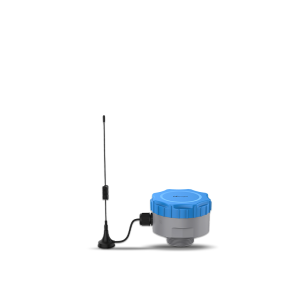 Milesight EM410-RDL Radar Distance/Level Sensor
£224.45 ex VAT
Milesight EM410-RDL Radar Distance/Level Sensor
£224.45 ex VAT
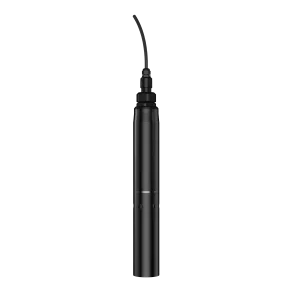 SpecSens iSPS-X Multi-Parameter Water Quality Instrument
Request a price
SpecSens iSPS-X Multi-Parameter Water Quality Instrument
Request a price
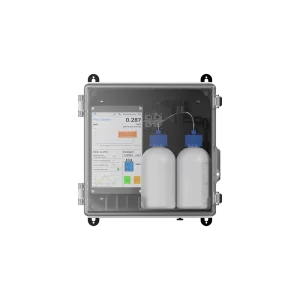 SpecSens SPA Free / Total Chlorine Analyzer
Request a price
SpecSens SPA Free / Total Chlorine Analyzer
Request a price
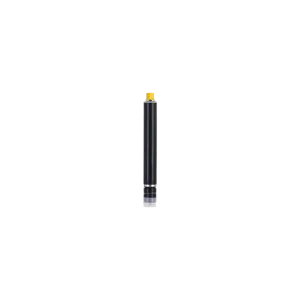 SpecSens SPS-Cl Chlorine Sensor
Request a price
SpecSens SPS-Cl Chlorine Sensor
Request a price
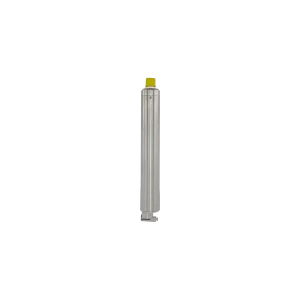 SpecSens SPS-DO Dissolved Oxygen Sensor
Request a price
SpecSens SPS-DO Dissolved Oxygen Sensor
Request a price
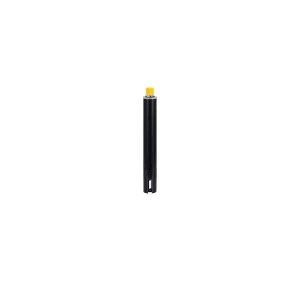 SpecSens SPS-EC Conductivity Sensor
Request a price
SpecSens SPS-EC Conductivity Sensor
Request a price
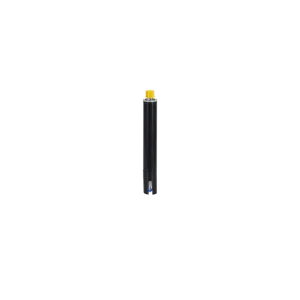 SpecSens SPS-pH Sensor
Request a price
SpecSens SPS-pH Sensor
Request a price
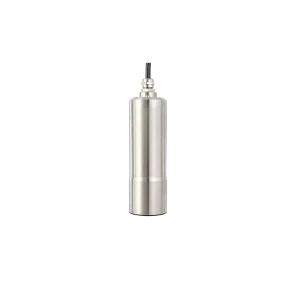 SpecSens SPS-T-SC1 Turbidity Sensor
Request a price
SpecSens SPS-T-SC1 Turbidity Sensor
Request a price
Water quality monitoring costs £224.45 ex VAT in the UK. Indiott published prices, September 2026. Delivery is charged by weight; VAT is added at checkout.
| Model | Key specification | Price ex VAT | Availability |
|---|---|---|---|
| Milesight EM410-RDL Radar Distance/Level Sensor EM410-RDL | Radar detection distance: 0.3 m ~ 12 m | Price range: £224.45 through £254.38 ex VAT (£269.34 – £305.26 inc. VAT) | In stock, UK · dispatched within 14 working days |
| SpecSens iSPS-X Multi-Parameter Water Quality Instrument iSPS-X | — | Price on request | Quote only |
| SpecSens SPA Free / Total Chlorine Analyzer SPA | — | Price on request | Quote only |
| SpecSens SPS-Cl Chlorine Sensor SPS-Cl | — | Price on request | Quote only |
| SpecSens SPS-DO Dissolved Oxygen Sensor SPS-DO | — | Price on request | Quote only |
| SpecSens SPS-EC Conductivity Sensor SPS-EC | — | Price on request | Quote only |
| SpecSens SPS-pH Sensor SPS-pH | — | Price on request | Quote only |
| SpecSens SPS-T-SC1 Turbidity Sensor SPS-T-SC1 | — | Price on request | Quote only |
Why Indiott
A specialist stack, not a box-shifter
Brand-agnostic by design
We pick the best of each brand for the layer and the environment, not one vendor catalogue. Milesight, AquaIoT, Atop, Browan, SpecSens and Urban.io, chosen on merit.
The whole stack, one supplier
Sensing, connectivity, OT security, control and the dashboard come from one accountable team, so there is no finger-pointing when something needs to talk to something else.
Specified and supported in Britain
UK-based engineers scope the site, quote the kit and stand behind it, with compliance mapped to the regimes your auditors actually cite.
Honest kit, honest pricing
Prices are shown where we can, quoted fast where we cannot, and you get a straight answer and a bill of materials within one working day.
 DEPLOYED IN THE FIELD
Compliance this answers to
| Standard | What it requires |
|---|---|
| DWI | continuous chlorine, turbidity and pH monitoring evidences drinking-water quality at treatment and into distribution |
| MCERTS | instrument-class effluent and discharge monitoring to satisfy Environment Agency permit conditions where certified-equivalent performance is required |
| Water Framework Directive | in-situ DO, conductivity and turbidity data supports ecological and chemical status reporting for surface waters |
| Urban Waste Water Treatment regs | continuous load and quality data at works outfalls evidences treatment performance and permit compliance |
What it costs, roughly
A single regulated discharge point with pH, turbidity, dissolved oxygen and conductivity, a LoRaWAN gateway and a year of dashboard and alarming typically lands in the low thousands of pounds, with the probes the dominant line. A multi-parameter instrument such as iSPS-X at a critical outfall, or a full chlorine analyser on a drinking-water main, sits higher; a basic level or flow point sits well below. Exact figures come back, itemised by point and parameter, within one working day.
Frequently asked questions
Does Milesight make the pH or turbidity probe itself?
No, and that is deliberate. Water quality probes for pH, dissolved oxygen, turbidity and conductivity are specialist wet-chemistry instruments. The Milesight UC controllers digitise and transmit the signal from a probe you already trust, so you keep your calibrated sensor and add wireless reporting rather than replacing a proven instrument with an unknown one.
How does a probe connect to the LoRaWAN network?
Through an IoT controller. The UC300 (£104.74 ex VAT) reads 4-20mA analogue and Modbus RTU, and the UC501 (£119.71) and UC502 (£122.70) add digital and analogue inputs with LoRaWAN transmission. Wire the probe transmitter to the controller, set the scaling, and its reading goes over radio to a gateway and into your platform.
What parameters can I actually monitor this way?
Anything a probe outputs as 4-20mA or Modbus: pH, dissolved oxygen, turbidity, conductivity, ORP, chlorine and temperature are common. You can also combine level, so the same node reports both water quality and how full a tank or channel is. The controller carries several inputs, so one node can host more than one parameter.
Is it suitable for a remote or off-grid intake?
Yes. The controllers are low power and the gateway can be solar, so a remote borehole, reservoir or discharge point reports without mains or a fixed line. One gateway covers several kilometres of open site, and cellular backhaul brings the data home from locations with no fixed broadband.
How are out-of-range readings alerted?
Each input carries configurable thresholds. When a reading crosses a limit, the reading is flagged and the platform raises an alert by email, SMS or webhook, with the full history retained for review. This turns periodic spot samples into a continuous record with immediate warning of a pollution or process excursion.
Does it integrate with our SCADA or compliance system?
Yes. The gateway forwards readings north over MQTT or HTTP, and the UC300 exposes Modbus, so data lands in your existing SCADA, historian or regulatory reporting system. You get continuous water quality data in the same place as the rest of your telemetry rather than in an isolated portal.
Related
Buying this in the UK
- Supplied by Indiott, a trading name of PSI Technologies Limited (Companies House 03689664, VAT GB 730 2340 83), Hampshire, United Kingdom.
- Every price is published ex VAT at indiott.com — no quote needed to see it.
- Typically dispatched within 14 working days from the UK, on a VAT invoice.
- Call 023 9223 3611 or request a quote.
Next step
Scope it with an engineer.
Tell us the site, the assets and the constraint. You get a bill of materials and a straight answer within one working day.
- A bill of materials sized to your site
- Priced ex VAT, UK entity, no login wall
Rather talk it through? Call 023 9223 3611
Received. An engineer has it.
You will hear back within one working day with the parts, the prices and the lead time. A confirmation is on its way to your inbox.
If it is urgent, call 023 9223 3611.