VS350 vs VS351 vs VS360 vs VS361: Which Milesight Footfall Counter Do I Need?
Short answer: Choose the Milesight VS350 for an ordinary doorway or washroom passage up to 3.1 m wide, where dual-PIR sensing and around 9.7 years of battery mean you fit it once. Choose the VS351 for a wider opening: 3.6 m of coverage at 3 m and a published 80-90% bi-directional accuracy, at the cost of roughly 1.7 years of battery unless you run it from USB-C. Choose the VS360 to break an infrared beam across an opening 1.2-3 m wide with a master-and-node pair at waist height. The VS361 is a different kind of device: no LoRaWAN radio, just an NPN output for a DI device you already have.
Which Milesight footfall counter do I need?
Choose the VS350 if you are counting through a normal shop door, office corridor or washroom entrance with no ceiling power. It mounts 2-3 m up for a 3.1 m passage width at 3 m, or wall-mounts at 1.2-1.3 m for under 2.3 m. Two replaceable ER14505 cells give around 9.7 years at SF7 on EU868.
Choose the VS351 if the opening is too wide for the VS350, or the counts have to stand up to scrutiny. At 3 m it sees 3.6 m of detection width and the datasheet publishes 80-90% bi-directional accuracy. Its battery version lasts about 1.7 years on four ER26500 cells, so use the Type-C version wherever mains is available – but note radar is fitted to the battery version only.
Choose the VS360 if there is nothing usable overhead – a glazed shopfront, a high atrium. Instead of looking down it breaks an infrared beam between a master unit and a node unit, both wall-mounted at 0.7-1.2 m and 1.2-3 m apart. Because a beam is broken rather than heat read, ambient temperature and clothing colour do not affect it. It is the most expensive of the four, and you site two devices, not one.
Choose the VS361 if a controller or DI input already sits at the entrance and you only need a footfall trigger to feed it. A knob sets its diffuse-reflective detection distance from 1 to 9 m, much more reach than anything else here, and it is the only one of the four rated IP65 rather than IP30 – the one for an exposed or wash-down entrance. It is also the cheapest, and runs on 802.3af PoE or 12-60 V DC.
Is the VS361 a LoRaWAN footfall counter?
No, and this is where the VS350 vs VS361 comparison usually goes wrong. The VS361 is not a LoRaWAN sensor. The VS350, VS351 and VS360 all list LoRaWAN and Milesight D2D with EU868 among their bands – the band UK LoRaWAN networks use, and the one the -868M part numbers ship on. The VS361 lists no radio at all: its output is a single NPN open-collector contact on a 3.5 mm terminal block rated 1 mA at 5 V DC, which has to land on a DI device that then reports. It triggers someone else’s system; it is not a reporting node.
Is the VS351 a more accurate footfall counter than the VS350?
The datasheets do not settle it. An accuracy figure is published for the VS351 only – 80-90% bi-directional, tested at 2.7 m installation height – and none is stated for the VS350, so the specifications do not support a like-for-like comparison. They do distinguish coverage and conditions: 3.6 m of width at 3 m against the VS350’s 3.1 m, and a note on the VS350 sheet that PIR sensitivity is affected by ambient temperature. Both quote a best operating temperature of 15-30 degrees C, so neither belongs in the draught of an air curtain.
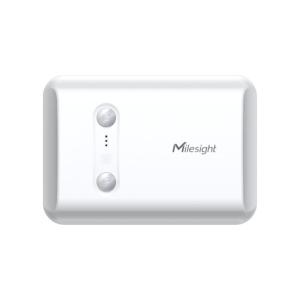
Milesight VS350 Passage People Counter
VS350-868M
£74.82 ex VAT (£89.78 inc. VAT)
Detection range (passage width)Ceiling mount: 3.1 m passage width at 3 m height; wall mount: under 2.3 m
View the VS350-868M
Milesight VS351 Thermopile People Counter
VS351-868M
Price range: £118.21 through £148.14 ex VAT (£141.85 – £177.77 inc. VAT)
Detection width at installation height3.6 m at 3 m installation height (installation height range 2 m ~ 3 m)
View the VS351-868M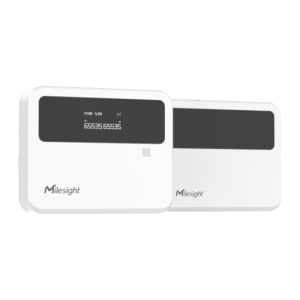
Milesight VS360 IR Breakbeam People Counter
VS360-868M
£127.19 ex VAT (£152.63 inc. VAT)
Detection Range1.2 m ~ 3 m (installation height 0.7 m ~ 1.2 m)
View the VS360-868M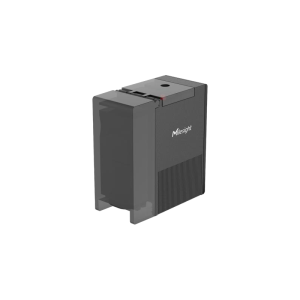
Milesight VS361 Storefront Footfall Sensor
VS361-868M
£40.40 ex VAT (£48.48 inc. VAT)
Detection Distance (unobstructed)1 - 9 m, adjustable via knob
View the VS361-868MSpecification comparison
| Specification | VS350-868M | VS351-868M | VS360-868M | VS361-868M |
|---|---|---|---|---|
| Approvals | CE, FCC; RoHS | CE, FCC | CE, FCC | CE, FCC, RoHS |
| Ingress protection | IP30 | IP30 | IP30 | IP65 |
| Installation | Ceiling mount, wall mount | Ceiling mounting, lintel mounting | Wall mount by 3M tape or screws | Wall mounting |
| Installation height | Ceiling mount 2 m - 3 m; wall mount 1.2 m - 1.3 m | 2 m ~ 3 m | 0.7 m ~ 1.2 m | 0.7 - 1.2 m |
| Operating temperature | -20°C ~ 60°C, 0-95% RH non-condensing | -20°C ~ 60°C | -20°C ~ 50°C | -20°C ~ 50°C |
| Power supply | 2 × 2700 mAh ER14505 Li-SOCl2 replaceable batteries | 5V/1A by Type-C port (both versions); 4 × 9000 mAh ER26500 Li-SOCl2 replaceable batteries (battery version only) | 2 × 2700 mAh ER14505 Li-SOCl2 replaceable batteries per device | 802.3af PoE or 12 - 60 V DC / 1 mA |
| Configuration | NFC via mobile app, Downlink | NFC via mobile app, downlink | NFC configuration via mobile app (master device) | — |
| Counting technology | Dual PIR | Radar (battery version only) & thermopile | IR Breakbeam | — |
| Dimensions | — | Type-C version: 70 × 68 × 32 mm; battery version: 188 × 68 × 32 mm | 76 × 62 × 20 mm (2.99 × 2.44 × 0.79 in) | 73.5 × 80 × 36 mm (2.89 × 3.15 × 1.42 in) |
| Frequency | CN470/IN865/RU864/EU868/US915/AU915/KR920/AS923-1&2&3&4 | CN470/IN865/RU864/EU868/US915/AU915/KR920/AS923-1&2&3&4 | CN470/IN865/RU864/EU868/US915/AU915/KR920/AS923-1&2&3&4 | — |
| Protocol | LoRaWAN®, Milesight D2D | LoRaWAN®, Milesight D2D | LoRaWAN®, Milesight D2D | — |
| Relative humidity | — | 0% ~ 95% (non-condensing) | 0% - 95% (Non-condensing) | 0 - 95% (non-condensing) |
| Weight | — | Type-C version: 72.3 g; battery version: 383 g | Master 88.4 g, node 85 g (batteries included) | 122 g |
| Advanced features | Data storage (1000 entries), data retransmission, data retrievability, Milesight D2D controller, multiple threshold trigger report | Data storage (1,000 entries), data retransmission, data retrievability, Milesight D2D controller | — | — |
| Antenna | — | Internal antenna | Internal antenna | — |
| Battery life | Around 9.7 years (SF7, EU868); around 5.2 years (SF10, EU868) at 10-min interval, 25°C, 1000 people per day | Around 1.7 years (SF7, EU868 & US915); around 1.6 years (SF10, EU868 & US915) at 30-min interval, 25°C, 1000 people per day | — | — |
| Best operating temperature | 15°C ~ 30°C (PIR sensitivity is affected by ambient temperature) | 15 °C ~ 30 °C | — | — |
| Bi-directional counting | Supported | — | Support | — |
| Detection range | Ceiling mount: passage width 3.1 m (at 3 m height); wall mount: passage width < 2.3 m | — | 1.2 m ~ 3 m | — |
| Material & colour | — | PC (flame retardant), white | PC (flame retardant), white (black customisable) | — |
| Mode | — | OTAA/ABP Class A | OTAA/ABP Class A | — |
| Sensitivity | — | -137 dBm | -137 dBm | — |
| Tx power | — | 16 dBm (868 MHz)/19 dBm (470 MHz)/22 dBm (915 MHz) | 16 dBm (868 MHz)/19 dBm (470 MHz)/22 dBm (915 MHz) | — |
| Battery Life (master) | — | — | Around 4 years (SF7, EU868 & US915); around 3 years (SF10) at 10-min report interval, 12 working hours/day, 25°C | — |
| Battery Life (node) | — | — | Around 3 years high-traffic mode; around 4 years low-traffic mode (12 working hours/day, 25°C) | — |
| Colour | — | — | — | Black |
| Counting accuracy | — | 80% - 90% for bi-directional people counting (tested at 2.7 m installation height, 1.7 m average target height, 25°C) | — | — |
| Detection Distance (unobstructed) | — | — | — | 1 - 9 m (through the adjustment knob) |
| Detection width | — | 3.6 m @ 3 m installation height (2.0 m height: 1.6 m; 2.4 m: 2.57 m; 2.8 m: 3.2 m) | — | — |
| Dimensions & weight | 100 × 70 × 21 mm; 99 g (batteries included) | — | — | — |
| Display | — | — | 1 × OLED screen (master device); 1 × LED indicator (node device) | — |
| LED Indicators | — | — | — | 1 × infrared-triggered indicator |
| Light Source | — | — | — | Infrared LED (940 nm) |
| LoRaWAN mode | OTAA/ABP Class A | — | — | — |
| Material | — | — | — | Polycarbonate (UL94 V2) |
| Maximum Load | — | — | — | 1 mA @ 5 VDC |
| Output Connector | — | — | — | 3.5 mm terminal block |
| Output Type | — | — | — | 1 × NPN open-collector output |
| Power Consumption | — | — | — | Max. 0.9 W |
| Power Interfaces | — | — | — | 1 × RJ45 (PoE PD, power supply only); 1 × 2-pin terminal block (VIN+GND) |
| Privacy | — | 100% anonymity and GDPR-compliant, no image capturing | — | — |
| Sensor Technology | — | — | — | Diffuse reflective |
| Sensor adjustable angle | — | 0° ~ 90° | — | — |
| Temperature accuracy | — | ± 2°C | — | — |
| Temperature measuring range | -30°C ~ 70°C, accuracy ±0.5°C | — | — | — |
| Temperature range | — | -30°C ~ 70°C | — | — |
| Tx power / sensitivity | 16 dBm (868 MHz) / 19 dBm (470 MHz) / 22 dBm (915 MHz); -137 dBm | — | — | — |
Specifications taken from the manufacturer datasheets. Rows where the models are identical are dimmed. Prices are ex VAT and read live from the catalogue.
Frequently asked questions
Do these footfall counters record images or video?
No. The VS351 datasheet states 100% anonymity, GDPR compliance and no image capturing, and the VS350 counts using dual PIR without capturing images. The VS360 uses an infrared breakbeam between two units and the VS361 uses a 940 nm infrared LED with diffuse reflection. None of the four is a camera.
Which of these can I mount outdoors or in a wash-down area?
Only the VS361, which is rated IP65. The VS350, VS351 and VS360 are all IP30. Operating temperature is -20 to 60 degrees C for the VS350 and VS351, and -20 to 50 degrees C for the VS360 and VS361, but the VS350 and VS351 both quote a best operating temperature of 15 to 30 degrees C.
How long do the batteries last on each model?
The VS350 quotes around 9.7 years at SF7 on EU868 (5.2 years at SF10) on two 2700 mAh ER14505 cells, at a 10-minute interval, 25 degrees C and 1,000 people per day. The VS351 battery version quotes around 1.7 years at SF7 on four 9000 mAh ER26500 cells at a 30-minute interval. The VS360 quotes around 4 years for the master and 3 to 4 years for the node depending on traffic mode, at 12 working hours a day. The VS361 has no battery: it runs on 802.3af PoE or 12-60 V DC.
Which models count in and out separately?
The VS350 and VS360 both list bi-directional counting as supported, and the VS351 counts entries and exits bi-directionally with a quoted 80-90% accuracy. The VS361 specification lists a single NPN open-collector output and no bi-directional counting, so do not assume in/out separation from it.
What mounting height does each one need?
VS350: ceiling mount 2-3 m, or wall mount 1.2-1.3 m. VS351: 2-3 m, ceiling or lintel mounted, with the sensor adjustable through 0-90 degrees. VS360: wall mount at 0.7-1.2 m for both the master and the node, 1.2-3 m apart. VS361: wall mount at 0.7-1.2 m.