BUILDINGS & ENERGY / ENERGY & SUSTAINABILITY
LoRaWAN Energy Monitoring Sensors (UK)
One fiscal meter at the boundary tells you what the estate spent. It never tells you which circuit spent it.
Talk through your board schedule ● Answered within one working day
Live simulation of a monitored floor
Deployed for







The LoRaWAN energy monitoring kit we deploy
Full catalogue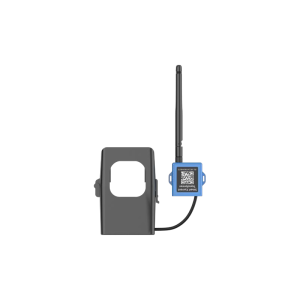 Milesight CT101 / CT103 / CT105 Smart Current Transformer
£62.85 ex VAT
Milesight CT101 / CT103 / CT105 Smart Current Transformer
£62.85 ex VAT
 Milesight WS523 Smart Portable Socket
£62.85 ex VAT
Milesight WS523 Smart Portable Socket
£62.85 ex VAT
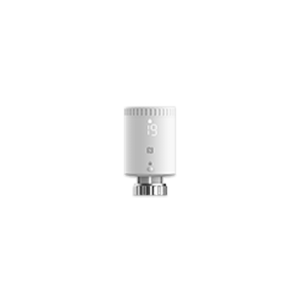 Milesight WT102 Smart Radiator Thermostat
£97.26 ex VAT
Milesight WT102 Smart Radiator Thermostat
£97.26 ex VAT
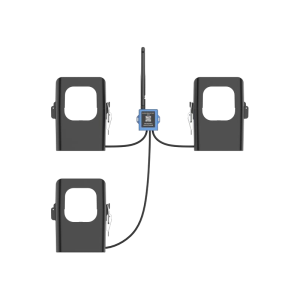 Milesight CT303 / CT305 / CT310 Smart Current Transformer
£101.75 ex VAT
Milesight CT303 / CT305 / CT310 Smart Current Transformer
£101.75 ex VAT
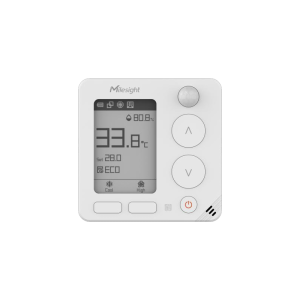 Milesight WT401 Smart Thermostat
£112.23 ex VAT
Milesight WT401 Smart Thermostat
£112.23 ex VAT
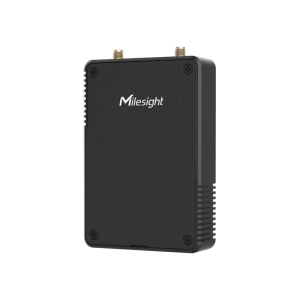 Milesight UG56 Industrial LoRaWAN Gateway
£173.58 ex VAT
Milesight UG56 Industrial LoRaWAN Gateway
£173.58 ex VAT
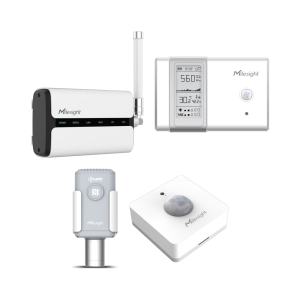 Milesight LoRaWAN Starter Kit — Gateway + 3 Environmental Sensors
£619.49 ex VAT
Milesight LoRaWAN Starter Kit — Gateway + 3 Environmental Sensors
£619.49 ex VAT
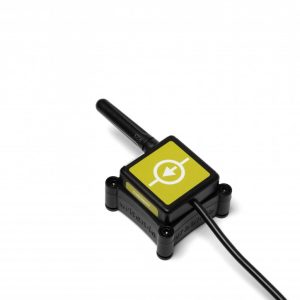 Urban.io Current Sensor
Request a price
Urban.io Current Sensor
Request a price
The blind spot
You are billed by the building. You spend by the circuit.
- 01
Plant left running overnight looks identical to plant that ran because it was needed.
- 02
A circuit drawing twice what it should hides inside a total nobody breaks down.
- 03
Departments and tenants cannot be apportioned, so recharge is a negotiation rather than a reading.
When SECR or ESOS comes round the figures get reconstructed from invoices rather than measured, and the savings recommendations have nowhere to land.

 LoRaWAN gateway
Circuit DB2-14 drawing 4.1 kW between 23:00 and 05:00, seven nights running.
Behind the fiscal meter
Clamp on, do not cut in
Split-core current transformers close around an existing cable, so most circuits are metered without breaking them and without a shutdown.
- Circuit-level kWhConsumption by board, circuit, zone, tenant or process, not one figure for the whole site.
- No new data cablingLoRaWAN reaches plant rooms, risers and remote sub-boards without pulling cable through occupied space.
- Measured, not estimatedSECR and ESOS figures come off real readings, and the baseload data points at which circuit to act on.
What your team sees
The bill, broken back down
One number at the boundary, and everything underneath it that spent it.
-
01
Circuits metered
How much of the board is actually instrumented.
-
02
Site load, now
The whole site in one figure, with the parts beneath it.
-
03
Overnight baseload
What the building draws when nobody is in it.
-
04
Demand against baseload
A day of load with the floor it never drops below.
Where it lands
Four questions one board answers
-
01
The incomer
A CT on the main, so the fiscal figure has something to reconcile against.
-
02
Circuit sub-metering
kWh by circuit, zone and process, which is where a saving can be pinned.
-
03
Tenant apportionment
Recharge from a reading rather than a negotiation.
-
04
SECR and ESOS
Measured consumption instead of figures reconstructed from invoices.
The difference
LoRaWAN energy monitoring: what changes the day it goes live
The bill arrives as one number a month late, so waste has nowhere to show up and no saving can be pinned to a circuit.
- Circuit-level visibility behind the fiscal meter, so waste shows up as a line you can act on
- Sub-metering by building, floor, tenant or process for accurate apportionment and recharge
- Measured data for SECR and ESOS reporting instead of figures reconstructed from invoices
- Out-of-hours and baseload consumption surfaced, the cheapest carbon and cost to remove
- Circuits metered
- 46–
- Overnight baseload
- 31%–
- Reportable for SECR
- Yes–
- Top circuit vs expected
- +2.1x–
What gets fitted, and where
One gateway, every board on the riser
Clamp-on CTs on the incomer and the circuits that matter, reporting to a single gateway.
- SENSE
Single-phase and three-phase clamp-on current transformers for retrofit metering, LoRaWAN energy sensors, and Urban.io current and meter-count sensors for pulse outputs on existing meters
- CONNECT
LoRaWAN gateways reaching plant rooms, risers and remote sub-boards without running new data cabling through occupied space
- MANAGE
Dashboards for kWh by circuit and zone, baseload and out-of-hours analysis, and exports formatted for SECR, ESOS and Net Zero reporting
Measured, not estimated. The figures come off real readings.
- SECR
- ESOS Phase 3
- PPN 06/21
- MID where billing
What these sensors can and cannot be used for
What this covers
Monitoring consumption to find waste, verify savings, report under SECR or ESOS, and apportion cost by building, floor, tenant or process so a service charge can be split on measured share rather than floor area. The clamp-on CTs fit an existing circuit with no rewiring and no outage.
What it does not
Issuing a fiscal energy invoice. Our current sensors are specified at ±1% with CE, FCC and UL508 approvals and carry no MID (Measuring Instruments Directive) approval, and in the UK a meter whose reading is the legal basis of a billable invoice must be MID-approved. Cost apportionment and transparency: yes. The number on a legally billable bill: no.
Where billing is the actual purpose we specify MID-approved metering instead — tell us which of the two you need and we will quote the right one rather than the cheaper one.
The full stack, applied here
One overnight baseload, metered to the circuit
Every Indiott build runs all five layers as one accountable system. Follow a single out-of-hours draw from the sensor that catches it to the report that proves it.
Single-phase and three-phase clamp-on current transformers plus LoRaWAN energy sensors meter each circuit behind the fiscal meter without breaking the supply.
Hands kWh per circuit to CONNECT ↓
A LoRaWAN gateway reaches plant rooms, risers and remote sub-boards, so sub-metering rolls out without running new data cabling through occupied space.
Hands a metered uplink to SECURE ↓
The stack already includes this: a managed switch VLAN-segments the metering network and a VPN router is added, so consumption data crosses the network encrypted and tamper-evident.
Hands a trusted stream to CONTROL ↓
Ready when you want metering to act: Remote IO and load control can shed or schedule out-of-hours plant the moment baseload spikes, not at the next energy review.
Hands an action and proof to MANAGE ↓
Urban.io dashboards chart kWh by circuit, surface baseload and out-of-hours waste, and export figures formatted for SECR, ESOS and a Carbon Reduction Plan.
The loop is closed ✓
How teams start
From a single pilot to the whole portfolio
You do not boil the ocean. Nearly every rollout runs the same four moves, and you own a working, evidenced result at the end of the first one.
Scope & risk map
We walk the sites, list the assets and pin the one constraint that matters, then agree what a good result looks like before a single sensor is bought.
Pilot on one site
A focused set of sensors goes onto one site or asset group, live on our telemetry and dashboards, wired to the people who need the alert.
Validate & standardise
We tune thresholds, kill false positives, confirm the integration into your SCADA, BMS or CAFM, and write the standard design down so it repeats.
Scale the portfolio
The proven design rolls out across the estate, reusing the same hardware standards and data models so every site reads the same way.
Compliance this answers to
| Standard | What it requires |
|---|---|
| SECR | continuous sub-metered consumption gives auditable energy and emissions figures rather than invoice estimates |
| ESOS Phase 3 and beyond | measured circuit-level data identifies and evidences the cost-effective savings opportunities the scheme requires |
| PPN 06/21 and Net Zero commitments | granular metering underpins a credible Carbon Reduction Plan and tracks it over time |
| MID where metering is used for billing | clamp-on CTs are for monitoring and apportionment, not fiscal billing, and we specify MID-approved meters where billing is the purpose |
What it costs, roughly
An indicative starter on one building, clamp-on CTs across the main incomer and the dozen or so largest circuits, a gateway and a year of dashboards, is a rough order of magnitude of low thousands of pounds in hardware. The first overnight baseload or stuck-on plant the data exposes typically covers it inside a billing quarter. Exact figures come back on your distribution board schedule within one working day.
The short answer
How do you monitor energy use without rewiring a building?
Clamp a wireless CT sensor around the existing cable. A Milesight CT101 is £62.85 ex VAT and reports current over LoRaWAN with no electrician downtime and no new cabling. This is monitoring, not billing: the sensors are not MID-approved, so the figures cannot be used to bill a tenant.
Frequently asked questions
Do I have to shut down the board to fit the sensors?
No. The CT101/CT103/CT105 smart current transformers (£62.85 ex VAT) use a detachable, non-invasive clamp that closes around a live conductor, so an electrician fits them without de-energising the distribution board. They are self-powered from the field they measure, needing no battery or external supply, which keeps installation to minutes per circuit and avoids downtime.
How do you meter a three-phase circuit?
Use the CT303/CT305/CT310 three-phase smart current transformer (£101.75 ex VAT), which reads all three phases simultaneously across a wide range of 300A, 500A or 1000A. Pick the CT rating above the circuit's protective device. For single-phase sub-circuits and machines, the CT101/CT103/CT105 single-phase clamp at £62.85 covers ratings up to 500A.
Does it report kWh or just current?
The current transformers report RMS current and accumulated current every minute, sampling at up to 3.3 kHz. Apparent power and kWh are derived at your known circuit voltage, which is fixed on a mains feed. For true plug-level energy on a single appliance, the WS523 smart socket (£62.85 ex VAT) meters an actual 16A load directly.
How does this support SECR and ESOS reporting?
SECR and ESOS ask for measured energy and carbon, not figures reconstructed from invoices. Circuit-level sub-metering gives you kWh by department, plant item or building, so the savings actions an ESOS assessor identifies have a specific circuit to land on. You export continuous half-hourly data and apportion consumption and carbon across an estate accurately.
What gateway and connectivity are needed?
The sensors use LoRaWAN on the EU868 band, so one gateway typically covers a whole building. A semi-industrial UG65 gateway is £279.82 ex VAT and the compact UG63 is £98.76. The gateway forwards readings over MQTT or HTTP into your BMS, energy dashboard or historian, so metering data sits alongside your other building systems.
What is baseload and why does metering it matter?
Baseload is the power an estate draws overnight or when closed, when it should be near zero. Metering each circuit exposes plant left running, standby loads and faults hidden inside a single fiscal meter. Cutting an unnecessary overnight baseload is often the fastest saving, because it runs 8,760 hours a year, and sub-metering shows exactly which circuit to switch.
Can I use these energy sensors to bill a tenant?
For cost apportionment, yes — splitting a service charge on measured share rather than floor area is exactly what these are for. For a fiscal invoice, no. Our LoRaWAN current sensors are specified at ±1% with CE, FCC and UL508 approvals and carry no MID (Measuring Instruments Directive) approval, and in the UK a meter whose reading is the legal basis of a billable invoice must be MID-approved. Where billing is the purpose we specify MID-approved metering instead.
Related
Buying this in the UK
- LoRaWAN current-transformer sensors from £62.85 ex VAT. Not MID-approved — for monitoring, not tenant billing.
- Supplied by Indiott, a trading name of PSI Technologies Limited (Companies House 03689664, VAT GB 730 2340 83), Hampshire, United Kingdom.
- Every price is published ex VAT at indiott.com — no quote needed to see it.
- Typically dispatched within 14 working days from the UK, on a VAT invoice.
- Call 023 9223 3611 or request a quote.
Related solutions
Compare the models
Next step
Scope it off your board schedule
Send the distribution board schedule. You get a CT count, a bill of materials and a straight answer within one working day.
- CT sizes matched to your actual cable diameters
- Which boards need an isolation and which do not, known before anyone attends
- Priced ex VAT, UK entity, no login wall
- MID-approved metering specified where billing is the purpose
Rather talk it through? Call 023 9223 3611
Received. An engineer has it.
You will hear back within one working day with the parts, the prices and the lead time. A confirmation is on its way to your inbox.
If it is urgent, call 023 9223 3611.