TS601 vs TS602: built-in sensor or external probe?
Short answer: Both are LTE Cat.1 cellular temperature loggers, so neither needs a LoRaWAN gateway: put a SIM in and they report over the mobile network. The TS601 measures with a built-in sensor and covers -35°C to +70°C. The TS602 has no built-in sensor and instead takes an external probe on an M12 connector, which is what lets it reach -200°C or +500°C, and it adds a 0.96-inch OLED screen.
Cellular is the point, and it changes the economics
Before comparing the two, be clear about why you would choose either over a LoRaWAN TS201 or TS302. A cellular sensor needs no gateway and no network coverage plan, which makes it the right answer for a vehicle, a single remote cabinet, a customer site you do not control, or a one-off trailer or shipping container. What it costs you is a SIM and a data plan per device, forever.
For a building with more than a handful of points, a gateway plus LoRaWAN sensors is cheaper to run. For assets that move, or for one or two isolated points, these are the correct products. Both add base station positioning, giving latitude and longitude with a typical deviation of 1 km, and a 3-axis accelerometer reporting Normal or Tilt, which is a strong hint about the intended use: things in transit.
Which one do I need?
Choose the TS601 for ambient monitoring where -35°C to +70°C is enough. That covers chilled and frozen transport, storerooms, cabinets and most cold chain work. Accuracy is typically plus or minus 0.2°C between 0 and 65°C. Because the sensing element is inside the housing there is no probe to specify, no probe to order and nothing to snag, and battery life is slightly better: around 4.8 years on MQTT or TCP against 4.2 for the TS602.
Choose the TS602 when the measurement point is not where the box can go, or when you need a range the TS601 cannot reach. The probe options set the range: the low temperature PT100 reaches -200°C, the industrial PT100 reaches +500°C, and food-grade and DS18B20 options sit between. It also has the OLED screen, so someone standing in front of the unit can read the value without a phone or a dashboard, which is often what an auditor or a driver actually needs.
Order the probe deliberately
The TS602 probes are separate part numbers and they are not interchangeable in what they cover. The regular SP11-B05-125-200 is Class B, -40°C to 125°C. The food application SP11-AF10-125-150 is Class A at plus or minus 0.4°C. The low temperature SP11-A03-050-150 covers -200°C to 50°C. The industrial SP11-A05-500-150 covers -50°C to 500°C. There is also a DS18B20 option and a combined temperature and humidity probe. Confirm the combination when you order, because a TS602 without the right probe measures nothing.
What is the same
Both are IP67 in a food-grade ABS and PC housing, 112 x 72 x 29 mm, running on two 2500 mAh CR18505 cells. Both store 5,000 entries with retransmission, support TCP, UDP, MQTT, AWS and the Milesight platform, take a Nano SIM, and carry the light sensor that detects a cargo box being opened. Both are limited to a 15 minute minimum reporting interval above 0°C and 30 minutes at or below 0°C, which is worth checking against any monitoring regime that specifies more frequent logging.

Milesight TS601 Cellular Temperature Sensor
TS601-L0DEU
£74.82 ex VAT (£89.78 inc. VAT)
Connector Type (external probe support)None — integrated sensor only. TS602 adds a 5-pin M12 A-coded male connector for TH/DS18B20/PT100 probes and a 0.96-inch OLED display
View the TS601-L0DEU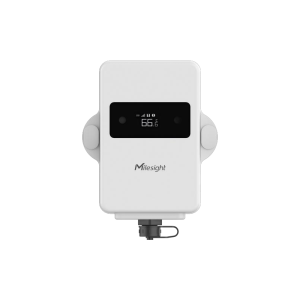
Milesight TS602 Cellular Temperature Sensor
TS602-L0DEU
£89.78 ex VAT (£107.74 inc. VAT)
Connector Type / Number5-pin M12 A-Coded Male Connector — 1 × connector for an external TH / DS18B20 / PT100 probe (the TS601 has no connector and uses a built-in sensor)
View the TS602-L0DEUSpecification comparison
| Specification | TS601-L0DEU | TS602-L0DEU |
|---|---|---|
| Advanced Features | Threshold Alarm, Data Storage (5,000 entries), Data Retransmission; NFC configuration; flight mode | Threshold Alarm, Data Storage (5,000 entries), Data Retransmission |
| Base Station Positioning | Longitude/Latitude; typ. deviation 1 km, max deviation 5 km on urban main roads | Longitude/Latitude; on urban main roads Typ. Deviation 1 km, Max Deviation 5 km |
| Connector Type | None on TS601 — the 5-pin M12 A-coded male connector for TH/DS18B20/PT100 probes is TS602 only | 5-pin M12 A-Coded Male Connector |
| Device Position | Status Normal/Tilt; measurement range -90° to +90° on all X, Y, Z axes (3-axis accelerometer) | Status Normal/Tilt; Measurement Range -90° to +90° on all X, Y, Z axes (3-axis accelerometer) |
| Frequency | LTE-FDD: B1/B3/B5/B7/B8/B20/B28 for EMEA + Australia/New Zealand | LTE-FDD: B1/B3/B5/B7/B8/B20/B28 for EMEA+Australia/New Zealand |
| Min. Packet Transmission Interval | 30 min @ operating temperature ≤0°C; 15 min @ operating temperature >0°C | 30 min @ Operating Temperature ≤ 0°C; 15 min @ Operating Temperature > 0°C |
| Power Supply | 2 × 2500 mAh CR18505 Li-MnO2 batteries; 1 × Type-C port (internal) for power supply | 2 × 2500 mAh CR18505 Li-MnO2 Batteries |
| SIM Slot | 1 × Nano SIM (4FF) slot, 1.8V/3V | 1 × Nano SIM (4FF) Slot, 1.8V/3V |
| Screen | None on TS601 — the 0.96-inch OLED is TS602 only | 0.96-inch OLED (TS601: none — it has a status LED instead) |
| Battery Life | MQTT/TCP around 4.8 years, AWS around 3.9 years, UDP around 5.1 years (6 reports/day, 8 packages per report, 30-min collection interval, positioning disabled, -20°C) | — |
| Battery Life (6 reports/day, 8 packages per report, 30-min collection interval, positioning disabled, -20°C) | — | MQTT/TCP - Around 4.2 Years; AWS - Around 3.5 Years; UDP - Around 4.6 Years |
| Connector Number | — | 1 × Connector for TH/DS18B20/PT100 Sensor |
| Enclosure / Environment | IP67; ABS+PC (food-grade), White; operating temperature -35°C to 70°C; 112 × 72 × 29 mm; 192 g with batteries | — |
| Housing / Weight / Dimension | — | ABS+PC (Food-grade), White; 200g with batteries; 112 × 72 × 29 mm |
| Humidity Accuracy | Typ. ±2% RH; resolution 0.1% RH | — |
| Humidity Range | 0% to 100% RH | — |
| LED | 1 × Status Indicator (TS601 only) for device status and threshold alarms | — |
| Light | — | Range 0 to 600 Lux; Status Light/Dark (cargo box opening detection) |
| Light Sensor | 0 to 600 Lux, status Light/Dark (cargo box opening detection and alarm) | — |
| Operating Temperature / Humidity / IP | — | -35°C to 70°C; 0% - 95% RH (non-condensing); IP67 |
| Optional DS18B20 probe | — | SP12-125-150: -40°C ~ 125°C, ±0.5°C (-10°C~85°C), ±2°C (-40°C~-10°C, 85°C~125°C); drift Typ. ±0.2°C |
| Optional PT100 probes | — | Regular SP11-B05-125-200: -40°C ~ 125°C, Class B, ±0.5°C (-40°C~40°C) / ±1°C (40°C~125°C). Food Applications SP11-AF10-125-150: -40°C ~ 125°C, Class A, ±0.4°C. Low Temperature SP11-A03-050-150: -200°C ~ 50°C, Class A. Industrial SP11-A05-500-150: -50°C ~ 500°C, Class A |
| Optional TH probe | — | SP13-125-150: Temperature -40°C ~ 125°C (±0.3/±0.2/±0.5°C by band); Humidity 0% RH ~ 100% RH, ±2% RH; drift Typ. 0.03°C/year |
| Temperature / Humidity sensing | — | Refer to Optional Sensors — measurement is made by the external probe (the TS601 uses a built-in Digital CMOSens® MEMS sensor) |
| Temperature Accuracy | Typ. ±0.3°C (-35°C to 0°C), ±0.2°C (0°C to 65°C), ±0.5°C (65°C to 70°C) | — |
| Temperature Range | -35°C to +70°C (integrated digital CMOSens MEMS sensor) | — |
| Temperature Resolution | Report: 0.01°C, Display: 0.1°C | — |
| Wireless Technology | — | LTE Cat.1 |
| Wireless Transmission Technology | LTE Cat.1 | — |
| Application Mode | TCP/UDP/MQTT/AWS/Milesight Development Platform | TCP/UDP/MQTT/AWS/Milesight Development Platform |
Specifications taken from the manufacturer datasheets. Rows where the models are identical are dimmed. Prices are ex VAT and read live from the catalogue.
Frequently asked questions
Do the TS601 and TS602 need a LoRaWAN gateway?
No. Both are LTE Cat.1 cellular devices with a Nano SIM slot, covering LTE-FDD B1/B3/B5/B7/B8/B20/B28 for EMEA. They report over the mobile network to TCP, UDP, MQTT, AWS or the Milesight Development Platform, so there is no gateway and no LoRaWAN coverage to plan. The trade is a SIM and a data plan for every device.
What temperature range can the TS602 measure?
It depends entirely on the probe, because the TS602 has no built-in sensing element. The low temperature PT100 probe covers -200 degC to 50 degC and the industrial PT100 covers -50 degC to 500 degC, with regular, food-grade, DS18B20 and combined temperature and humidity options between. The TS601, by contrast, is fixed at -35 degC to +70 degC on its built-in sensor.
Which has a screen?
The TS602, a 0.96-inch OLED. The TS601 has a status indicator LED instead, for device status and threshold alarms. If someone needs to read the temperature standing in front of the unit, during a delivery check or an audit, that is the TS602.
How often can they report?
The minimum packet transmission interval is 15 minutes when the operating temperature is above 0 degC and 30 minutes at or below 0 degC, on both models. That lower limit is worth checking against your monitoring requirement before ordering, particularly for frozen applications where the 30 minute floor applies.
How long does the battery last?
On two 2500 mAh CR18505 cells at six reports a day with an eight-package report, a 30 minute collection interval, positioning disabled and -20 degC: the TS601 is quoted at around 4.8 years on MQTT or TCP, 5.1 on UDP and 3.9 on AWS. The TS602 is quoted at around 4.2, 4.6 and 3.5 respectively. Enabling positioning shortens both.