Desk occupancy sensor without a subscription: VS340, VS321 or VS370?
Short answer: An occupancy sensor without subscription means buying the hardware outright and reporting to a server you control, rather than renting a per-desk-per-month platform. The Milesight VS340 covers one desk or seat each, the VS321 covers a bank of desks from the ceiling and adds a headcount, and the VS370 answers whether a room is in use at all. None of the three is a workplace analytics service, and the UG63 gateway carries an embedded network server for up to 20 devices.
Which occupancy sensor should I buy if I do not want a monthly fee?
Choose the VS340 if you need to know which specific desk is free. Its PIR detects within 1 m across 107 by 107 degrees, making it a one-per-desk device; interchangeable covers reshape the field at 70 cm height, from 1 m x 0.9 m for a single desk to 1.8 m x 1.8 m for a round table. Recognition is up to 95%, and it is the cheapest of the four.
Choose the VS321 if you are covering an open-plan bank of desks from above and want people counting. Mounted at 2.4 m to 4 m it gives an effective detection range of 6.0 m x 11.0 m at 4 m (optimal 4.6 m x 8.7 m), switches between people counting and desk occupancy modes and adds temperature, humidity and light. One VS321 costs less than three VS340s, so it wins once it replaces three or more.
Choose the VS370 if the real question is whether a room is in use, not whether desk 14 is free. It pairs 24 GHz millimetre-wave radar with PIR, detecting movement at 7.5 m and slight movement at 4.8 m across 150 degrees, at up to 99% recognition, so someone sitting almost still still registers.
Choose the UG63 if you have no LoRaWAN coverage yet. This is the part that replaces the subscription: 8 half-duplex channels on an SX1302, around 2000 Class A/B/C devices, an embedded network server for up to 20 of them, and an ordinary 10/100 Ethernet WAN port.
Is a desk occupancy sensor the same as a desk booking platform?
No. The VS340, VS321 and VS370 are sensors: their datasheets specify radios, batteries and detection geometry, with no hosted dashboard, no user seat and no per-desk licence, because no software product is attached. They report over LoRaWAN to whichever network server you point them at; the UG63’s compatibility list names The Things Stack, ChirpStack and AWS IoT Core alongside its own embedded server.
The VS321 is not a CCTV camera: it needs 50 lux of illumination to work, but Milesight states that no images are collected. The VS370 is not a desk sensor: 7.5 m of radar across 150 degrees covers a room, so it cannot say which desk inside it is taken. The specs do not separate the VS340 and VS321 on accuracy, both quoted at up to 95%, so choose on coverage and mounting.
What do you buy once, and what runs out?
The arithmetic is one gateway plus one sensor per desk for the VS340, or one gateway plus one ceiling unit per bank for the VS321. UK sites use the EU868 band; all four here are 868M variants. What runs out is batteries, not credit: around 5 years for the VS340 at 100 triggers a day, 7.5 to 11.3 for the VS321 and 5.3 to 6.7 for the VS370, on test conditions that differ between datasheets and are not directly comparable. Every device here is IP30, so an occupancy sensor without subscription is still indoor-only equipment.

Milesight VS340 / VS341 Desk & Seat Occupancy Sensor – VS340-868M (PIR)
VS340-868M
£43.39 ex VAT (£52.07 inc. VAT)
View the VS340-868M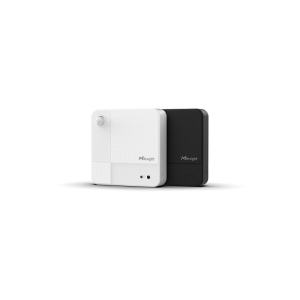
Milesight VS321 AI Workplace Occupancy Sensor
VS321-868M
£124.20 ex VAT (£149.04 inc. VAT)
Installation height / effective detection range2.4 m ~ 4 m; 6.0 m × 11.0 m effective range at 4 m
View the VS321-868M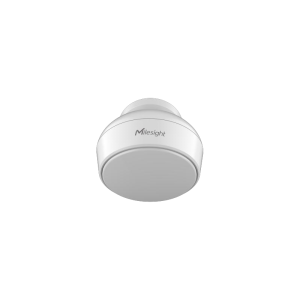
Milesight VS370 Radar Human Presence Sensor
VS370-868M
£74.82 ex VAT (£89.78 inc. VAT)
Radar detection distanceMovement 7.5 m, slight movement 4.8 m, across a 150° detection angle
View the VS370-868MMilesight UG63 Mini LoRaWAN® Gateway – External antenna-UG63-868M
UG63-868M
£98.76 ex VAT (£118.51 inc. VAT)
View the UG63-868MSpecification comparison
| Specification | VS340-868M | VS321-868M | VS370-868M | UG63-868M |
|---|---|---|---|---|
| Advanced features | — | D2D controller, data storage (2045 entries), data retransmission, data retrievability, threshold alarm, hibernate mode | Milesight D2D controller, hibernate time setting, sensitivity setting, FUOTA | — |
| Approvals | — | CE, FCC; RoHS (planned) | CE, FCC | — |
| Battery life | — | Around 11.3 years (SF7, EU868); around 7.5 years (SF10, EU868 & US915) — 8 h/day, 5-min interval, 25°C | Around 6.7 years (SF7, EU868 & US915); around 5.3 years (SF10, EU868) at 50 triggers per day, 25°C | — |
| Configuration | — | Bluetooth | Mobile app via NFC or Bluetooth, Downlink | — |
| Frequency | — | CN470/IN865/RU864/EU868/US915/AU915/KR920/AS923-1&2&3&4 | CN470/IN865/EU868/RU864/US915/AU915/KR920/AS923-1&2&3&4 | — |
| Ingress protection | — | IP30 | IP30 | — |
| Installation | — | Ceiling mounting (screws or adhesive backed fixed) | Wall mounting via magnetic bracket (additional 30° deflection angle) | — |
| Operating temperature | — | 0°C ~ +30°C | 0°C ~ 30°C, 0-95% RH non-condensing | — |
| Power supply | — | 4 × 2700 mAh ER14505 Li-SOCl2 replaceable batteries | 2 × 2700 mAh ER14505 Li-SOCl2 batteries | — |
| Protocol | — | LoRaWAN®, Milesight D2D | LoRaWAN®, Milesight D2D | — |
| Detection accuracy | — | Up to 95% (tested within optimal detection range) | — | — |
| Dimensions | — | 100 × 100 × 26 mm (3.94 × 3.94 × 1.02 in) | — | — |
| Dimensions & weight | — | — | Ф70 × 48.5 mm; body 89.6 g, magnetic bracket 38.2 g | — |
| Field of view | — | 129° horizontal, 93° vertical | — | — |
| Humidity range / accuracy | — | 0 ~ 100 %RH, ±2.5 %RH, resolution 0.5 %RH | — | — |
| Installation height | — | 2.4 m ~ 4 m | — | — |
| Light sensor | — | Photodiode, Bright/Dim status | — | — |
| Light status | — | — | Bright/Dim | — |
| LoRaWAN mode | — | — | OTAA/ABP Class A | — |
| Measurement | — | People counting & occupancy detection | — | — |
| PIR detection area | — | Radius 4 m (15°C, 3 m installation height) | — | — |
| PIR detection area / distance | — | — | 110°; within 7 m | — |
| PIR measuring angle | — | 115° | — | — |
| Radar Tx power | — | — | 5 dBm | — |
| Radar detection angle | — | — | 150° | — |
| Radar detection distance | — | — | Movement 7.5 m; slight movement 4.8 m | — |
| Radar frequency | — | — | 24 GHz | — |
| Recognition rate | — | — | Up to 99% | — |
| Required illumination | — | 50 Lux | — | — |
| Sensitivity | — | -137 dBm @300bps | — | — |
| Technology | — | — | Millimetre wave radar & PIR | — |
| Temperature range / accuracy | — | -40°C ~ 125°C, ±1°C, resolution 0.1°C | — | — |
| Tx power | — | 16 dBm (868 MHz) | — | — |
| Tx power / sensitivity | — | — | 16 dBm (868 MHz) / 20 dBm (915 MHz) / 19 dBm (470 MHz); -137 dBm @300bps | — |
| Weight | — | 145 g (batteries excluded) | — | — |
| Work mode | — | OTAA/ABP Class A | — | — |
Specifications taken from the manufacturer datasheets. Rows where the models are identical are dimmed. Prices are ex VAT and read live from the catalogue.
Frequently asked questions
Do these desk occupancy sensors need a monthly subscription?
The hardware does not. The VS340, VS321 and VS370 are LoRaWAN sensors bought outright, with no dashboard or per-desk licence attached. The UG63 gateway includes an embedded network server for up to 20 devices, so a small deployment needs no external service; larger ones forward packets to a network server of your choice, and the UG63's compatibility list names The Things Stack, ChirpStack and AWS IoT Core.
How many desks does one VS321 cover?
The datasheet quotes an effective detection range of 6.0 m x 11.0 m at a 4 m mounting height, with an optimal range of 4.6 m x 8.7 m, from an installation height of 2.4 m to 4 m and a 129 by 93 degree field of view. It states an area, not a desk count, so the number of desks depends on your desk pitch.
Can one VS340 cover two desks?
Its PIR detection distance is within 1 m, and the interchangeable covers include a 70 by 107 degree option giving 1 m x 1.8 m at 70 cm height, which Milesight specifies for face-to-face desks. That layout is supported, but the VS340 reports a single occupancy state for the area it sees rather than one per seat.
Do these sensors work in a dark office?
The VS321 lists a required illumination of 50 Lux, so it needs light. The VS340's PIR and the VS370's 24 GHz radar plus PIR carry no stated illumination requirement; the VS370 additionally reports a Bright/Dim light status.
Do I still need the UG63 if I already have LoRaWAN coverage?
No. All three sensors are OTAA/ABP Class A devices on EU868, the band used in the UK, so if an existing gateway already covers the area you only need the sensors. The UG63 is for sites with no coverage: 8 half-duplex channels, around 2000 Class A/B/C devices, powered by USB Type-C, DC or an 802.3af PoE splitter.