WS303 vs EM300-SLD vs EM300-ZLD vs EM300-MLD: which LoRaWAN leak detection sensor do I need?
Short answer: Choose the Milesight WS303 for a small self-contained floor detector that alarms at 0.5 mm of water and has its own buzzer. Choose the EM300-SLD when the probe needs to sit on a 1.5 m cable away from the radio, and you also want temperature and humidity from the same device. Choose the EM300-ZLD when the leak could appear anywhere along a run, because its 3 m sensing cable detects along its whole length. Choose the EM300-MLD when liquid spreads as a thin film rather than pooling, because it detects across a 400 × 400 mm printed membrane. All four are LoRaWAN Class A and support EU868, the band used in the UK.
Which Milesight LoRaWAN leak detection sensor do I need?
Choose the WS303 if you are putting a detector under a sink, a boiler, a washing machine or a pipework run where water will pool on the floor and people are usually nearby. It is 63 × 63 × 14 mm, mounts with 3M tape or simply sits on a surface, and its probe is part of the body. It triggers once conductive liquid reaches 0.5 mm — the most sensitive trigger of the four — and it is the only one of the four with a built-in buzzer, so it makes a noise locally as well as sending an uplink. It is also the cheapest of the four.
Choose the EM300-SLD if the wet spot and the sensible place for the radio are not the same place: a floor void, inside a plinth, behind a tank. The stainless steel 316 probe sits on a 1.5 m cable (customisable) and alarms when liquid reaches 5 mm at the probe, while the transceiver mounts on a wall where the signal is better. It also reports temperature from -30°C to +70°C (±0.3°C over 0 to +70°C) and humidity from 0% to 100% RH.
Choose the EM300-ZLD if you cannot say in advance where the water will appear — along a chilled-water route, around a plant-room perimeter, down a raised-floor aisle. Its 3 m sensing cable (customisable) detects conductive liquid anywhere along its length at the same 5 mm trigger, so you are covering a route rather than a point. Its enclosure is listed as UV-resistant, and like the SLD it reports temperature and humidity. It is the most expensive of the four.
Choose the EM300-MLD if liquid will spread thinly across a surface instead of collecting in a puddle — under a rooftop unit, across a flat plant deck, beneath a shallow tray. It senses across a 400 × 400 × 0.25 mm printed leakage-detecting film (size customisable) on a 1 m cable, and triggers once the soaked length exceeds 1.5 cm. Its datasheet also lists weak acids and weak bases, not just water.
Spot, zone and membrane: what is the actual difference?
All three EM300 models use the same conductive-liquid principle and the same 105.6 × 85.3 × 27 mm transceiver. What changes is the shape of the part that gets wet:
- EM300-SLD — a point. One probe, on a 1.5 m cable.
- EM300-ZLD — a line. A 3 m sensing cable, live along its whole length.
- EM300-MLD — a surface. A 400 × 400 mm film.
Match that shape to the shape of the leak you are worried about, not to the size of the room. And note the disambiguation that catches most buyers: a zone sensor is not a leak-location system. The EM300-ZLD reports that liquid has reached 5 mm somewhere along its cable; nothing in its specification reports where along the cable that happened. If you need position, you use more zones, not a longer cable. Equally, the WS303 is not a remote-probe sensor — its probe is integral to the body, so the unit itself must sit at the low point. If the radio needs to be drier or higher than the water, that is the EM300-SLD.
Will it survive outside a heated room, and how long does the battery last?
The WS303 is rated -10°C to +60°C and runs around 5.7 years on one replaceable 590 mAh CR2450 cell, quoted at one hour of leakage per week at 25°C. The three EM300 models are rated -30°C to +70°C and take a 4000 mAh ER18505 Li-SOCl2 cell, with an 8000 mAh option. Milesight quotes over 10 years at SF7 on EU868 for the SLD and ZLD, and around 10 years for the MLD, falling to roughly 5.3 to 5.6 years at SF10. A weak or obstructed link to the gateway forces the higher spreading factor, so a marginal LoRaWAN leak detection installation roughly halves those figures. All four are IP67 and configured by NFC from a mobile app or by downlink.
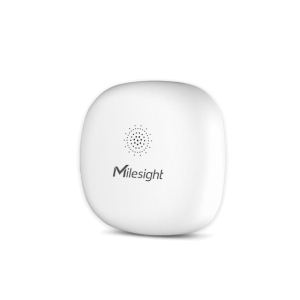
Milesight WS303 Mini Leak Detection Sensor
WS303-868M
£41.90 ex VAT (£50.28 inc. VAT)
Trigger ConditionOnce liquid level reaches 0.5 mm
View the WS303-868M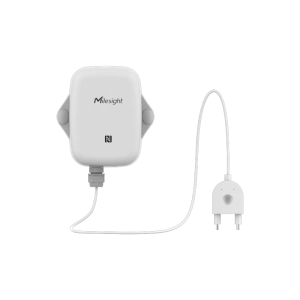
Milesight EM300-SLD Spot Leak Detection Sensor
EM300-SLD-868M
£53.87 ex VAT (£64.64 inc. VAT)
Leak trigger conditionWhen liquid level reaches 5 mm at the probe
View the EM300-SLD-868M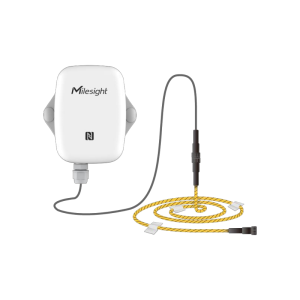
Milesight EM300-ZLD Zone Leak Detection Sensor
EM300-ZLD-868M
£71.82 ex VAT (£86.18 inc. VAT)
Sensing cable length3 m (customizable), alarm when liquid level reaches 5 mm
View the EM300-ZLD-868M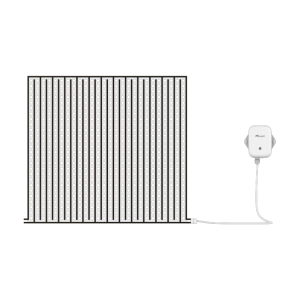
Milesight EM300-MLD Membrane Leakage Detection Sensor
EM300-MLD-868M
£62.85 ex VAT (£75.42 inc. VAT)
Trigger media (detection membrane)400 × 400 × 0.25 mm printed leakage-detecting film (size customisable)
View the EM300-MLD-868MSpecification comparison
| Specification | WS303-868M | EM300-SLD-868M | EM300-ZLD-868M | EM300-MLD-868M |
|---|---|---|---|---|
| Advanced Features | Milesight D2D controller, water leakage alarm | Threshold alarm, Milesight D2D controller, data storage (2,800 entries), data retransmission, data retrievability | Threshold alarm, Milesight D2D controller, data storage (2,800 entries), data retransmission, data retrievability | Water leakage alarm, Milesight D2D controller, data storage (1,000 entries), data retransmission, data retrievability |
| Approvals | CE, FCC; RoHS | CE, FCC, ISED, RCM, Telec, ICASA; RoHS | CE, FCC, ISED, RCM, Telec, ICASA; RoHS | CE, FCC, ISED |
| Configuration | Mobile app via NFC, or downlink | NFC via mobile app, downlink | NFC via mobile app, downlink | NFC via mobile app, downlink |
| Dimensions | 63 × 63 × 14 mm | 105.6 × 85.3 × 27 mm (4.16 × 3.36 × 1.06 in) | 105.6 × 85.3 × 27 mm (4.16 × 3.36 × 1.06 in) | 105.6 × 85.3 × 27 mm (4.16 × 3.36 × 1.06 in) |
| Ingress Protection | IP67 | IP67 | IP67, UV-resistant enclosure | IP67 |
| Installation | 3M tape mounting, desktop | Transceiver: wall screw, 3M tape or cable-tie mounting; sensor probe: wall screw or 3M tape mounting | Transceiver: wall screw, 3M tape or cable tie. Cable: 3M tape or cable tie | Transceiver: wall screw, 3M tape or cable-tie mounting; film: 3M tape mounting |
| Liquid Type | Conductive liquid | Conducting liquid | Conducting liquid | Conductive liquid (water, weak acid, weak base, etc.) |
| Operating Temperature | -10°C to +60°C | -30°C to +70°C | -30°C to +70°C | -30°C~70°C |
| Power Supply | 1 × 590 mAh CR2450 lithium battery (replaceable) | 1 × 4000 mAh ER18505 Li-SOCl2 battery (8000 mAh version optional) | 1 × 4000 mAh ER18505 Li-SOCl2 battery (8000 mAh version optional) | 1 × 4000 mAh ER18505 Li-SOCl2 battery (8000 mAh version optional) |
| Relative Humidity | 0% to 100% (non-condensing) | 0% to 100% (non-condensing) | 0% to 100% (non-condensing) | 0% to 95% (non-condensing) |
| Trigger Condition | Once liquid level reaches 0.5 mm | When liquid level reaches 5 mm | When liquid level reaches 5 mm | Soaking liquid length > 1.5 cm |
| Antenna | Internal antenna | Internal antenna | — | Internal antenna |
| Mode | OTAA/ABP Class A | OTAA/ABP Class A | — | OTAA/ABP Class A |
| Technology | LoRaWAN®, Milesight D2D | LoRaWAN®, Milesight D2D | — | LoRaWAN®, Milesight D2D |
| Battery Life | Around 5.7 years (one hour leakage per week, 25°C) | Over 10 years (SF7, EU868 & US915); around 5.6 years (SF10, EU868) at 10 min interval + 24 triggers per day | — | — |
| Housing | — | Transceiver: ABS + PC (flame retardant), white; sensor probe: stainless steel 316, white & silver | Transceiver ABS + PC (flame retardant), white; sensing cable PE + steel wire, yellow & black | — |
| Humidity accuracy | — | 10% to 90% RH (±3%), below 10% and above 90% RH (±5%) | ±3% (10~90% RH); ±5% below 10% and above 90% RH | — |
| Humidity range | — | 0% to 100% RH | 0% to 100% RH, resolution 0.5% RH | — |
| Temperature accuracy | — | 0°C to +70°C (±0.3°C), -30°C to 0°C (±0.6°C) | ±0.3°C (0 to +70°C); ±0.6°C (-30 to 0°C) | — |
| Temperature range | — | -30°C to +70°C | -30°C to +70°C, resolution 0.1°C | — |
| Weight | 36.4 g (battery included), 29.8 g (battery excluded) | — | — | 142 g (with 1 battery) |
| Battery Life (one hour leakage per day, 25°C) | — | — | — | Around 10 years (SF7, EU868 & US915); around 5.3 years (SF10, EU868) |
| Battery life (10 min interval + 24 triggers/day) | — | — | Over 10 years (SF7, EU868 & US915); around 5.6 years (SF10, EU868) | — |
| Cable Length | — | — | — | 1000 mm (customisable) |
| Colour & Material | — | — | — | White, ABS + PC (flame retardant) |
| Detection method | — | — | Conductive principle via sensing cable | — |
| Humidity resolution | — | 0.5% RH | — | — |
| LoRaWAN mode | — | — | OTAA/ABP Class A | — |
| Local Alarm | Built-in buzzer | — | — | — |
| Material & Colour | ABS+PC, White | — | — | — |
| Probe cable length | — | 1.5 m (customizable) | — | — |
| Sensing cable | — | — | 3 m (customizable) | — |
| Temperature resolution | — | 0.1°C | — | — |
| Trigger Media | — | — | — | 400 × 400 × 0.25 mm printed leakage-detecting film (size customisable) |
| Wireless technology | — | — | LoRaWAN®, Milesight D2D; internal antenna | — |
| Frequency | CN470/IN865/RU864/EU868/US915/AU915/KR920/AS923-1&2&3&4 | CN470/IN865/RU864/EU868/US915/AU915/KR920/AS923-1&2&3&4 | CN470/IN865/RU864/EU868/US915/AU915/KR920/AS923-1&2&3&4 | CN470/IN865/RU864/EU868/US915/AU915/KR920/AS923-1&2&3&4 |
| Sensitivity | -137 dBm @300bps | -137 dBm @300bps | -137 dBm @300bps | -137 dBm @300bps |
| Tx Power | 16 dBm (868 MHz)/20 dBm (915 MHz)/19 dBm (470 MHz) | 16 dBm (868 MHz)/20 dBm (915 MHz)/19 dBm (470 MHz) | 16 dBm (868 MHz)/20 dBm (915 MHz)/19 dBm (470 MHz) | 16 dBm (868 MHz)/20 dBm (915 MHz)/19 dBm (470 MHz) |
Specifications taken from the manufacturer datasheets. Rows where the models are identical are dimmed. Prices are ex VAT and read live from the catalogue.
Frequently asked questions
Do these leak sensors work on UK LoRaWAN networks?
Yes. All four list EU868 among their supported frequencies, which is the LoRaWAN band used in the UK, and all four operate as OTAA/ABP Class A devices with an internal antenna, 16 dBm Tx power at 868 MHz and -137 dBm sensitivity at 300 bps.
Which one alarms at the smallest amount of water?
The WS303, which triggers once conductive liquid reaches 0.5 mm at its probe. The EM300-SLD and EM300-ZLD both trigger at 5 mm. The EM300-MLD works differently again: it triggers when the soaked length across its membrane exceeds 1.5 cm, rather than on a depth of liquid.
Can they detect oil, fuel or other non-conductive liquids?
No. All four are specified for conductive liquid only — the EM300-MLD datasheet names water, weak acid and weak base as examples. Non-conductive liquids such as oils and fuels are outside what these datasheets claim, so do not specify them for that duty.
Which of the four also measure temperature and humidity?
The EM300-SLD and EM300-ZLD. Both report temperature from -30°C to +70°C at 0.1°C resolution and humidity from 0% to 100% RH at 0.5% RH resolution, alongside the leak alarm. The WS303 and EM300-MLD specifications list no temperature or humidity measurement — their temperature and humidity figures are operating limits, not readings.
Can the probe, cable or membrane lengths be changed?
Yes, all three EM300 models list a customisable sensing element: the EM300-SLD's 1.5 m probe cable, the EM300-ZLD's 3 m sensing cable, and the EM300-MLD's 1000 mm cable and 400 × 400 mm film size. The WS303 has no cable at all — its probe is built into the 63 × 63 × 14 mm body.