IoT Flood Monitoring: A Practical UK Guide for 2026
Last updated: 1 July 2026
TL;DR: IoT flood monitoring uses battery-powered water-level sensors, rain gauges and flow meters that report over low-power radio to a central dashboard, giving early warning of rising water. In the UK, where 6.3 million properties sit in areas at risk of flooding, these systems cut response times, protect assets and integrate cleanly with SCADA. This guide covers sensors, LoRaWAN deployment, UK flood risk, alerts and cost.

On this page
- How does an IoT flood monitoring system work?
- What sensors are used in IoT flood monitoring?
- What is the LoRaWAN range and battery life for flood sensors?
- How bad is the UK flood-risk picture?
- What is the difference between a flood alert and a flood warning?
- How do IoT flood sensors integrate with SCADA and telemetry?
- What does an IoT flood monitoring system cost, and what is the ROI?
- A short deployment checklist
- Frequently asked questions
Flooding is the most widespread natural hazard facing the UK, and it is getting worse. Traditional gauging networks are sparse, expensive to maintain and slow to alert. IoT flood monitoring closes that gap with dense, low-cost, battery-powered sensors that watch water levels in real time and push readings to the people who need them. This guide explains, in plain terms, how the technology works, which sensors to specify, how far LoRaWAN really reaches, and what a UK deployment costs. If you manage a water network, a highway, a business park or a critical site, this is the practical primer.
How does an IoT flood monitoring system work?
An IoT flood monitoring system pairs field sensors with wireless connectivity and a dashboard. Sensors measure water level, rainfall or flow at the site, transmit those readings over a low-power network to a gateway, and the gateway forwards data to a server where thresholds trigger alerts. The whole chain runs on batteries and needs no mains power.
The architecture has four layers. First, the sensing layer: devices mounted on bridges, culverts, riverbanks or drainage assets take readings every few minutes. Second, the connectivity layer: a gateway aggregates traffic from many sensors and backhauls it over cellular or Ethernet. Third, the platform layer: a cloud or on-premises server stores readings, applies rules and manages the fleet.
Fourth, the application layer: dashboards, SMS alerts and API feeds that turn data into decisions. Because each sensor is autonomous and cheap, you can deploy dozens across a catchment rather than relying on a handful of expensive stations. That density is the whole point: floods are local, and dense sensing catches them early. You can see how we structure this in our flood and environment solution.

What sensors are used in IoT flood monitoring?
The core sensor measures water level. The main types are ultrasonic and radar distance sensors mounted above the water, pressure and float sensors placed in the water, rain gauges that count rainfall, and flow meters for pipes and channels. Radar is the most robust for exposed outdoor sites because it ignores fog, debris and temperature swings.
Ultrasonic level sensors are affordable and accurate but can drift in heavy rain or fog. Radar level sensors, such as the EM410-RDL radar distance sensor we stock, fire microwaves at the water surface and are unaffected by weather, making them the reliable default for rivers, culverts and reservoirs. Submersible pressure transducers sit on the bed and infer depth from hydrostatic pressure, which suits boreholes and stilling wells.
Tipping-bucket rain gauges give the upstream signal that predicts a rise before the river responds. Flow meters matter in managed drainage and combined sewers, where velocity, not just level, tells you whether an asset is about to surcharge. Most real deployments combine two or three: a radar level sensor at the asset, a rain gauge upstream, and a flow meter where discharge is regulated. Specifying the right mix is where deployment experience pays off, and it is central to our work with utilities and water networks.
What is the LoRaWAN range and battery life for flood sensors?
LoRaWAN is the dominant radio for flood monitoring because it trades bandwidth for range and battery life. A single gateway reaches roughly 5 to 15 km in rural areas and 2 to 5 km in towns, and a water-level sensor can run for years on one battery. That combination lets you cover a whole catchment from one or two gateways with almost no maintenance.
On range, independent testing puts LoRaWAN at roughly 5 to 15 km in rural settings and 2 to 5 km in urban ones from a single gateway, which is why rural river catchments suit it so well. On endurance, purpose-built LoRaWAN water-level sensors can run for 8 to 12 years on one battery because they wake, transmit a tiny packet and sleep again.
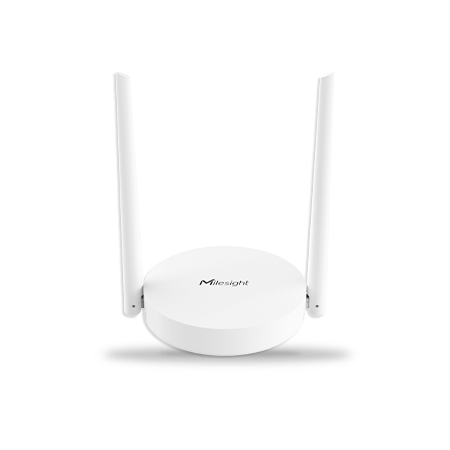
In practice you place a gateway on a mast, a tall building or a water tower, then scatter sensors across the surrounding catchment. A compact unit like the UG63 mini LoRaWAN gateway is enough for many sites. Where a location has no clear line of sight to a gateway, cellular NB-IoT sensors are the fallback, and mixed LoRaWAN plus NB-IoT estates are common.
How bad is the UK flood-risk picture?
The UK flood-risk picture is severe and worsening. The Environment Agency now counts millions of properties at risk from rivers, sea and surface water, with the surface-water threat rising fastest as rainfall intensifies. Climate projections push the exposed total higher still by mid-century, making dense, early-warning monitoring a sensible investment rather than a luxury.
The numbers are stark. The Environment Agency’s 2024 assessment found that 6.3 million properties in England are in areas at risk of flooding, up from 5.5 million in 2018. Of those, 4.6 million properties are at risk from surface water flooding, a 43% rise on earlier figures, and the same assessment warns that 1 in 4 properties, around 8 million, could be at flood risk by mid-century.
The economic toll is just as heavy: surface-water flooding causes about £1.2 billion in average annual damage, with rivers and sea adding roughly £1.1 billion. Single events dwarf even those figures: the 2007 summer floods cost the UK economy £3.2 billion. Against that backdrop, sensors that buy hours of warning pay for themselves quickly.
What is the difference between a flood alert and a flood warning?
In the UK, a flood alert means flooding is possible and you should be prepared, while a flood warning means flooding is expected and you should act now. A severe flood warning means there is danger to life. The Environment Agency issues these through its national service, and IoT sensors give sites their own earlier, local trigger on top of it.
The distinction matters operationally. A flood alert is the amber signal to check pumps, move stock and brief staff. A flood warning is the red signal to deploy barriers, shut down assets and evacuate if needed. The Environment Agency aims to give around 2 hours of warning on rivers and up to 6 hours for tidal and coastal locations, but those windows are catchment-wide averages.
A private flood monitoring network gives you a site-specific trigger that can fire earlier than the regional service, because your sensor sits on your asset and watches your water. Many operators run both: they subscribe to the national feed for context and rely on their own telemetry for the precise, local call to act. That layered approach is what turns a warning into a saved building.

How do IoT flood sensors integrate with SCADA and telemetry?
IoT flood sensors integrate with SCADA through standard industrial protocols and APIs. Gateway data is decoded and passed to the SCADA system over MQTT, Modbus or a REST API, appearing as live tags alongside pumps, valves and alarms. From there it can drive automated responses, trend displays and the same control screens operators already use.
For water utilities and infrastructure operators, this is the decisive feature. A sensor reading is only useful if it lands where decisions are made. Modern IoT platforms expose data over MQTT and REST, which SCADA and telemetry systems ingest natively, so a rising level can automatically start a pump, close a penstock or raise an alarm without a human in the loop. Historian integration means every reading is logged for compliance and post-event analysis, and dashboards such as Power BI turn the raw feed into maps and trends.
A real London deployment did exactly this: 14 NB-IoT sensor sites across Kingston and Sutton fed a Power BI dashboard for the boroughs. The same integration pattern applies whether your back end is a national SCADA estate or a single site controller.
What does an IoT flood monitoring system cost, and what is the ROI?
A basic flood monitoring deployment costs less than most people expect. Sensors run from a few hundred pounds each, one gateway serves many sensors, and running costs are low because the hardware is battery-powered and licence-free on LoRaWAN. Against flood damage measured in thousands to millions of pounds per event, the payback is usually a single avoided incident.
Break the cost into three parts. Capital is sensors plus one or two gateways, a modest outlay when a gateway can cover a whole catchment. Operating cost is minimal: LoRaWAN uses unlicensed spectrum, batteries last the best part of a decade, and there is no mains wiring to install or maintain. Platform cost is a small annual subscription for hosting, dashboards and alerts.
The return is straightforward. With surface-water flooding alone driving around £1.2 billion in annual damage nationally, even a small commercial site avoiding one flood justifies the spend many times over. Add the softer gains, lower insurance premiums, protected stock, and business continuity, and the ROI case is rarely close. The question is not whether to monitor, but how densely.
A short deployment checklist
- Map the risk: identify the assets, watercourses and drainage points that matter and where water rises first.
- Choose sensors: radar level at exposed sites, pressure sensors in wells, a rain gauge upstream, flow meters on regulated discharge.
- Plan connectivity: site a gateway with line of sight to your sensors; use NB-IoT where LoRaWAN cannot reach.
- Set thresholds: define alert and action levels per site, and decide who is notified and how.
- Integrate: connect the feed to your SCADA or telemetry system via MQTT, Modbus or REST.
- Test and maintain: verify alerts end to end, check battery health, and review thresholds after each event.
Get these six steps right and you have a resilient flood early warning system that runs for years with almost no intervention.
Protect your site with IoT flood monitoring
Indiott is the UK specialist for IoT flood monitoring hardware and integration. We supply the radar level sensors, rain gauges, LoRaWAN gateways and telemetry that catch rising water early and feed it straight into your dashboards or SCADA. Explore our flood and environment solution to see how we design a network for your catchment, then request a quote and we will scope the sensors, connectivity and integration your site needs.
Frequently asked questions
How does an IoT flood monitoring system work?
Battery-powered sensors measure water level, rainfall or flow at the site and transmit readings over a low-power radio network to a gateway. The gateway backhauls data to a server that applies thresholds, sends alerts by SMS, email or dashboard, and can feed the readings into SCADA to trigger automated responses such as starting a pump.
What sensors are used in flood detection?
The main sensors are radar and ultrasonic level sensors mounted above the water, submersible pressure and float sensors placed in it, tipping-bucket rain gauges that measure rainfall upstream, and flow meters for pipes and channels. Radar is the most robust outdoors because it is unaffected by fog, debris or temperature. Most sites combine level, rainfall and flow sensing.
What is a LoRaWAN flood sensor and what is its range?
A LoRaWAN flood sensor is a water-level device that reports over the LoRaWAN low-power radio standard. A single gateway reaches roughly 5 to 15 km in rural areas and 2 to 5 km in towns, and the sensor can run 8 to 12 years on one battery. This lets one or two gateways cover an entire catchment with minimal maintenance.
What is the difference between a flood alert and a flood warning in the UK?
A flood alert means flooding is possible and you should prepare. A flood warning means flooding is expected and you should act now, moving people and property and deploying defences. A severe flood warning means danger to life. The Environment Agency issues all three nationally, and a private IoT sensor network adds an earlier, site-specific trigger on top.
Can IoT flood sensors integrate with SCADA?
Yes. Gateway data is decoded and passed to SCADA and telemetry systems over standard protocols such as MQTT, Modbus and REST, appearing as live tags beside pumps, valves and alarms. This lets a rising level automatically start a pump or raise an alarm, and logs every reading to a historian for compliance and post-event analysis.
Next step
Get a priced kit list for your site
Answer three quick questions and tell us where to send it. An engineer replies within one working day with the parts, the prices and the lead time.
Rather talk it through? Call 023 9223 3611
Received. An engineer has it.
You will hear back within one working day with the parts, the prices and the lead time. A confirmation is on its way to your inbox.
If it is urgent, call 023 9223 3611.