IoT Energy Monitoring for Commercial Buildings: A UK Practical Guide
Last updated: 1 July 2026
TL;DR: IoT energy monitoring uses wireless sensors, LoRaWAN and a cloud dashboard to measure how much electricity, gas and heat a building uses, right down to a single floor or circuit. Because the sensors clamp on and run on batteries, you can retrofit a commercial building without rewiring. Vendors report savings of 10 to 30%, and the data supports ESOS compliance and UK net zero goals.

On this page
- What it is
- How it works
- How does wireless submetering work?
- Can you retrofit without rewiring?
- How much energy can it save?
- What is the ROI and payback period?
- How does UK regulation drive it?
- Wireless vs a traditional BMS
- Frequently asked questions
What is IoT energy monitoring?
IoT energy monitoring is the practice of using connected sensors and a data platform to measure and analyse a building’s energy use in near real time. Instead of one meter and a monthly bill, you get granular, live visibility of where energy goes, so you can find waste, prove savings and meet regulation.
The stakes are large. Buildings account for 30% of global final energy consumption, and they are responsible for 27% of total energy-sector CO2 emissions. In the UK the picture is just as pointed: 25% of UK emissions are directly attributable to the built environment. For any organisation with an estate of offices, warehouses or retail sites, the building is the problem to solve, and you cannot manage what you cannot measure.
Traditional building management systems (BMS) were built for large, new-build sites with a wiring budget to match. IoT changes the economics. Low-cost wireless sensors, long battery life and open networks mean you can instrument an ageing 1990s office block for a fraction of the historic cost. That matters, because 80% of the buildings that will be occupied in 2050 already exist. The retrofit market, not the new-build market, is where most carbon savings have to come from.
How does an IoT energy monitoring system work?
An energy monitoring system has four parts: sensors that measure current, energy or environment; a LoRaWAN radio network that carries the readings; a gateway that bridges the sensors to the internet; and a dashboard that turns raw data into charts, alerts and reports. Each layer is modular, so you scale one site or a hundred.
The sensors sit at the edge. A current transformer (CT) clamp reads the load on a circuit without breaking the cable; a pulse sensor counts flashes from an existing utility meter; an environment sensor tracks temperature, humidity or CO2. These devices sample on a schedule and send tiny data packets upstream, which is why they can run for years on a single battery.
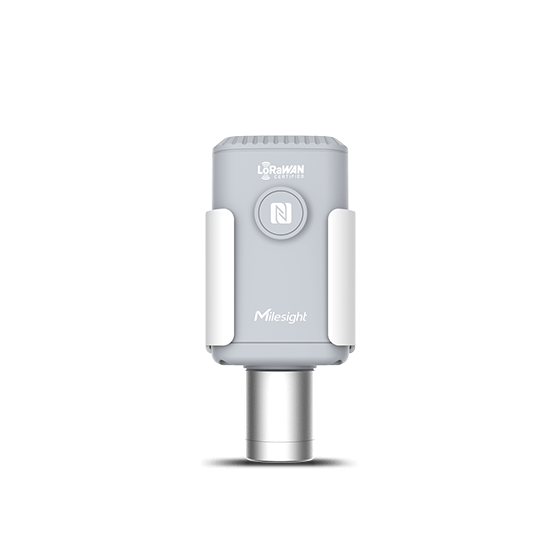
LoRaWAN is the connective tissue. It is a low-power, long-range wireless protocol designed for exactly this job: small messages, deep building penetration, and range measured in hundreds of metres indoors or kilometres outdoors. One gateway on a rooftop or in a riser can serve a whole building, so you avoid the cost of running new cable to every meter point. The gateway forwards data to a network server and then to your dashboard, where a smart buildings platform aggregates everything into one view.
The dashboard is where the raw readings become decisions. A good platform establishes a baseline for each meter, then plots load profiles across the day and week so you can see the shape of demand, not just a total. It highlights out-of-hours consumption, the energy a building draws when nobody is in it, which is almost always the fastest saving to find.
You set thresholds and receive alerts when a circuit exceeds them, so a failed timer or a plant unit stuck on is caught in days rather than at the next audit. Crucially for compliance, the same data exports cleanly to CSV, PDF or an API feed, so the numbers your facilities team watches are the numbers your finance and reporting teams submit.
How does wireless submetering work down to floor or circuit level?
Submetering means adding meters below the main incoming supply, so you can attribute energy to a floor, a tenant, a zone or a single circuit. Wireless submetering does this with clamp-on CT sensors instead of hard-wired meters, which makes it fast to deploy and easy to move as the building changes.
This granularity is where the value lives. A single building-level meter tells you that consumption is high; it cannot tell you which loads are driving it. Circuit-level energy metering and net zero data lets facilities teams pinpoint the exact loads driving cost, then act with confidence.
Granular data reliably surfaces the same recurring culprits. HVAC overlap is common, where heating and cooling run against each other in the same zone because two systems are fighting over one thermostat. Server rooms and comms cupboards run flat out around the clock, and are often over-cooled far beyond what the equipment needs. Car-park and basement ventilation frequently runs at full speed continuously when demand-based control would idle it for most of the day. And standby loads, the small draw from equipment left on overnight and at weekends, add up across an estate to a permanent tax on the bill. None of these show on a single main meter; all of them show the moment you submeter.
The benchmark for well-run buildings is stark. ENERGY STAR-certified buildings use 35% less energy than typical buildings, and the gap is rarely one big fault. It is the accumulation of many small inefficiencies that only granular submetering can surface. Wireless submetering makes those invisible costs visible, floor by floor.
Can you retrofit IoT energy monitoring without rewiring?
Yes. Retrofitting IoT energy monitoring without rewiring is the whole point of the LoRaWAN approach. Clamp-on CT sensors snap around existing cables, battery-powered devices need no mains spur, and one wireless gateway replaces kilometres of data cabling. A typical office floor can be instrumented in hours, not weeks.
The retrofit workflow is straightforward. An installer identifies the circuits or meters to monitor, clips a CT clamp around each conductor, pairs the sensor to the LoRaWAN network, and confirms readings appear on the dashboard. Because nothing is hard-wired, there is minimal disruption, no lengthy power-down, and no re-certification of the electrical installation. The same battery sensors can be relocated later when tenants move or the floor plan changes.
This flexibility extends beyond electricity. The same LoRaWAN network can carry air-quality data, so a building can add a CO2 sensor to link occupancy and ventilation with energy use, or feed a smart heating and HVAC strategy that only conditions space that is actually occupied. One network, many uses, no rewiring for any of them. That is why retrofit-first IoT is displacing the rip-and-replace BMS model for existing estates.
How much energy can you save?
Vendors report that this approach can reduce building energy consumption by 10 to 30%, depending on the starting condition and how much of the insight is acted on. The savings come not from the sensors themselves but from the behaviour and control changes the data makes possible: switching off waste, tuning schedules and catching faults early.
According to analysis from monitoring specialists, the technology can cut building energy use by 10 to 30% while automating ESG reporting. The early, cheap wins are usually the same everywhere: plant running out of hours, heating and cooling fighting each other, and equipment left on standby. Once those are fixed, continuous monitoring keeps the building honest, because energy creep returns the moment the data stops being watched.
The environmental leverage is significant at national scale. In 2025 the buildings and product-uses sector was 22% of UK net greenhouse gas emissions. Trimming even 10% from that base across a commercial portfolio is a material contribution to both a company’s cost base and its carbon reporting.
What is the ROI and payback period?
Payback on such a system typically lands within one to two years for commercial buildings, though the exact figure depends on energy prices, site size and how aggressively savings are pursued. Low hardware cost and wireless install keep the upfront spend down, while ongoing savings compound month after month.
The maths is favourable because the retrofit model removes the biggest historic cost: labour and cabling. A wireless deployment avoids the electrician days, containment and disruption of a wired BMS retrofit, so the capital outlay is modest against the annual energy bill it targets. When vendors report savings in the 10 to 30% range on commercial building energy efficiency, even the conservative end of that range usually recovers the system cost inside two heating seasons.
Beyond the direct energy saving, there is a compliance and reputational return. The same dataset that finds waste also automates the evidence needed for audits, ESG disclosure and tenant billing, work that would otherwise consume staff time. That secondary value rarely appears in a simple payback calculation but materially improves the real return.
How does UK regulation drive IoT energy monitoring?
UK regulation makes energy monitoring close to essential for large organisations. The Energy Savings Opportunity Scheme (ESOS) mandates energy audits for large undertakings, and the national net zero framework sets legally binding targets. Continuous, granular data is the cheapest way to satisfy both.
ESOS applies to large UK undertakings, and for Phase 4 the qualification date is 31 December 2026. Organisations that qualify must audit their energy use and identify savings, and a live monitoring system turns what was a periodic, consultant-heavy exercise into a standing capability. The data is already there, already granular, and already audit-ready. The same continuous dataset also underpins accurate tenant billing by attributing energy to each let area, and supplies the auditable figures that ESG and CSRD-style sustainability disclosure increasingly demand.
The bigger driver is the trajectory. The UK has legal targets of a 68% emissions cut by 2030 and net zero by 2050. Buildings are on the critical path to both, and measurement is the first step of every credible decarbonisation plan. You cannot set a reduction target, let alone prove you have hit it, without knowing where the energy goes today.
Wireless energy monitoring vs a traditional BMS
An IoT energy monitoring system uses wireless clamp-on sensors and LoRaWAN, so it retrofits in hours at low capital cost. A traditional BMS relies on hard-wired meters and cabling, which suits new-build but carries heavy install cost and disruption in an existing building. For most retrofits, wireless wins.
The difference is not only price but flexibility. A wired BMS fixes each meter in place, so re-metering after a tenant change means fresh cabling and downtime, whereas wireless sensors simply unclip and move. A modern BMS and IoT monitoring often integrate, but for adding visibility to buildings that already exist, the retrofit-first wireless model is faster and cheaper.
Energy monitoring rollout checklist
A successful rollout is methodical, not heroic. Follow a clear sequence, prove value on one site, then scale across the estate with confidence.
- Define the goal: cost reduction, ESOS evidence, tenant billing or net zero reporting. The goal shapes what you measure.
- Audit the supply: locate the main meters, key circuits and plant you want visibility of.
- Pick a pilot building that is representative of your estate.
- Survey for LoRaWAN coverage and choose gateway locations.
- Install clamp-on CT and battery sensors on priority circuits, with no rewiring.
- Connect the dashboard and set baselines, thresholds and alerts.
- Act on the first wins: out-of-hours loads, plant scheduling and standby waste.
- Report and verify savings against the baseline, then roll out to the next site.
Start small, prove the number, and let the saved energy fund the next phase. That is how a portfolio moves from a single instrumented floor to a fully monitored, continuously improving estate.
Get started with IoT energy monitoring
Indiott is the Industrial IoT specialist for UK commercial buildings, supplying the LoRaWAN sensors, CT clamps and gateways that make retrofit energy monitoring straightforward. Explore our energy metering and net zero solutions to see the hardware and dashboards in one place, then request a quote for your site or estate. We will help you scope a pilot, pick the right sensors and put a payback figure on paper before you commit.
Frequently asked questions
What is IoT energy monitoring?
It uses connected wireless sensors and a cloud dashboard to measure a building’s electricity, gas and heat use in near real time. It gives granular, live visibility of where energy goes, so facilities teams can find waste, prove savings and meet regulation such as ESOS.
How does an energy monitoring system work?
Sensors measure current, energy or environment at the edge, a LoRaWAN wireless network carries the readings, a gateway bridges them to the internet, and a dashboard turns the data into charts, alerts and reports. Clamp-on CT sensors and battery power mean no rewiring is needed.
How much can it reduce energy consumption?
Vendors report reductions of 10 to 30%, depending on the building’s starting condition and how much of the insight is acted on. The savings come from cutting out-of-hours loads, tuning heating and cooling schedules, and catching faults early through continuous monitoring.
What is the payback period?
Payback typically falls within one to two years for commercial buildings, because wireless retrofit keeps the upfront cost low while savings compound monthly. Exact payback depends on energy prices, site size and how aggressively the savings opportunities are pursued.
Can you retrofit energy monitoring without rewiring?
Yes. Clamp-on current transformer sensors fit around existing cables, battery-powered devices need no mains spur, and a single LoRaWAN gateway replaces data cabling. A typical office floor can be instrumented in hours with minimal disruption and no electrical re-certification.
Next step
Get a priced kit list for your site
Answer three quick questions and tell us where to send it. An engineer replies within one working day with the parts, the prices and the lead time.
Rather talk it through? Call 023 9223 3611
Received. An engineer has it.
You will hear back within one working day with the parts, the prices and the lead time. A confirmation is on its way to your inbox.
If it is urgent, call 023 9223 3611.