






Desk occupancy monitoring: how privacy-safe IoT sensors rightsize the hybrid office
Last updated: 24 July 2026
TL;DR: Desk occupancy monitoring uses anonymous IoT sensors to measure how workstations, meeting rooms and floors are really used, not how they were booked. PIR desk sensors, radar and AI people counters and CO2 proxies record presence without cameras or personal data, so the approach is GDPR-friendly. The utilisation data lets you cut wasted floorspace, schedule cleaning and HVAC to real demand and prove the business case for a smaller, better office.
UK offices are running half empty on hybrid patterns, yet most firms still pay rent, rates and energy on the assumption that everyone turns up. This guide explains how desk occupancy monitoring closes that gap: what the sensors measure, how they protect privacy, and how the numbers turn into hard property and energy savings.

What is desk occupancy monitoring and why does it matter now?
Desk occupancy monitoring is the continuous, anonymous measurement of whether a desk, room or zone is in use, aggregated into utilisation rates over time. It replaces guesswork and stale badge data with objective evidence of demand. It matters now because hybrid work has permanently reset attendance, and the old planning rules no longer hold.
More than a quarter of working adults in Great Britain, 28%, hybrid worked between January and March 2025 (ONS). Managers, directors and senior officials are the group most likely to split their week between home and office, which means the desks nearest the leadership are often the emptiest on a Monday or Friday.
Attendance data confirms the effect. Average weekly UK office occupancy reached 37.8% in the week ending 21 March 2025, the highest level since lockdown began yet still barely a third of capacity (Remit Consulting). A building leased and heated for full occupancy is being used by roughly one worker in three.
The financial consequence is a portfolio sized for a workforce that no longer arrives together. Without measurement, leaders cannot see which desks are dead, which teams cluster on which days, or how much space could be released. That is the gap this data fills.
How much does empty and over-heated floorspace actually cost?
Unused office space is expensive twice over: you pay to lease it and you pay to condition it. Property teams that cannot see real utilisation carry desks, floors and even whole buildings that nobody needs, while HVAC and lighting run at full tilt in rooms sitting empty for most of the week.
Space rented but not used is dead money. Companies waste over 300,000 dollars per year on unused office space in a typical mid-sized footprint, with US office space averaging around 35 dollars per square foot and operating expenses adding roughly 6.79 dollars per square foot on top (VergeSense). Utilisation across many portfolios still sits below 40% even where occupancy looks healthier.
Energy is the second bill. Heating and air conditioning account for around 35% to 55% of total office energy consumption and lighting for a further 30% to 40%, so conditioning empty zones is a direct, avoidable loss (Voltimum UK). When ventilation serves a lightly occupied floor at full demand, the money leaves the building with the warm air.
The controllable win is real. Installing occupancy sensors can cut lighting waste by 30% to 50% in targeted areas, a low-cost upgrade that often pays for itself inside the first year (Voltimum UK). Do the same across HVAC scheduling and the saving compounds every quarter.

How do privacy-safe IoT sensors measure real utilisation?
Privacy-safe sensors measure occupancy by detecting presence, heat, motion or people counts rather than identity, so no camera image or personal data ever leaves the room. Three complementary technologies cover the whole building, from a single desk to an open floor, and each reports only anonymous numbers.
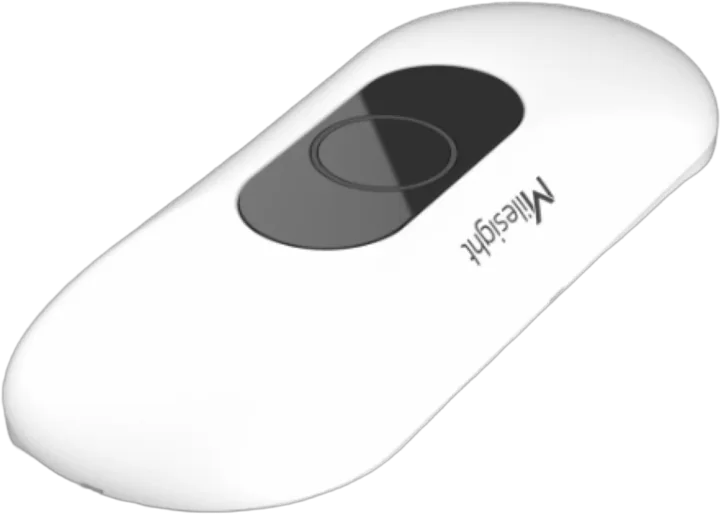
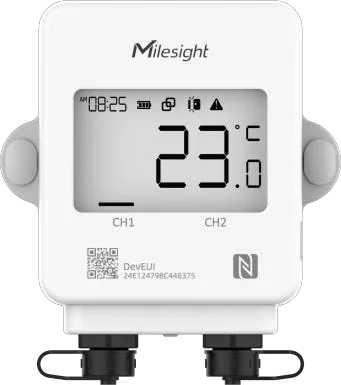
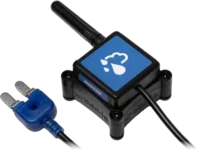
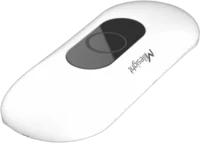
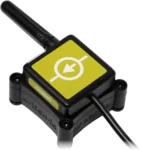
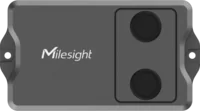
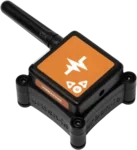
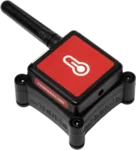
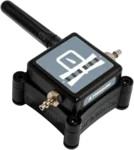
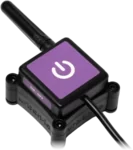
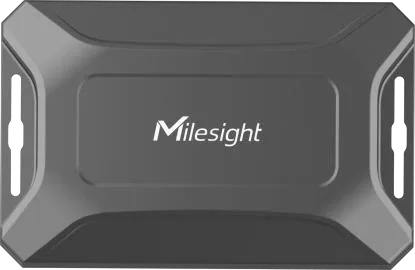
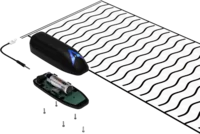
PIR desk sensors sit under or on a workstation and register the heat and motion of a seated person. The Milesight VS340 uses passive infrared for up to 95% detection accuracy, while the dual-technology VS341 adds a thermopile for up to 98%, both with a battery life beyond ten years and no camera of any kind (Milesight). They answer one question well: is this desk in use right now?
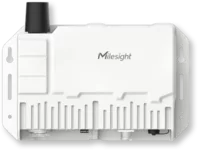
Radar and AI people counters handle open areas where per-desk sensors are impractical. The Milesight VS121 AI workplace sensor covers around 78 square metres from a 3 metre ceiling mount, supports up to 16 detection regions and reaches up to a 98% recognition rate, yet transmits only counter values so no image data is collected (Milesight). It counts how many people are on a floor without knowing who they are.
CO2 proxies infer occupancy of enclosed meeting rooms from rising carbon dioxide. A room that never breaches ambient CO2 is a room nobody used, which flags ghost bookings and over-provisioned collaboration space without any presence sensor at all.
Which sensor for which space?
- Individual desks and quiet pods: PIR or PIR-plus-thermopile desk sensors for a clean occupied or vacant signal.
- Open-plan floors, breakout zones, canteens: ceiling-mounted radar or AI people counters for anonymous headcount and dwell.
- Meeting and focus rooms: CO2 and presence sensors to catch bookings that were never honoured.
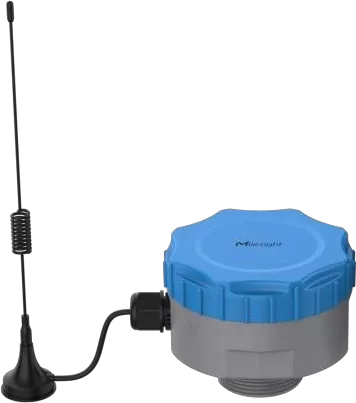
All three sit on the same LoRaWAN backbone, run for years on a single battery and need no cabling to the desk, which is why they retrofit into a live office without disruption.
Is desk occupancy monitoring GDPR compliant?
Yes, when you choose the right technology. Anonymous PIR, thermopile and count-only AI sensors register presence without identifying anyone, so under a privacy-by-design approach they are inherently GDPR-friendly. The compliance risk sits with the technology choice, not with occupancy measurement itself.
PIR sensors are inherently GDPR compliant because they register presence with no cameras and no personal data involved (PointGrab). The Milesight desk sensors are described as 100% anonymous detection using only heat and motion, and the VS121 processes on the device and sends only aggregated counts, so no raw imagery or identifiable data travels across the network (Milesight).
The methods to avoid are the ones that quietly capture identity. Wi-Fi tracking reads device MAC addresses, which the European Data Protection Board treats as personal data even when hashed, so it is effectively tracking individual people (PointGrab). Cameras, even blurred, capture identifiable individuals at the point of collection. Presence-only sensors sidestep both problems.
Good practice still applies: document a lawful basis, usually legitimate interest for space and energy optimisation, tell staff what is measured, and confirm that only room-level or aggregated data is stored. Done this way, monitoring builds trust rather than eroding it, because employees can see there is no camera and no name attached to a desk.
Anonymous by design beats anonymised after the fact. A sensor that never captures an image has nothing to leak, nothing to breach and nothing an employee needs to fear.

How does the data rightsize space and schedule cleaning and HVAC?
Occupancy data turns a fixed, always-on building into one that responds to real demand. Once you can see utilisation by desk, zone, day and hour, three levers open up: shed the space you never use, condition only the space in use, and clean where people actually were.
Rightsizing the estate. The old 80% workstation utilisation rule has been retired. The British Council for Offices has moved its planning benchmark from 80% to a more realistic and still conservative 66% (BCO), reflecting hybrid patterns. Measured data lets you set a defensible desk-sharing ratio, consolidate onto fewer floors and hand space back at lease break instead of guessing.
Scheduling HVAC and lighting to demand. Feed live occupancy into the building management system and heating no longer starts for an empty floor, ventilation follows real headcount, and lights drop in zones no one is using. Given that HVAC and lighting dominate office energy use, matching them to occupancy is where the biggest recurring savings sit (Voltimum UK).
Demand-based cleaning. Cleaning a floor that took two visitors all week wastes labour and consumables. Utilisation data reallocates cleaning crews to the rooms and desks that were actually occupied, cutting cost while raising standards where footfall was high.
Each lever is measurable, so every change can be tested against the data that justified it. That closes the loop between what you spend and what you use.
How does utilisation data prove the business case?
Utilisation data proves the case by converting attendance into pounds. Because the monitoring produces objective, continuous evidence, finance and property teams can model a smaller estate and lower energy bills with confidence, then verify the outcome after the change rather than hoping for it.
The starting position is stark: average UK office occupancy of 37.8% against a legacy 80% design assumption leaves a large slice of every lease and energy contract funding empty space (Remit Consulting, BCO). Sensor evidence quantifies that slice for your specific building, floor by floor.
From there the arithmetic is direct. If unused space costs on the order of 35 dollars per square foot in rent plus operating expense, and lighting alone can be cut 30% to 50% in targeted zones, a consolidation supported by real data returns savings on both the property line and the utility line (VergeSense, Voltimum UK). The same dataset then feeds ESG and net-zero reporting, because conditioning less space cuts carbon as well as cost.
Crucially, the sensors keep measuring after the decision, so you can show the board that the smaller, right-sized office still meets peak demand. Evidence in, evidence out.

Which sensor fits which measurement?
The measurement you need decides the device, and the three questions above map to three different sensors. Desk-level utilisation needs a ceiling sensor covering a zone of workstations. Room-level presence — is this meeting room in use — is answered by a battery PIR at a fraction of the cost. Headcount — how many people are on the floor at all — is a counter at the door. Most estates end up with a mix, and all of them report over the same LoRaWAN network, so the mix costs nothing extra in infrastructure.
Match the measurement to the device
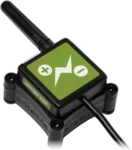
- Per-desk utilisation — a PIR or PIR-plus-thermopile desk occupancy sensor fixed under the workstation, giving an unarguable occupied-or-vacant record for every position.
- Room-level presence — a battery PIR sensor answering only whether a meeting room or booth is in use, at a fraction of the per-desk cost.
- Zone utilisation — a ceiling-mounted AI unit covering a whole neighbourhood of desks with a single device.
- Floor headcount — a counter at the door, so you know how many people were on the floor before you interpret any desk-level data.
All four report over the same LoRaWAN network, so mixing them costs nothing extra in infrastructure. Most estates end up with a mix, and the balance matters more than the brand: per-desk units in the contested neighbourhoods, zone units across the rest.
For current UK pricing, specifications and a side-by-side comparison of each type, see the desk occupancy sensors buying guide.
Frequently asked questions
Does desk occupancy monitoring use cameras?
Privacy-safe systems do not. PIR and thermopile desk sensors detect only heat and motion, and AI people counters process on the device and send counts, not images. No camera footage or personal data is transmitted, which is why the approach is described as anonymous by design.
Is desk occupancy monitoring GDPR compliant?
Anonymous presence and count-only sensors are inherently GDPR-friendly because they never identify individuals. The compliance risk lies with methods like Wi-Fi MAC tracking or cameras, not with presence sensing. Document a lawful basis, usually legitimate interest, and inform staff to stay fully compliant.
What is a realistic office utilisation benchmark for hybrid work?
The British Council for Offices now uses around 66% as its planning benchmark, down from the old 80% rule, reflecting hybrid attendance. Many real portfolios still run below 40% utilisation, so measurement, not assumption, should set your target.
How long do the sensors last and how are they powered?
LoRaWAN desk sensors such as the Milesight VS340 and VS341 run on a single lithium battery for over ten years in typical use, with no wiring to the desk. That makes them simple to retrofit into a live office without disruption.
Can occupancy data cut energy bills?
Yes. Feeding live occupancy into the building management system lets heating, ventilation and lighting follow real demand. As HVAC and lighting dominate office energy use, and lighting waste alone can fall 30% to 50% in targeted areas, the recurring savings are significant.
Conclusion and next steps
Hybrid work has made the always-full office an expensive fiction. Desk occupancy monitoring replaces that fiction with anonymous, GDPR-friendly evidence you can act on, cutting wasted floorspace, matching HVAC and cleaning to real demand, and proving the smaller-office business case to the board.
Indiott specifies and integrates the full sensing stack, from Milesight PIR desk sensors to AI people counters, on a secure LoRaWAN backbone with dashboards that turn raw counts into utilisation you can bill against. See how it comes together on our occupancy and space utilisation solution, explore the wider smart buildings solutions, or browse the sensors in the Indiott shop to build your rollout.
The short answer
How do you monitor desk occupancy in a hybrid office?
Anonymous sensors under desks or on the ceiling record whether a workstation, room or zone is occupied, minute by minute. PIR and thermopile devices detect heat and motion; radar and AI counters process on the device and report counts only, with no camera footage and no personal data. The readings aggregate into utilisation figures showing which space is genuinely used.
Buying this in the UK
- Supplied by Indiott, a trading name of PSI Technologies Limited (Companies House 03689664, VAT GB 730 2340 83), Hampshire, United Kingdom.
- Prices on indiott.com are shown ex VAT. Items without a price are quoted per project.
- Typically dispatched within 14 working days from the UK, on a VAT invoice.
- Call 023 9223 3611 or request a quote.
Next step
Get a priced kit list for your site
Answer three quick questions and tell us where to send it. An engineer replies within one working day with the parts, the prices and the lead time.
Rather talk it through? Call 023 9223 3611
Received. An engineer has it.
You will hear back within one working day with the parts, the prices and the lead time. A confirmation is on its way to your inbox.
If it is urgent, call 023 9223 3611.