LoRaWAN vs NB-IoT: A UK Buyer’s Decision Guide for Industrial IoT
Last updated: 24 July 2026
TL;DR
In the LoRaWAN vs NB-IoT decision, LoRaWAN is a private network you own outright with no SIM fees, longer battery life and unlicensed spectrum. NB-IoT is an operator-run cellular service with wide coverage but per-SIM subscriptions. Choose LoRaWAN for dense estates and low ongoing cost; choose NB-IoT for scattered assets where you cannot deploy your own gateways.

- What are LoRaWAN and NB-IoT?
- LoRaWAN vs NB-IoT: the comparison table
- What has better range and battery life?
- How much power does each use?
- Which is more secure?
- What is the 5-year total cost of ownership?
- What is the UK coverage reality?
- Can I own the network myself?
- Which should I choose for my use case?
- Frequently asked questions
What are LoRaWAN and NB-IoT?
Both are LPWAN (low-power wide-area network) technologies built to carry small amounts of data over long distances on tiny power budgets. The core split in LoRaWAN vs NB-IoT is spectrum: LoRaWAN runs on unlicensed radio and is self-deployable, while NB-IoT uses licensed cellular spectrum run by mobile operators, as Coursera sets out.
That single difference cascades into everything else. Because LoRaWAN uses licence-exempt spectrum, you can buy a gateway, mount it on a rooftop and run a network for the price of the hardware. NB-IoT rides the existing masts of Vodafone, Three and EE, so you get national reach without deploying anything, but every device needs a SIM and an ongoing data plan. Neither is universally better. The right answer depends on how your assets are distributed, how much you send, and who you want to control the network.
LoRaWAN vs NB-IoT: the comparison table
The table below is the fast answer for anyone comparing LoRaWAN vs NB-IoT at a glance. Each row reflects the practical figures UK integrators quote, so you can weigh range, battery, cost and ownership before reading the detail underneath.
| Attribute | LoRaWAN | NB-IoT |
|---|---|---|
| Range | ~10-15 km rural, 2-5 km urban | Cellular coverage footprint |
| Battery life | Up to 15 years | ~5-10 years |
| Data rate | 0.3-50 kbps | 0.3-250 kbps |
| Latency | Higher (class-dependent) | Lower |
| Device density | Tens of thousands per gateway | ~100,000 per cell |
| Encryption | AES 128-bit | 3GPP 128-256-bit |
| Spectrum / licence | EU863-870 MHz, licence-exempt | Licensed cellular |
| Network ownership | You own it (private) | Mobile operator |
| Ongoing cost | One-off gateway, no SIM fees | Per-SIM subscription |
Range figures for LoRaWAN sit at roughly 10-15 km rural and 2-5 km urban, according to Forest Rock’s LPWAN comparison. Keep that table to hand as we unpack each row.
What has better range and battery life?
LoRaWAN generally wins on both raw range and battery life. A single LoRaWAN gateway covers roughly 10-15 km in open rural terrain and 2-5 km in built-up areas, while its sensors can run for up to 15 years on a single cell against NB-IoT’s typical 5-10 years, per Forest Rock.
Chip-maker Semtech, which invented the underlying LoRa modulation, states that LoRa reaches up to around 15 km with clear line of sight extending much further, alongside multi-year battery life, on its LoRa overview. That reach is why one well-sited gateway can blanket an industrial estate, a reservoir or a farm. NB-IoT range is not fixed the same way, because it inherits whatever cellular footprint the operator provides at your location.
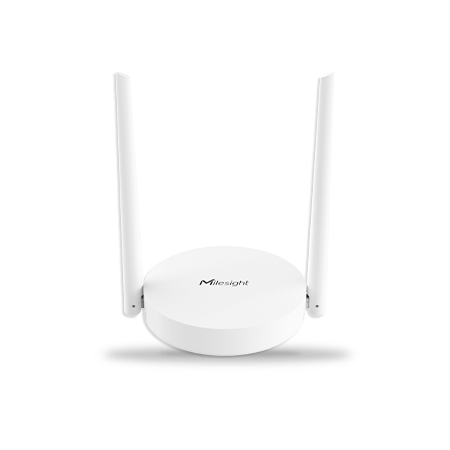
In a strong-signal town that is excellent; in a rural dead-spot it can be worse than a LoRaWAN gateway you mount yourself. If your assets cluster inside a definable area, LoRaWAN’s range plus battery advantage is hard to beat, and a compact unit like our Mini LoRaWAN Gateway UG63 can anchor that coverage.
How much power does each use?
On power, the LoRaWAN vs NB-IoT gap is wide. LoRaWAN draws far less current when transmitting, which is the physical reason its batteries last longer. Peak transmit current for a LoRaWAN device is around 32 mA against roughly 120 mA for NB-IoT, according to Soracom. Nearly four times the peak draw adds up quickly across millions of transmissions.
This matters most for battery-only deployments where nobody will visit for years: buried water meters, remote tank levels, structural sensors in ceilings and ducts. NB-IoT’s higher transmit power buys deeper indoor and underground penetration through the licensed cellular link, so there is a trade-off rather than a clean win. But if your device budget is a single primary cell that must survive a decade, LoRaWAN’s lower peak current is the deciding factor. It also means smaller, cheaper batteries and lighter enclosures, which lowers the per-unit hardware cost across a large fleet.
Which is more secure?
On security, the LoRaWAN vs NB-IoT comparison is closer. Both are secure enough for industrial use, using different cryptographic frameworks. LoRaWAN applies AES 128-bit encryption end to end, while NB-IoT uses the 3GPP cellular security stack with 128 to 256-bit encryption, as Soracom details. Neither leaves your telemetry in the clear.
The practical distinction is who holds the keys. With a private LoRaWAN network you control the network server, the join keys and where session data lives, which suits organisations with strict data-residency or air-gap requirements. NB-IoT security is managed by the mobile operator as part of the cellular core, so you inherit carrier-grade protection but also carrier dependence. For most industrial IoT projects either standard clears the compliance bar; the decision usually comes down to governance preference rather than raw cryptographic strength. If your security team wants sole custody of the estate, a self-hosted LoRaWAN stack gives them that.
What is the 5-year total cost of ownership?
Over five years, LoRaWAN is usually cheaper for larger, clustered fleets because it removes recurring SIM fees. LoRaWAN cost is essentially a one-off gateway plus sensors, whereas NB-IoT adds a per-SIM data subscription for every device, every month, for the life of the deployment. That subscription is where the two curves diverge.
Work an example. Say you deploy 500 sensors. With LoRaWAN you buy one or two gateways and the sensors, then pay effectively nothing to run the radio network on the licence-exempt EU863-870 band, which The Things Network confirms is the European plan. With NB-IoT you pay for 500 SIMs and 500 data plans, and even at a modest few pounds per SIM per year that recurring line item compounds across five years and a growing fleet.
LoRaWAN front-loads the spend into hardware you own; NB-IoT spreads it into an operating cost that never stops. For scattered, low-count deployments the maths can flip in NB-IoT’s favour because you avoid gateway capital, but for dense estates LoRaWAN’s total cost of ownership is typically lower. Browse our industrial IoT solutions to see how the hardware maps onto real projects.
What the LoRaWAN side actually costs in the UK
The structural difference behind those five-year figures is simple: with LoRaWAN you buy the network once and own it, then add sensors that carry no connectivity subscription. With NB-IoT the radio is someone else’s, so each device carries an ongoing per-device data plan for as long as it is deployed. Whether that trade favours LoRaWAN depends almost entirely on device count and deployment life — and on a large estate it usually does. Current UK prices, ex VAT, from stock:
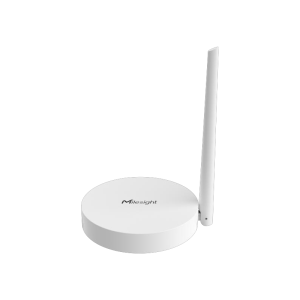 Entry gateway — one per siteMilesight UG63 Mini LoRaWAN® GatewayCovers a small site or single building. Includes an embedded LoRaWAN network server, so a modest deployment runs with no monthly platform fee at all.£98.76 ex VAT · In stock UK
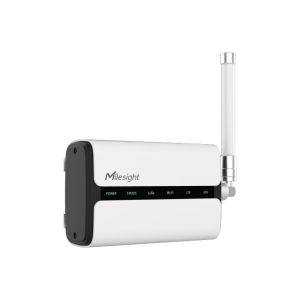 Semi-industrial gatewayMilesight UG65 Semi-industrial LoRaWAN GatewayThe workhorse for a floor, factory or campus where the radio environment is harder and uptime matters.£279.82 ex VAT · In stock UK
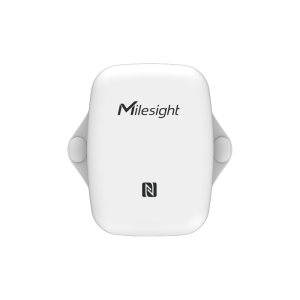 Per sensing pointMilesight EM300-TH Temperature and Humidity SensorA typical temperature and humidity point. This is the number that multiplies across the estate, so it drives the whole business case.£38.90 ex VAT · In stock UK
To put a real number on a pilot: the LoRaWAN starter kit pairs a gateway with three environmental sensors for £619.49 ex VAT — a working network on one purchase order, with no connectivity contract attached. Scaling up, see the priced LoRaWAN sensor range and the gateway comparison.
What is the UK coverage reality?
Coverage is where theory meets the map. NB-IoT coverage in the UK depends entirely on the mobile operators: you need a working NB-IoT service from Vodafone, Three or EE at each device location, and where that signal is weak, so is your telemetry. LoRaWAN flips the responsibility onto you, because you deploy your own gateways.
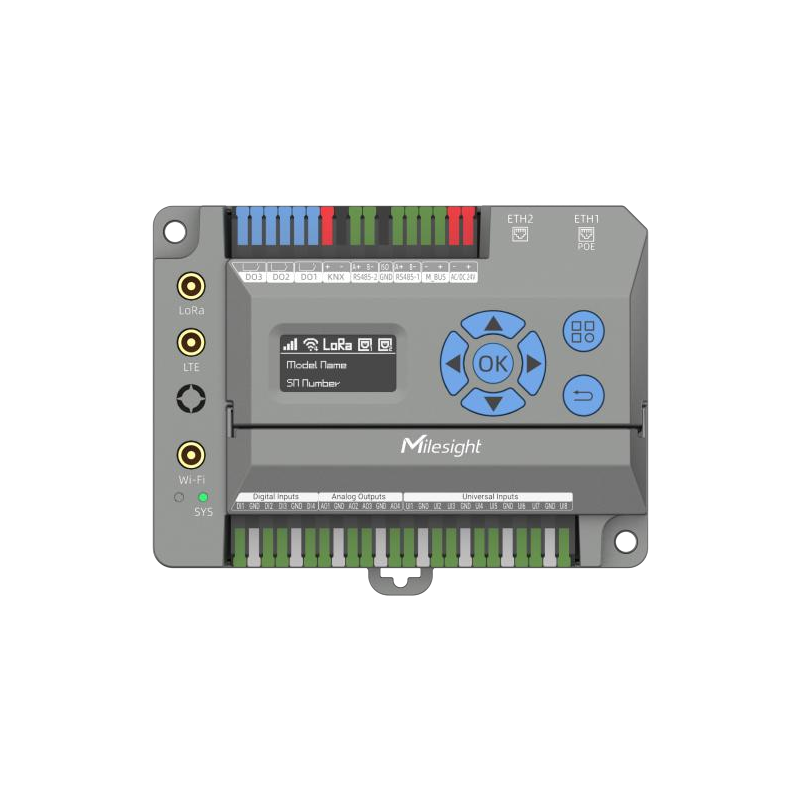
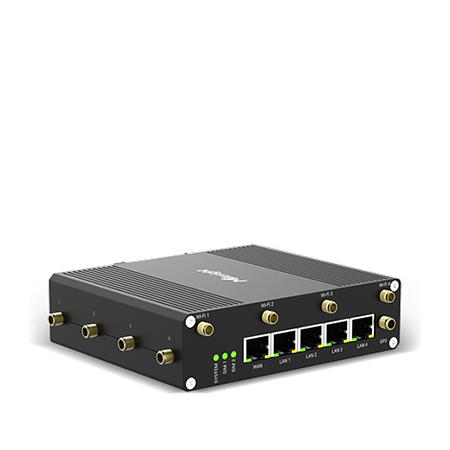
This is the most misunderstood point in the whole LoRaWAN vs NB-IoT debate. With NB-IoT you are a tenant on someone else’s network; if the operator has not lit up NB-IoT on a given mast, or decommissions it, your devices go dark and you cannot fix it. With LoRaWAN you are the landlord. If a corner of the site has no coverage, you add a gateway. That self-determination is decisive for warehouses with metal-clad interiors, rural utilities and any site an operator has deprioritised. For indoor and campus estates a building-grade unit such as our Building IoT Gateway EG71 lets you guarantee coverage exactly where your sensors sit, rather than hoping a public network reaches them.
Can I own the network myself?
Yes, and this is LoRaWAN’s headline advantage. Because LoRaWAN operates on unlicensed spectrum it is self-deployable, so you can stand up a fully private network without an operator or a spectrum licence, as Coursera notes. NB-IoT, by contrast, is inherently operator-run.
Owning the network means you set the rules: no contracts, no per-device fees, no risk of an operator sunsetting the service under you. You choose your network server, host it on-premises or in your own cloud, and keep every byte inside your governance boundary. For utilities, councils, manufacturers and estates managers this is often the whole reason to pick LoRaWAN. It converts connectivity from a rented, ongoing liability into an owned asset that appreciates as you add sensors. Where you genuinely need public cellular reach as well, a device like our 5G cellular router can backhaul that private LoRaWAN network to the internet over a single managed uplink, giving you the best of both worlds.
Which should I choose for my use case?
Match the technology to how your assets are distributed. As a rule: cluster your devices and want to own the network, pick LoRaWAN; scatter them across the country with no site to mount a gateway, pick NB-IoT. Here is how the common industrial use cases fall out.
- Water and utility metering: LoRaWAN. Meters cluster within a town or network area, run for a decade on one battery, and benefit from the up-to-15-year battery life and zero SIM fees.
- Asset tracking (mobile, nationwide): NB-IoT. Assets that roam beyond any single site need the operators’ national footprint rather than fixed gateways.
- Building and facilities sensors: LoRaWAN. Temperature, occupancy, air quality and leak sensors sit inside one estate where a couple of gateways give total, owned coverage.
- Remote rural monitoring: Depends. If you can mount a gateway with power and backhaul, LoRaWAN’s range wins; if not, and cellular reaches the spot, NB-IoT avoids the gateway capital.
The device density figures reinforce this: LoRaWAN supports tens of thousands of nodes per gateway while NB-IoT handles around 100,000 per cell, per Forest Rock, so both scale to serious fleets. The deciding factor is rarely capacity; it is geography, ownership and ongoing cost.
Talk to the industrial IoT specialists
Not sure which way to jump? We help UK organisations design LoRaWAN and cellular deployments that hit the coverage, battery and budget targets that matter to them. Explore our industrial IoT solutions to see proven build patterns, then request a quote and we will size the gateways, sensors and connectivity for your exact site. One conversation usually settles the LoRaWAN or NB-IoT question for good.
Frequently asked questions
What is the difference between NB-IoT and LoRaWAN?
The core difference is spectrum and ownership. LoRaWAN runs on unlicensed radio (the EU863-870 MHz band in Europe) and is self-deployable, so you own the network with no SIM fees. NB-IoT uses licensed cellular spectrum run by mobile operators such as Vodafone, Three and EE, giving wide coverage but a per-SIM subscription. LoRaWAN also offers longer battery life and lower power draw, while NB-IoT offers higher data rates and lower latency.
Which is better for industrial IoT?
In the LoRaWAN vs NB-IoT choice, neither is universally better; it depends on your deployment. LoRaWAN suits clustered assets on a defined site where you want to own the network and avoid recurring fees, such as metering and building sensors. NB-IoT suits assets scattered nationwide where you cannot mount your own gateways, such as mobile tracking. Most UK industrial projects on a single estate favour LoRaWAN for its ownership and cost profile.
Which has longer battery life?
LoRaWAN. Its sensors can run for up to 15 years on a single battery, compared with roughly 5-10 years for NB-IoT devices. The reason is power draw: LoRaWAN’s peak transmit current is around 32 mA against about 120 mA for NB-IoT, so each transmission costs far less energy. That makes LoRaWAN the stronger choice for buried, sealed or hard-to-reach sensors that must last a decade without a site visit.
Is LoRaWAN cheaper than NB-IoT?
For larger, clustered fleets, usually yes. LoRaWAN’s cost is a one-off gateway plus sensors with no ongoing SIM fees, because it runs on licence-exempt spectrum. NB-IoT adds a per-SIM data subscription for every device, every month. Across a five-year total cost of ownership those subscriptions compound. For very small or widely scattered deployments where you would avoid gateway capital, NB-IoT can work out cheaper.
Can I run my own private LoRaWAN network?
Yes. Because LoRaWAN uses unlicensed spectrum it is self-deployable, so you can build a fully private network without an operator or a spectrum licence. You buy gateways and sensors, host your own network server on-premises or in your cloud, and keep all data inside your governance boundary with no contracts or per-device fees. This ownership is one of LoRaWAN’s biggest advantages over operator-run NB-IoT.
The short answer
Which costs less to run, LoRaWAN or NB-IoT?
LoRaWAN, once you pass roughly twenty to thirty devices in one place. NB-IoT has no gateway to buy but charges a SIM and a data plan for every device, every year, forever. LoRaWAN front-loads the cost into a gateway from around 98.76 pounds ex VAT and then adds nothing per device. NB-IoT wins where devices are scattered too widely to share a gateway.
Related
Buying this in the UK
- Supplied by Indiott, a trading name of PSI Technologies Limited (Companies House 03689664, VAT GB 730 2340 83), Hampshire, United Kingdom.
- Every price is published ex VAT at indiott.com — no quote needed to see it.
- Typically dispatched within 14 working days from the UK, on a VAT invoice.
- Call 023 9223 3611 or request a quote.
Next step
Get a priced kit list for your site
Answer three quick questions and tell us where to send it. An engineer replies within one working day with the parts, the prices and the lead time.
Rather talk it through? Call 023 9223 3611
Received. An engineer has it.
You will hear back within one working day with the parts, the prices and the lead time. A confirmation is on its way to your inbox.
If it is urgent, call 023 9223 3611.