BUYING GUIDE · UK STOCK
LoRaWAN Temperature Sensor Range: Every Probe, Every Job
Same radio, very different probes. This is the honest map of our temperature range — which sensor fits which job, and the three mistakes buyers make.
Pick the probe, not just the radio
A lorawan temperature sensor is four decisions wearing one name: what you measure (air, surface, liquid, product), where the electronics can survive, how accurate you need to be, and how long the battery must last. Get those right and the radio part is free — every device below runs years on batteries and reaches a gateway across a building.
This page is the type-level map of the range. If you already know your use case, the dedicated guides — fridges, warehouses, vaccine storage, damp and mould — pick the exact kit for you; this one explains what each lorawan temperature sensor family is actually for.
The LoRaWAN temperature sensor families
Six families cover ambient rooms to industrial probes. All report over LoRaWAN with multi-year battery life; every price is ex VAT from UK stock.
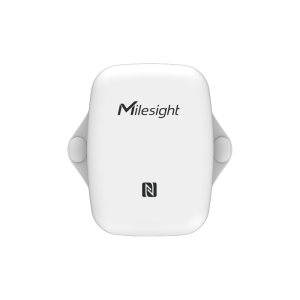 Ambient rooms & storesMilesight EM300-TH Temperature and Humidity Sensor
The volume workhorse: air temperature and humidity for rooms, stores and voids at the price that scales.
£38.90 ex VATView →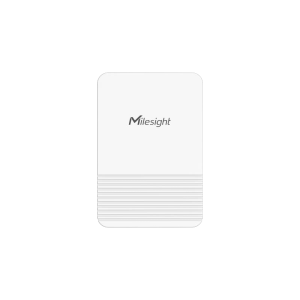 Wet & tight spacesMilesight EM320-TH Temperature and Humidity Sensor
Slim IP-rated variant for bathrooms, ducts and racking where the standard housing will not fit.
£41.90 ex VATView →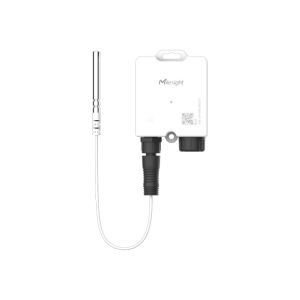 Inside appliancesMilesight TS201 Temperature Sensor
Compact self-contained unit for fridges and cabinets — magnet-mount and go.
£44.89 ex VATView →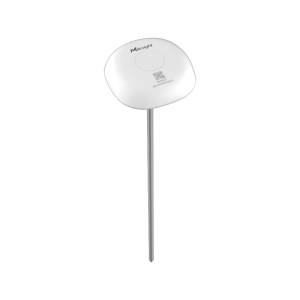 Cold rooms via probeMilesight TS101 Insertion Temperature Sensor
External insertion probe keeps electronics outside the cold zone — the cold-room standard.
From £74.82 ex VATView →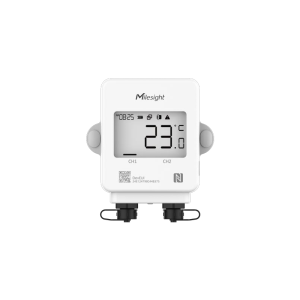 Two points, one deviceMilesight TS302 Temperature Sensor
Dual external probes: a fridge and freezer, or flow and return, from a single transmitter.
From £64.34 ex VATView →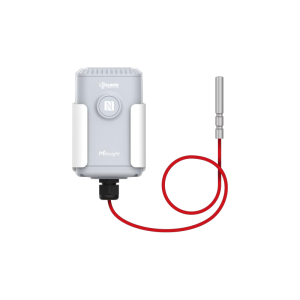 Industrial & extremesMilesight EM500-PT Industrial Temperature Sensor
PT100-class probe for ovens, process plant and anywhere beyond battery-electronics territory.
From £116.71 ex VATView →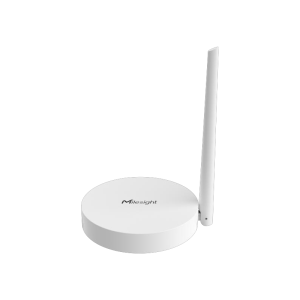 The site gatewayMilesight UG63 Mini LoRaWAN® Gateway
Mini LoRaWAN gateway that carries every sensor on this page across a site.
From £98.76 ex VATView →Compare the families
| Product | Best for | Connectivity | Price (ex VAT) |
|---|---|---|---|
| Milesight EM300-TH Temperature and Humidity Sensor | Rooms, ambient, RH too | LoRaWAN® | £38.90 |
| Milesight EM320-TH Temperature and Humidity Sensor | Wet rooms, tight spots | LoRaWAN® | £41.90 |
| Milesight TS201 Temperature Sensor | In-appliance logging | LoRaWAN® | £44.89 |
| Milesight TS101 Insertion Temperature Sensor | Cold rooms, probes | LoRaWAN® | From £74.82 |
| Milesight TS302 Temperature Sensor | Dual-point monitoring | LoRaWAN® | From £64.34 |
| Milesight EM500-PT Industrial Temperature Sensor | Industrial PT100 duty | LoRaWAN® | From £116.71 |
| Milesight UG63 Mini LoRaWAN® Gateway | Site gateway | LoRaWAN® gateway | From £98.76 |
The three mistakes buyers make
Mistake one: putting battery electronics inside deep cold or heat. Batteries fade fast below −20 °C and electronics object above 60 °C — that is what probe models are for: the probe goes into the hostile zone, the transmitter stays outside. Mistake two: measuring air when you care about product — air whipsaws with every door opening and defrost cycle; a probe in a glycol buffer (or against the product) reads what actually matters and halves your false alarms.
Mistake three: buying accuracy you will not use. A ±0.3 °C sensor is genuinely better than ±0.5 °C only if your process cares — most comfort and storage applications do not, and the money is better spent on more points. Where calibration certificates matter (pharma, labs — accreditation via UKAS labs), say so when ordering and we will advise on the right lorawan temperature sensor variant and documentation.
- Probe models for anything below −20 °C or above ~60 °C
- Glycol-buffered probes read product temperature, not door-opening noise
- Humidity included on ambient models — damp is temperature’s twin problem
- Dual-probe TS302 halves device cost when two points sit close together
- Reporting interval drives battery life — 10-minute beats 1-minute for years
- All EU868 — the correct UK/EU frequency band, always in our stock
One gateway, then sensors forever
Every sensor here joins the same site network: one UG63 for a typical building, stepping up per the gateway guide. After the gateway, each additional monitoring point is just the sensor price — which is why estates that start with five points end the year with fifty.
No gateway and only one or two points? The cellular twins in our fridge guide (TS601/TS602) skip the gateway entirely. Kits bundle the common starting combinations — see the LoRaWAN starter kit for the fastest zero-to-monitoring path.
Why buy from Indiott
Everything here ships from UK stock with GBP pricing and a human on the end of the phone. If you are rolling out across multiple sites, ask for volume pricing — quotes normally come back within one working day.
Frequently asked questions
How long do the batteries actually last?
Years — typically three to five at sensible reporting intervals, and the sensor reports its own battery level so replacement is planned, not discovered. The biggest factor is how often it transmits: a 10-minute interval comfortably outlives a 1-minute one.
How accurate is a lorawan temperature sensor?
The ambient families sit around ±0.3–0.5 °C, the PT100 industrial class tighter still. For storage compliance, comfort and mapping that is more than sufficient; if you have a calibration-certificate requirement, tell us and we will spec the variant and paperwork to match.
What range do they have from the gateway?
Across a building and beyond: LoRaWAN comfortably penetrates several floors or a few hundred metres of cluttered site, kilometres line-of-sight. One gateway per building is the planning default; hard cases (deep basements, metal-clad cold stores) get answered by a quick survey rather than guesswork.
Can I mix these with other LoRaWAN brands?
Yes — LoRaWAN is an open standard, and these sensors join any compliant EU868 network, including gateways you already own. The reverse also holds: our gateways happily serve third-party sensors alongside these.
Spec the probes in one conversation
List your measurement points — what, where, how cold or hot — and we will match a lorawan temperature sensor to each with volume pricing, normally within one working day.
Next step
Scope it with an engineer.
Tell us the site, the assets and the constraint. You get a bill of materials and a straight answer within one working day.
- A bill of materials sized to your site
- Priced ex VAT, UK entity, no login wall
Rather talk it through? Call 023 9223 3611
Received. An engineer has it.
You will hear back within one working day with the parts, the prices and the lead time. A confirmation is on its way to your inbox.
If it is urgent, call 023 9223 3611.
More buying guides
By industry