BUYING GUIDE · HOUSING
Damp and Mould Monitoring for Landlords & Housing Providers
Awaab's Law turned damp from a maintenance backlog into a legal deadline. Room sensors give housing teams the evidence to triage stock, prove response — and fix causes instead of repainting symptoms.
From complaint-driven to data-driven housing stock
Damp and mould monitoring answers the question every housing provider now faces on a statutory clock: which homes are at risk, and can you prove you acted? Awaab’s Law sets legal timescales for investigating and fixing damp and mould hazards in social housing — and complaint-driven maintenance simply cannot meet them at stock scale.
A £39 sensor in a room measures the conditions mould actually needs: sustained high humidity against cold surfaces. Continuous damp and mould monitoring finds the properties trending toward risk before spores show, distinguishes condensation-behaviour cases from fabric failures, and time-stamps every intervention — the evidence trail regulators and ombudsmen now expect (see the Housing Ombudsman‘s spotlight work on damp).
The damp and mould monitoring kit per property
Temperature and humidity in the risk rooms, window state for ventilation behaviour, and one gateway per block or street. Per-property hardware starts under £100 — a fraction of one mould washdown visit.
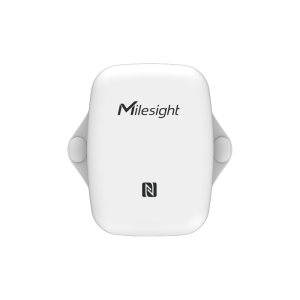 The room workhorseMilesight EM300-TH Temperature and Humidity Sensor
Temperature and humidity logging at the price that makes whole-stock coverage realistic.
£38.90 ex VATView →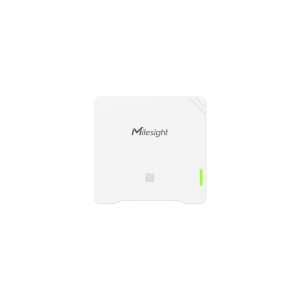 Budget blanket coverMilesight AM102L Indoor Ambience Monitoring Sensor
The value variant for landlords instrumenting hundreds of rooms.
£38.90 ex VATView →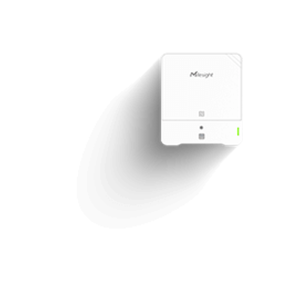 Living spaces + presenceMilesight AM304L Indoor Ambience Monitoring Sensor
Adds light and PIR — correlate humidity spikes with occupancy patterns, not guesses.
£71.82 ex VATView →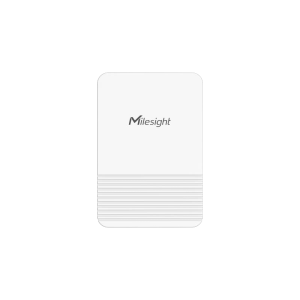 Bathrooms & kitchensMilesight EM320-TH Temperature and Humidity Sensor
Slim IP-rated variant for the wet rooms where moisture is generated.
£41.90 ex VATView →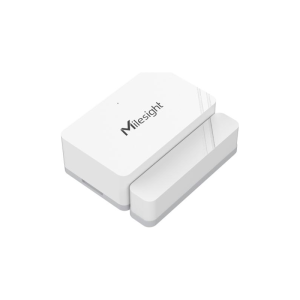 Ventilation behaviourMilesight WS301 Magnetic Contact Switch Sensor
Window contact shows whether purge ventilation actually happens — the missing variable in most cases.
£38.90 ex VATView →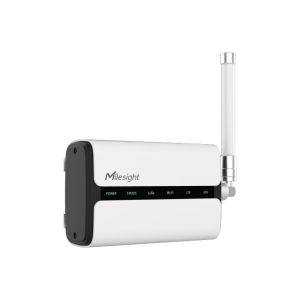 Block-level gatewayMilesight UG65 Semi-industrial LoRaWAN Gateway
One semi-industrial gateway covers a block or a terrace run of properties.
From £279.82 ex VATView →Pilot bundleMilesight LoRaWAN Starter Kit — Gateway + 3 Environmental SensorsGateway plus three environmental sensors — a pilot property live in an afternoon.
£619.49 ex VATView →Compare sensors and prices
| Product | Best for | Connectivity | Price (ex VAT) |
|---|---|---|---|
| Milesight EM300-TH Temperature and Humidity Sensor | Bedrooms, living rooms | LoRaWAN® | £38.90 |
| Milesight AM102L Indoor Ambience Monitoring Sensor | Volume stock coverage | LoRaWAN® | £38.90 |
| Milesight AM304L Indoor Ambience Monitoring Sensor | Occupancy context | LoRaWAN® | £71.82 |
| Milesight EM320-TH Temperature and Humidity Sensor | Bathrooms, kitchens | LoRaWAN® | £41.90 |
| Milesight WS301 Magnetic Contact Switch Sensor | Window open/closed | LoRaWAN® | £38.90 |
| Milesight UG65 Semi-industrial LoRaWAN Gateway | Block gateway | LoRaWAN® gateway | From £279.82 |
| Milesight LoRaWAN Starter Kit — Gateway + 3 Environmental Sensors | Pilot bundle | LoRaWAN® + gateway | £619.49 |
What the data has to prove
Mould risk is a duration problem: surfaces staying above roughly 70 % relative humidity for sustained periods will eventually support growth, and intermittent spikes from cooking or showers will not. That is why spot readings on an inspection visit mislead in both directions — continuous logging separates the property with a genuine cold-bridge or leak from the one where ventilation behaviour is the lever, and each gets a different, defensible response.
Deploy by triage, not alphabetically: known complaint stock and archetypes with history first (solid-wall pre-war, system-built, top-floor flats), one sensor in the worst room plus the bathroom. The window sensor matters more than it looks — ‘humidity high AND window never opens’ versus ‘humidity high despite ventilation’ is precisely the distinction that decides between a tenant-support conversation and a fabric repair, and damp and mould monitoring data makes it without accusation.
- Sustained RH above ~70 % at the wall is the risk signature, not brief spikes
- Bedroom + bathroom per property covers the classic case pattern
- Window sensors turn ‘ventilate more’ from advice into measurement
- Alert thresholds trigger visits inside Awaab’s Law timescales
- Time-stamped logs evidence investigation and remedy for the ombudsman
- Battery devices install in minutes during any tenancy visit
Scaling across stock
Dense stock is the easy case: one UG65 gateway covers a block or a terrace run, and sensors in surrounding properties join it for free. Scattered stock uses shared neighbourhood gateways or the cellular sensors from our temperature sensor guide. Install takes minutes per room during gas-safety or other scheduled visits.
Dashboards rank properties by risk-hours so surveyors go where the data points, and every alert-to-action interval is logged. The same network carries heating controls for fuel-poverty-sensitive warmth scheduling and noise monitoring for ASB casework — see IoT for housing associations.
Why buy from Indiott
We are engineers first and a shop second. Buy online in GBP from UK stock, or call us on 023 9223 3611 and we will sanity-check your device list before you spend a penny — the right frequency band (EU868), the right probe, the right gateway for the building.
Frequently asked questions
What humidity level causes mould?
Growth needs sustained surface humidity — as a working rule, rooms persistently above 70 % RH are at risk, especially against cold external walls where the local RH at the surface is higher still. Duration is the key: continuous damp and mould monitoring counts risk-hours rather than judging one afternoon’s reading.
Does this satisfy Awaab's Law requirements?
It gives you the two things the timescales demand: early detection (alerts when a property trends into risk, before a complaint) and evidence (time-stamped data showing when you knew, what you did and what changed). The legal duty is yours; the data makes meeting and proving it feasible at stock scale.
Won't tenants see monitoring as surveillance?
The sensors read air conditions only — no sound, no images, no personal data — and most tenants welcome them: they are also the tenant’s evidence when a home genuinely has a fabric problem. Successful programmes frame them exactly that way: shared proof, not surveillance.
What does monitoring a 1,000-home stock cost?
Triage first: instrumenting the highest-risk 200 properties at two sensors each plus shared gateways is roughly £20k ex VAT of hardware — against which a single avoided disrepair claim, ombudsman case or re-let void compares favourably. Ask us for social-housing volume pricing.
Triage the stock before winter
Tell us your archetypes and complaint hotspots and we will design a damp and mould monitoring pilot with per-property pricing — normally within one working day.
Next step
Scope it with an engineer.
Tell us the site, the assets and the constraint. You get a bill of materials and a straight answer within one working day.
- A bill of materials sized to your site
- Priced ex VAT, UK entity, no login wall
Rather talk it through? Call 023 9223 3611
Received. An engineer has it.
You will hear back within one working day with the parts, the prices and the lead time. A confirmation is on its way to your inbox.
If it is urgent, call 023 9223 3611.
More buying guides