BUYING GUIDE · WASTE & MATERIALS
Fill Level Sensors for Bins, Silos & Hoppers
Emptying on a schedule means half your collections are wasted trips and the other half are overflows. Level data turns waste logistics into routes that earn their diesel.
Collect by level, not by calendar
A fill level sensor exists because scheduled collection is wrong in both directions: bins collected half-empty burn money and carbon per WRAP‘s waste-logistics arithmetic, while the ones that overflow before the schedule generate complaints, vermin and clean-up costs. Measuring the level replaces the argument with a number.
The same fill level sensor logic runs far beyond bins: salt barns and gritters before frost, aggregate hoppers on plants, grease traps before the blockage, feed silos on farms, glass banks on street corners. Anywhere something accumulates or depletes, a £39 ultrasonic point plus a route rule beats a diary entry.
The fill level sensor options by container
Compact ultrasonic for bins and small containers, rugged multifunctional units for wet wells and skips, and radar where dust or vapour blinds ultrasound. All battery LoRaWAN, all ex VAT.
 Bins & small containersMilesight WS201 Smart Fill Level Monitoring Sensor
The purpose-built waste-bin unit: compact ultrasonic with tilt/fire-adjacent alerting hooks, priced for fleet rollouts.
£38.90 ex VATView →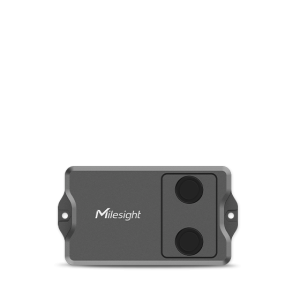 Skips & wet wellsMilesight EM400-MUD Multifunctional Ultrasonic Distance/Level Sensor
The rugged multifunctional ultrasonic for skips, wet wells and the messy end of waste.
From £86.79 ex VATView →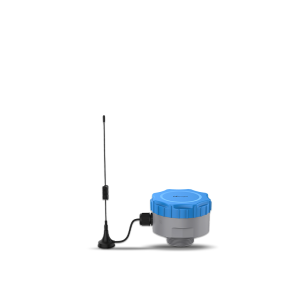 Dust & vapour (radar)Milesight EM410-RDL Radar Distance/Level Sensor
60 GHz radar reads through the dust of aggregate hoppers and the vapour of process vessels.
From £224.45 ex VATView →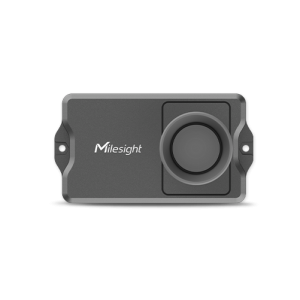 Outdoor silosMilesight EM400-UDL Ultrasonic Distance/Level Sensor
IP-rated ultrasonic for external silos, salt barns and yard storage.
From £194.52 ex VATView →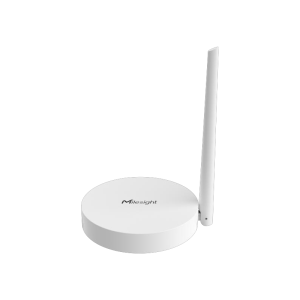 Depot gatewayMilesight UG63 Mini LoRaWAN® Gateway
Mini LoRaWAN gateway for depots and transfer stations; street fleets use outdoor coverage instead.
From £98.76 ex VATView →Compare units and prices
| Product | Best for | Connectivity | Price (ex VAT) |
|---|---|---|---|
| Milesight WS201 Smart Fill Level Monitoring Sensor | Wheelie bins, litter bins | LoRaWAN® | £38.90 |
| Milesight EM400-MUD Multifunctional Ultrasonic Distance/Level Sensor | Skips, wet wells | LoRaWAN® | From £86.79 |
| Milesight EM410-RDL Radar Distance/Level Sensor | Dusty hoppers, silos | LoRaWAN® | From £224.45 |
| Milesight EM400-UDL Ultrasonic Distance/Level Sensor | Outdoor bulk storage | LoRaWAN® | From £194.52 |
| Milesight UG63 Mini LoRaWAN® Gateway | Depot gateway | LoRaWAN® gateway | From £98.76 |
Getting reliable readings from awkward containers
Containers are hostile instrument environments — lids slam, contents pile unevenly, bags snag the beam. The rules that keep data honest: mount the sensor clear of the fill path (corner of the lid, not the centre where bags drop), respect each unit’s dead zone so a full container does not sit inside the blind spot, and prefer radar over ultrasound wherever dust (aggregates, flour, salt) or heavy vapour lives in the headspace.
Then let the fleet view do the work: a fill level sensor per container feeds a percentage league table, and routes rebuild around ‘collect above 70 %’ with overflow predictions from each container’s own fill rate. Councils and waste contractors typically find a meaningful share of scheduled lifts were unnecessary — the sensors pay for themselves in avoided collections within months, and the overflow complaints stop as a bonus.
- Mount clear of the fill drop path; corners beat centres
- Check the dead zone against ‘full’ — the spec everyone misses
- Radar for dust and vapour; ultrasound for everything else
- Fill-rate trends predict overflow days ahead per container
- Tilt and temperature outputs flag knocked-over and fire-risk bins
- Route on percentage thresholds — 70 % is the common trigger
Depot to street coverage
Depots, transfer stations and farms run off a local UG63; street-distributed fleets need the reach of an elevated UG67, and remote compounds the solar SG50. Coverage planning is the real design work for street fleets — we survey before you commit.
Levels feed dashboards with route-list exports and webhook triggers for your logistics software. The liquid end of the same problem — fuel, water, effluent — lives in the tank level monitoring guide; the sector view is at IoT for waste management and the smart bin solution.
Why buy from Indiott
Indiott is the trading name of PSI Technologies Ltd, a UK industrial-communications specialist. Every device on this page is priced in GBP, held in UK stock and dispatched with UK-based support — no grey imports, no marketplace resellers, no guessing which regional frequency band you have been shipped.
Frequently asked questions
Do the sensors survive bin lifts and emptying?
Yes — they are built for exactly that life: shock-tolerant mounts, IP-rated housings and no moving parts. The WS201 class is designed into the lid or upper wall and rides the lift like part of the bin. Expect years of service including the abuse.
How accurate is a fill level sensor on lumpy contents?
Honest answer: it reads distance to the top of the pile, and uneven loads read as the nearest surface. For collection decisions that is fine — you are asking ‘past 70 %?’, not ‘how many litres?’. Radar plus sensible mounting smooths most of the noise, and fill-rate trends matter more than any single reading.
Can this connect to our routing or council systems?
Yes — levels and predictions export via API and webhooks into routing tools and council waste systems, or simply as a morning route list ranked by urgency. Most operators start with the list and integrate properly once the savings are proven.
What about underground and semi-underground containers?
Good fit — the sensor mounts inside the neck reading down, and LoRaWAN reaches surprisingly well from below grade to a street-level gateway. Underground container fleets are among the strongest business cases because each lift is expensive.
Route by data next quarter
Tell us the fleet — container types, counts, geography — and we will spec the fill level sensor mix and coverage with pricing within one working day.
Next step
Scope it with an engineer.
Tell us the site, the assets and the constraint. You get a bill of materials and a straight answer within one working day.
- A bill of materials sized to your site
- Priced ex VAT, UK entity, no login wall
Rather talk it through? Call 023 9223 3611
Received. An engineer has it.
You will hear back within one working day with the parts, the prices and the lead time. A confirmation is on its way to your inbox.
If it is urgent, call 023 9223 3611.
More buying guides