BUYING GUIDE · UTILITIES
Water Pressure Monitoring for Networks, Pumps & Plant
Pressure is the pulse of a water network: bursts announce themselves as drops, failing pumps as decay, and leaks as nights that never reach static. Wireless sensors read that pulse anywhere on the pipe.
Pressure tells you first
Water pressure monitoring is the earliest-warning instrument a network owner can fit: a burst shows as a pressure drop minutes before water surfaces, a clogging strainer as a rising differential, a failing booster set as decaying delivery, and background leakage as night pressure that never recovers to static. Ofwat’s leakage expectations (see Ofwat) have made that early warning an economic obligation for utilities — but the same physics pays on any private network, campus or plant.
The wireless part changes who can afford it: a battery pressure sensor strapped into a chamber reports for years over LoRaWAN, so water pressure monitoring no longer means cabinets, cabling and SCADA points — a whole DMA or estate instrument in days.
The water pressure monitoring kit
Pipeline pressure plus its natural companions — depth, actuation and off-grid connectivity — because pressure data is strongest when level and control sit beside it.
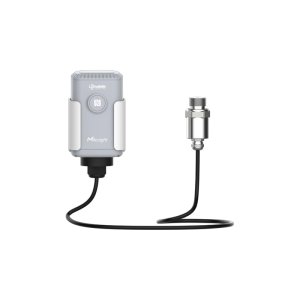 The pipeline sensorMilesight EM500-PP Pipe Pressure Sensor
Wireless pipe pressure sensing for mains, risers and pump discharge — the core instrument, battery-powered for chambers.
£197.52 ex VATView →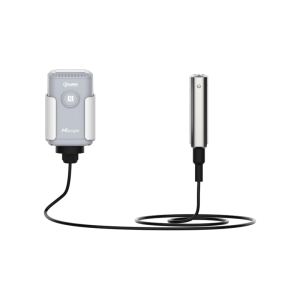 Tanks & wet wellsMilesight EM500-SWL Submersible Water Level Sensor
Submersible hydrostatic level — pairs with pressure to separate supply problems from demand problems.
From £251.38 ex VATView →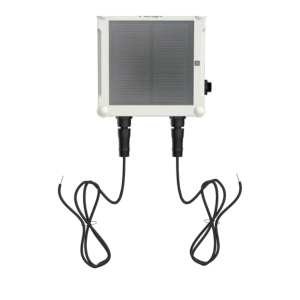 Act on the readingMilesight UC511 Solenoid Valve Controller
Solenoid valve controller: automatic shut-off or zone isolation driven by the same network's rules.
From £119.71 ex VATView →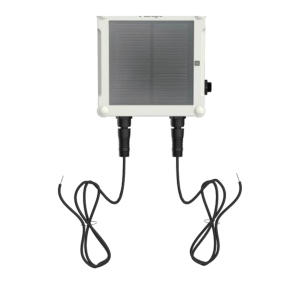 Two-valve controlMilesight UC512 Solenoid Valve Controller
The dual-channel controller for fill/isolate pairs and twin-zone arrangements.
From £127.19 ex VATView →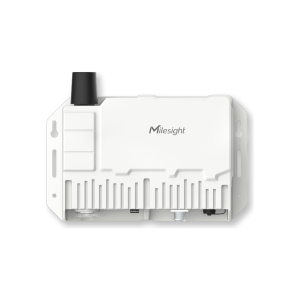 Chambers, no powerMilesight SG50 Ultra Low Power Solar LoRaWAN® Gateway
Solar LoRaWAN gateway — brings rural mains chambers and remote boosters online with zero infrastructure.
£683.83 ex VATView →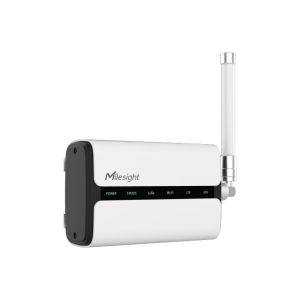 Starter bundleMilesight Water & Leak Monitoring Kit — Gateway + Level + Leak Sensors
Gateway, level and leak sensors in one kit — add the pressure sensor for a complete pilot.
£360.62 ex VATView →Compare components and prices
| Product | Best for | Connectivity | Price (ex VAT) |
|---|---|---|---|
| Milesight EM500-PP Pipe Pressure Sensor | Mains, risers, pump sets | LoRaWAN® | £197.52 |
| Milesight EM500-SWL Submersible Water Level Sensor | Tank & well level | LoRaWAN® | From £251.38 |
| Milesight UC511 Solenoid Valve Controller | Single-valve actuation | LoRaWAN® | From £119.71 |
| Milesight UC512 Solenoid Valve Controller | Dual-valve actuation | LoRaWAN® | From £127.19 |
| Milesight SG50 Ultra Low Power Solar LoRaWAN® Gateway | Remote chambers | LoRaWAN® gateway (solar) | £683.83 |
| Milesight Water & Leak Monitoring Kit — Gateway + Level + Leak Sensors | Pilot bundle | LoRaWAN® + gateway | £360.62 |
Where to tap, and what the patterns mean
Instrument the decision points: pump discharge (proves the set delivers), the far end of each zone (proves the customerss actually receive), either side of critical strainers or PRVs (differential exposes clogging and failure), and the highest point on the network (first to starve). On private estates the equivalents are the boiler-house header, each block’s riser base and the known complaint locations.
Then read patterns rather than points. A sharp synchronized drop across sensors is a burst — dispatch now. Slow decay at one point with normal neighbours is local: a strainer, a partially closed valve, a failing pump. Night pressure that never reaches static is the leakage signature worth chasing with the leak detection and tank level layers of the same system. Water pressure monitoring is cheap; interpreting it well is the multiplier.
- Pump discharge + zone extremities = the minimum honest picture
- Differential across strainers/PRVs exposes clogging before failure
- Synchronised drops = burst; lone decay = local restriction
- Night-line pressure that never recovers = background leakage
- Valve controllers close the loop for isolation and protection
- Battery sensors live happily in chambers — no power, no cabling
From one main to a network
Chambers and boosters join a local gateway or, for scattered rural assets, the solar SG50 per cluster. Alerts route to the duty engineer with burst-pattern rules pre-configured; history exports for regulatory reporting and post-incident review.
The same network usually grows sideways within the season: level sensors on reservoirs and wet wells, Modbus bridges lifting pump-panel data, flow context where meters exist. See IoT for water utilities and the water networks solution for the full architecture.
Why buy from Indiott
Everything here ships from UK stock with GBP pricing and a human on the end of the phone. If you are rolling out across multiple sites, ask for volume pricing — quotes normally come back within one working day.
Frequently asked questions
How does a wireless pressure sensor attach to the pipe?
Via a standard threaded tapping — the same fitting a gauge would use, on mains, manifolds or pump discharge. Installation is a fitter’s routine job during any planned intervention, and the battery electronics then report from the chamber for years without power or cabling.
What pressure range and accuracy do these cover?
The range covers typical distribution and building-services duties with accuracy comfortably sufficient for burst detection, pump verification and trend analysis. If you have a specific duty point — high-head pumping, very low-pressure rural mains — tell us and we will confirm the right variant before you order.
Can water pressure monitoring find leaks on its own?
It finds the signature — night pressure failing to recover, zones drawing when they should be static — which tells you where to look. Pinpointing then uses correlation, acoustic work or the spot/zone sensors from our leak detection guide. The pressure layer is what makes the search targeted instead of general.
Does this integrate with SCADA?
Yes — data flows out over standard integrations (MQTT, APIs, webhooks) into SCADA historians and dashboards, and many operators run this as the low-cost extension layer: SCADA on the major assets, wireless sensing filling the network between them.
Put a pulse on the network
Describe the network — zones, pumps, known trouble spots — and we will design the water pressure monitoring layout with pricing within one working day.
Next step
Scope it with an engineer.
Tell us the site, the assets and the constraint. You get a bill of materials and a straight answer within one working day.
- A bill of materials sized to your site
- Priced ex VAT, UK entity, no login wall
Rather talk it through? Call 023 9223 3611
Received. An engineer has it.
You will hear back within one working day with the parts, the prices and the lead time. A confirmation is on its way to your inbox.
If it is urgent, call 023 9223 3611.
More buying guides