BUYING GUIDE · UK STOCK
Water Leak Detection Systems for Commercial Buildings
Escape of water is one of the most expensive things that happens to commercial buildings — and almost all of it starts small. Wireless sensors catch the drip before it becomes the insurance claim.
Catch the leak while it is still a puddle
A water leak detection system pays for itself the first time a heater valve weeps into a ceiling void on a Saturday. Escape of water consistently ranks among the costliest classes of UK commercial property claim, and the damage is a function of time: a leak found in minutes is a mop job, the same leak found on Monday is a strip-out.
A wireless water leak detection system needs no cabling to each point: battery sensors sit under risers, boilers and ceiling voids for years, and alert your phone the moment their probes or sensing cable get wet. Insurers increasingly ask about leak detection at renewal — some now require it in specifications for new fit-outs (see ABI guidance on escape of water).
Sensors that make up the water leak detection system
Three detection styles cover every risk point in a building: spot probes for known drip points, membrane pads for flat areas, and sensing cable for perimeters and long runs. Mix them freely — they all report into the same dashboard.
 Under sinks & boilersMilesight WS303 Mini Leak Detection Sensor
Tiny spot sensor that tucks under appliances, sinks and AHU drip trays. The cheapest way to cover many known risk points.
£41.90 ex VATView →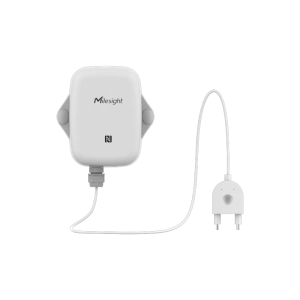 Plant roomsMilesight EM300-SLD Spot Leak Detection Sensor
Spot leak probe with a separate detection lead — mount the body high and dry, put the probe where water pools first.
£53.87 ex VATView →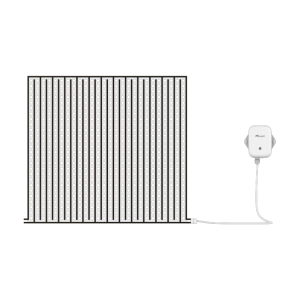 Flat areas & voidsMilesight EM300-MLD Membrane Leakage Detection Sensor
Membrane sensor that watches a surface area rather than a single point — ideal for ceiling voids and under raised floors.
£62.85 ex VATView →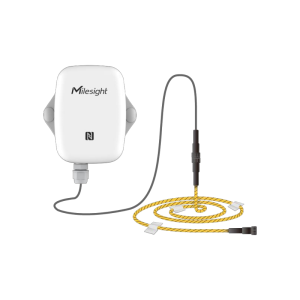 Perimeters & pipe runsMilesight EM300-ZLD Zone Leak Detection Sensor
Zone sensor with sensing cable: run the cable along a riser, around a tank base or the full perimeter of a server room.
£71.82 ex VATView →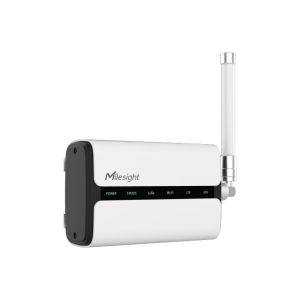 Complete starter systemMilesight Water & Leak Monitoring Kit — Gateway + Level + Leak Sensors
Gateway, level and leak sensors in one bundle — a working water leak detection system out of the box.
£360.62 ex VATView →Multi-floor buildingsMilesight UG65 Semi-industrial LoRaWAN GatewaySemi-industrial LoRaWAN gateway with the punch to carry sensors across several floors of concrete.
From £279.82 ex VATView →Compare detection types and prices
| Product | Best for | Connectivity | Price (ex VAT) |
|---|---|---|---|
| Milesight WS303 Mini Leak Detection Sensor | Spot: appliances, sinks | LoRaWAN® | £41.90 |
| Milesight EM300-SLD Spot Leak Detection Sensor | Spot: plant rooms | LoRaWAN® | £53.87 |
| Milesight EM300-MLD Membrane Leakage Detection Sensor | Area: voids, flat roofs | LoRaWAN® | £62.85 |
| Milesight EM300-ZLD Zone Leak Detection Sensor | Zone: cable perimeters | LoRaWAN® | £71.82 |
| Milesight Water & Leak Monitoring Kit — Gateway + Level + Leak Sensors | Bundle with gateway | LoRaWAN® + gateway | £360.62 |
| Milesight UG65 Semi-industrial LoRaWAN Gateway | Building-wide gateway | LoRaWAN® gateway | From £279.82 |
How to design the system for your building
Walk the building and list every place water can appear: risers, tank rooms, boiler and plant rooms, AHUs, tea points, dishwashers, WCs, ceiling voids below roof plant, and anything above a server room or archive. Then match the detection style to the geometry — spot sensors for point risks, membrane pads where water would spread across a surface, sensing cable where a whole run or perimeter needs cover.
Prioritise by consequence, not probability. The tea point above the comms room matters more than the ground-floor WC. A sensible first phase covers the ten highest-consequence points — typically under £600 of hardware — and expands later, because adding a sensor to an existing water leak detection system takes five minutes.
- Spot sensors: one per appliance or drip point — cheapest per point
- Membrane sensors: voids, raised floors and flat roofs where water spreads
- Cable zones: risers, tank surrounds, server-room perimeters
- Alert routing: push and email as standard, SMS escalation for out-of-hours
- Battery devices — no electrician, no redecorating, install during occupation
- Pair with door and temperature sensors on the same gateway for full plant-room cover
From sensors to a system
One LoRaWAN gateway carries every sensor in the building — a UG65 handles most multi-floor buildings, and the gateway guide covers the edge cases. Alerts route to whoever is on call: FM helpdesk email during hours, security’s phone overnight.
For pump-down or shut-off automation, the same network drives solenoid valve controllers — detection and response in one loop. Water bills creeping up with no visible leak? Add level sensors on tanks to spot slow losses (see Waterwise for why UK non-household leakage matters).
Why buy from Indiott
Everything here ships from UK stock with GBP pricing and a human on the end of the phone. If you are rolling out across multiple sites, ask for volume pricing — quotes normally come back within one working day.
Frequently asked questions
How do the sensors raise the alarm?
Each sensor reports over LoRaWAN to the site gateway, which pushes the event to the monitoring dashboard — from there you get app push, email or SMS within seconds of water touching the probe. Alert rules are per sensor, so a plant-room zone can page the on-call engineer while a tea point just emails the helpdesk.
Wired or wireless water leak detection — which is better?
Wired systems make sense in new builds where cable runs are free. In an occupied building, wireless wins on every axis: a battery sensor installs in minutes with zero disruption, moves when the risk moves, and costs a fraction of a cabled point once installation labour is counted.
Where should sensors go first?
Highest consequence first: anything above IT rooms, archives or lift motor rooms; then plant rooms and risers; then appliance points. Ten well-placed sensors catch the large majority of escape-of-water events in a typical commercial building.
Can it turn the water off automatically?
Yes — pair the sensors with a LoRaWAN solenoid valve controller on the incoming main or a zone valve. Most clients start with detection and alerts, then add automatic shut-off on unattended floors once they trust the system.
Get a leak-detection layout for your building
Send us a floor count and plant-room list and we will design the water leak detection system point by point, with volume pricing — normally within one working day.
The short answer
How does a commercial water leak detection system work?
Battery sensors sit where water would first appear: under pipework, in risers, on plant room floors, along cable trays. Each reports wirelessly to a gateway the moment it detects water, and the gateway raises an alert by app, email or SMS. There is no cabling to each point, so a retrofit across an occupied building takes days rather than weeks.
Related
Buying this in the UK
- Supplied by Indiott, a trading name of PSI Technologies Limited (Companies House 03689664, VAT GB 730 2340 83), Hampshire, United Kingdom.
- Every price is published ex VAT at indiott.com — no quote needed to see it.
- Typically dispatched within 14 working days from the UK, on a VAT invoice.
- Call 023 9223 3611 or request a quote.
Next step
Scope it with an engineer.
Tell us the site, the assets and the constraint. You get a bill of materials and a straight answer within one working day.
- A bill of materials sized to your site
- Priced ex VAT, UK entity, no login wall
Rather talk it through? Call 023 9223 3611
Received. An engineer has it.
You will hear back within one working day with the parts, the prices and the lead time. A confirmation is on its way to your inbox.
If it is urgent, call 023 9223 3611.
More buying guides
By industry