BUYING GUIDE · WORKPLACE
Office Air Quality Monitoring That Pays for Itself
Half of workplace comfort complaints are really ventilation problems. Put a number on every meeting room and open plan zone, and stop arguing about whether the air is 'stuffy'.
Measure the air people argue about
Office air quality monitoring settles the oldest argument in facilities management with data: is meeting room 3 actually stuffy, or is it folklore? CO2, temperature, humidity and TVOC sensors put live numbers on every space, so FM teams fix ventilation where it genuinely fails and stop chasing anecdotes.
The same data earns its keep twice more. It right-sizes ventilation energy — most AHUs run flat out for a building that is 40 % occupied — and it feeds wellbeing reporting that leasing teams and CIBSE-aligned building certifications increasingly expect. Office air quality monitoring is the cheapest data layer a smart building can add.
The office air quality monitoring sensors to deploy
Pick the tier per space: basic temperature/humidity for circulation areas, CO2 units for meeting rooms and open plan, and the full multi-parameter sensor for showcase floors. All share one gateway.
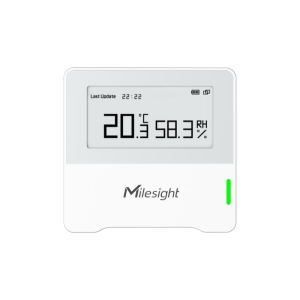 Circulation & storageMilesight AM102 Indoor Ambience Monitoring Sensor
Accurate temperature and humidity at the lowest per-point price — blanket coverage for back-of-house.
£47.88 ex VATView →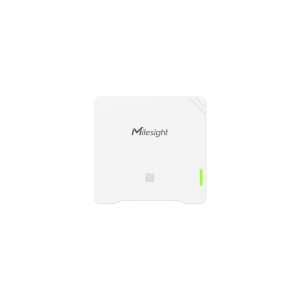 Budget blanket coverMilesight AM102L Indoor Ambience Monitoring Sensor
The L-variant of the AM102 for large counts where every pound per point matters.
£38.90 ex VATView →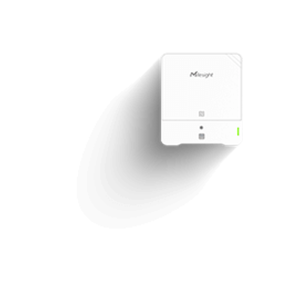 Zones + presenceMilesight AM304L Indoor Ambience Monitoring Sensor
Adds light and PIR motion — comfort data with occupancy context for desk zones.
£71.82 ex VATView →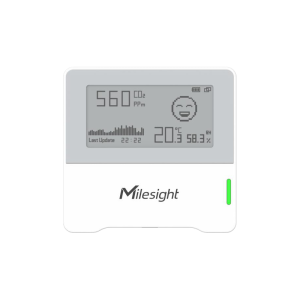 Meeting roomsMilesight AM103 / AM103L Indoor Ambience Monitoring Sensor
CO2, temperature and humidity: the meeting-room stuffiness sensor, with the history to prove it.
From £127.19 ex VATView →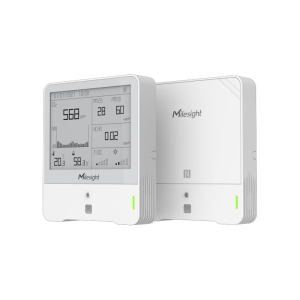 Client-facing floorsMilesight AM307 / AM308 Indoor Ambience Monitoring Sensor
Multi-parameter with on-device display — occupants see the live state, FM sees the trend.
From £224.45 ex VATView →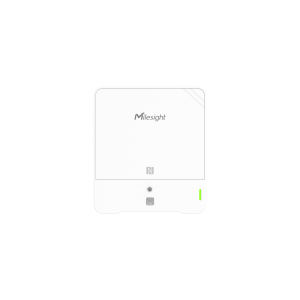 Showcase & wellnessMilesight AM308L Indoor Ambience Monitoring Sensor
8-in-1 including TVOC and barometric pressure for premium floors and wellness reporting.
£239.41 ex VATView →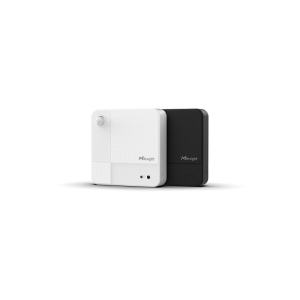 Bundle with gatewayMilesight Smart Building Occupancy Kit — Occupancy + Air Quality + Gateway
Occupancy, air quality and gateway in one kit — a working pilot floor out of the box.
£531.21 ex VATView →Compare sensor tiers
| Product | Best for | Connectivity | Price (ex VAT) |
|---|---|---|---|
| Milesight AM102 Indoor Ambience Monitoring Sensor | Back-of-house baseline | LoRaWAN® | £47.88 |
| Milesight AM304L Indoor Ambience Monitoring Sensor | Desk zones + PIR | LoRaWAN® | £71.82 |
| Milesight AM103 / AM103L Indoor Ambience Monitoring Sensor | Meeting rooms (CO2) | LoRaWAN® | From £127.19 |
| Milesight AM307 / AM308 Indoor Ambience Monitoring Sensor | Display floors | LoRaWAN® | From £224.45 |
| Milesight AM308L Indoor Ambience Monitoring Sensor | Premium multi-parameter | LoRaWAN® | £239.41 |
| Milesight Smart Building Occupancy Kit — Occupancy + Air Quality + Gateway | Pilot-floor bundle | LoRaWAN® + gateway | £531.21 |
Which parameters actually matter
CO2 is the workhorse: it tracks how well ventilation keeps up with people, and it is the metric HSE’s workplace ventilation guidance leans on. Temperature and humidity are the comfort pair — most complaints live in their interaction, not in either number alone. TVOC catches off-gassing after fit-outs and cleaning regimes gone wrong; particulates matter near busy roads or workshops.
Spend where people concentrate: meeting rooms fail first because ventilation was designed for four people and the room hosts ten. A sensible rollout is CO2-class sensors in every enclosed meeting space, mid-tier units per open-plan zone, and cheap temperature/humidity everywhere else. That pattern gives complete office air quality monitoring coverage at roughly half the cost of uniform top-tier hardware.
- Meeting rooms: alert at 1000 ppm CO2, act at 1500 ppm
- Comfort band: 21–24 °C and 40–60 % RH covers most UK offices
- TVOC spikes after fit-out or new furniture are worth a look, not a panic
- PIR-equipped models add occupancy context — was the room even in use?
- Battery sensors relocate freely when floors are re-planned
- History defends the FM team when the complaint reaches the board
Rollout and what it connects to
One UG65 gateway per floor plate or small building carries everything; sensors mount at seated head height away from direct sun and supply grilles. A 100-point office deploys in a day or two with adhesive mounts — no cabling, no ceiling access, no disruption.
Dashboards give FM live state and monthly trends; webhooks and APIs push events into Teams or the CAFM system. Pair with desk occupancy sensors on the same network and you get the full workplace picture — air plus utilisation — from one gateway investment.
Why buy from Indiott
Everything here ships from UK stock with GBP pricing and a human on the end of the phone. If you are rolling out across multiple sites, ask for volume pricing — quotes normally come back within one working day.
Frequently asked questions
What should CO2 be in an office?
Outdoor air is about 420 ppm; a well-ventilated office sits under 800 ppm. Sustained readings above 1000 ppm mean ventilation is not keeping up with occupancy and people will describe the space as stuffy. Above 1500 ppm, expect drowsiness complaints — treat that as an action level.
Can this reduce our energy bills?
Often substantially. Air quality data exposes where AHUs over-ventilate empty spaces; matching ventilation schedules to measured CO2 and occupancy typically trims HVAC energy without any comfort complaint — the data protects you both ways.
How is this different from the BMS sensors we already have?
BMS points live in ducts and plant, measuring what the system supplies — not what people breathe at desk height. Wireless room sensors measure the occupied zone itself, deploy in minutes without controls contractors, and cover the meeting rooms the BMS never instrumented.
What does a floor cost?
A typical floor plate — six meeting rooms on CO2-class sensors, four open-plan zones mid-tier, plus a gateway — lands around £1,500 ex VAT at the prices shown. Multi-floor volume pricing is available on request.
Pilot one floor, then scale
Tell us your floor plate and meeting-room count and we will spec office air quality monitoring for a pilot floor with volume pricing for the rest — quote within one working day.
Next step
Scope it with an engineer.
Tell us the site, the assets and the constraint. You get a bill of materials and a straight answer within one working day.
- A bill of materials sized to your site
- Priced ex VAT, UK entity, no login wall
Rather talk it through? Call 023 9223 3611
Received. An engineer has it.
You will hear back within one working day with the parts, the prices and the lead time. A confirmation is on its way to your inbox.
If it is urgent, call 023 9223 3611.
More buying guides