BUYING GUIDE · SPECIFICATION
LoRaWAN Sensor Housings and Enclosures: What You Actually Need
Most industrial LoRaWAN sensors arrive already sealed to IP65, IP67 or IP68. Before you specify an enclosure, check what you have already bought, and what a metal box does to 868 MHz.
Do LoRaWAN sensors need an enclosure?
Most industrial LoRaWAN sensors do not need a separate housing. They are sold already sealed to IP65, IP67 or IP68, which is a higher rating than the enclosure most people are about to buy. Of the 105 priced devices in this catalogue, 38 are rated IP65 or better and are designed to be mounted outdoors, in plant rooms, in chambers or underwater as supplied.
Putting one of those inside a second box usually makes the installation worse, not better, for a reason that is easy to miss: a metal enclosure is a radio shield. LoRaWAN works at 868 MHz and depends on a clear path from the sensor’s antenna to the gateway. Seal a sensor inside a steel or aluminium cabinet and you can lose most of your link budget, turning a two kilometre range into a few metres. If you take one thing from this page, take that.
What the IP rating on the datasheet actually means
Ingress protection is defined by IEC 60529 and is always two digits. The first is solids, the second is liquids. Higher is not automatically better for you, because the second digit is not a simple ladder: IP65 is tested against water jets, IP67 against temporary immersion, and a device can be rated for one and not the other.
| Rating | Solids | Liquids | What it means on site |
|---|---|---|---|
| IP20 | Fingers | None | Indoor, dry rooms only. Wall switches and panels. |
| IP30 | Tools, 2.5 mm | None | Indoor. Offices, corridors, retail, comms rooms. |
| IP40 | Wires, 1 mm | None | Indoor ceiling mount. Most people counters sit here. |
| IP65 | Dust tight | Water jets from any direction | Outdoors under cover, wash-down areas, plant rooms. |
| IP66 | Dust tight | Powerful water jets | Exposed outdoor, vehicle wash, high pressure cleaning. |
| IP67 | Dust tight | Immersion to 1 m for 30 minutes | Fully exposed outdoor, chambers that occasionally flood. |
| IP68 | Dust tight | Continuous immersion, depth per manufacturer | Permanently submerged. Wet wells, tanks, sumps. |
Two practical consequences. First, IP67 does not imply IP66: a device certified for immersion has not necessarily been jet-tested, so check both if you are specifying for a wash-down bay. Second, an IP rating says nothing about temperature, UV or chemical exposure. Those are separate lines on the datasheet and they are usually the ones that fail first.
Sensors that are already rated for the environment
These ship sealed, with the rating on the manufacturer datasheet. No enclosure, no gland, no additional assembly. Prices are ex VAT.
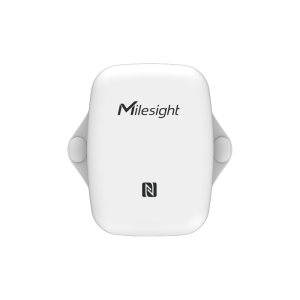 IP67 · -30°C to +70°CMilesight EM300-TH Temperature and Humidity Sensor
The default outdoor temperature and humidity sensor. Sealed, replaceable cell, mounts on a wall or a post as it comes.
From £38.90 ex VATView →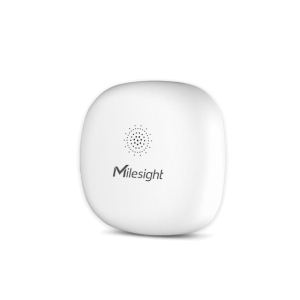 IP67 · -10°C to +60°CMilesight WS303 Mini Leak Detection Sensor
Sits on the floor in a plant room or under a pipe run. Being sealed is the entire point of the device.
From £41.90 ex VATView →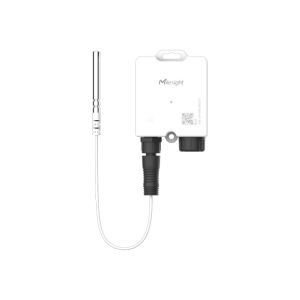 IP67 · -30°C to +55°CMilesight TS201 Temperature Sensor
Sealed body with an external probe, so the electronics stay dry while the probe goes into the cold space or the pipe.
From £44.89 ex VATView →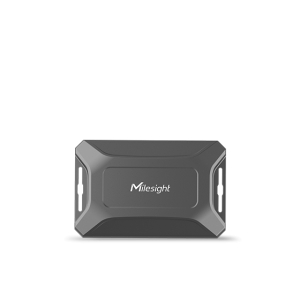 IP67 · -30°C to +70°CMilesight AT101 Outdoor Asset Tracker
Built to be bolted to plant and left in a yard through a British winter. Adding a box would block its GNSS fix.
From £97.26 ex VATView →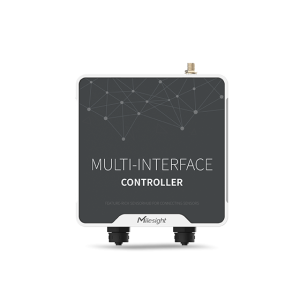 IP68 · -30°C to +70°CMilesight UC502 IoT Controller
Remote IO rated for continuous immersion, which is why it goes straight into a chamber where a DIN panel could not.
From £122.70 ex VATView →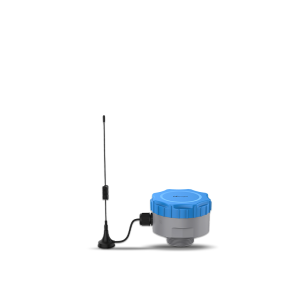 IP68 · -40°C to +70°CMilesight EM410-RDL Radar Distance/Level Sensor
The widest operating range in the catalogue. Radar reads through condensation and foam that defeat ultrasonics.
From £224.45 ex VATView →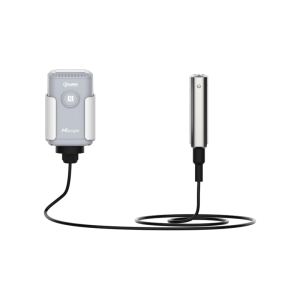 IP67 body · submersible probeMilesight EM500-SWL Submersible Water Level Sensor
The probe is meant to sit in the water. Enclosing the transmitter above it is the one case where a box helps.
From £251.38 ex VATView →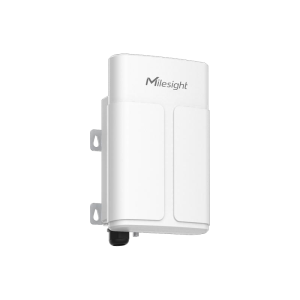 IP67 · -40°C to +70°CMilesight UG67 Outdoor LoRaWAN Gateway
Pole or wall mounted outdoor gateway. The single most common thing people wrongly try to put in a cabinet.
From £658.39 ex VATView →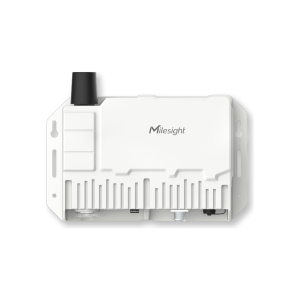 IP67 · -30°C to +70°CMilesight SG50 Solar LoRaWAN Gateway
Solar and 4G, so there is no cabinet, no mains feed and no enclosure to specify at all.
From £683.83 ex VATView →Every priced product with its IP rating and operating temperature is published as JSON, so you can filter the whole range against your own environmental spec rather than reading datasheets one at a time.
When you genuinely do need an enclosure
There are four. Outside these, specifying a higher IP rating is cheaper, faster and more reliable than adding a box.
- An indoor-rated device has to go somewhere wet. If the job needs an IP30 controller in a plant room, an enclosure is the correct answer. Check first whether a sealed variant exists, because it usually does and it usually costs less than the enclosure plus the labour.
- Mains wiring or terminals are exposed. The device may be sealed, but a junction, a PSU or a DIN rail assembly beside it is not. The enclosure is protecting the wiring, not the sensor.
- Physical security or vandalism. Public realm, school grounds, car parks. Here you are buying a lockable box, and IP rating is a side effect rather than the requirement.
- Hazardous area classification. ATEX and IECEx zones are a certification question, not an ingress question. A standard sensor in a standard enclosure is not compliant, whatever the IP rating on either. This needs a certified device, and it is one of the things our engineering line is built for.
If you do enclose one, three things to get right
Never use metal. Steel, aluminium and stainless all attenuate 868 MHz badly, and a sealed metal box approximates a Faraday cage. Use ABS, polycarbonate or GRP without a metallic mesh or foil liner. If the enclosure must be metal, the antenna has to be outside it on a bulkhead connector, which most battery sensors do not support.
Watch the thermal side. A sealed box in direct sun runs well above ambient. Sensors are rated to +60°C or +70°C, and lithium cells lose capacity and eventually vent when held near the top of that range. Mount on a north-facing surface, use a light colour, or fit a shade. A vented enclosure with a membrane gland is often better than a fully sealed one for exactly this reason.
Do not enclose the measurement. An air quality, temperature or humidity sensor inside a box measures the box. Ultrasonic and radar level sensors need a clear, unobstructed path to the surface. If the sensing element has to see the environment, then the housing has to be the environment.
We do not sell separate enclosures
Worth saying plainly, because it is probably why you are here. Indiott does not stock generic IP-rated boxes. We take the view that on most industrial LoRaWAN jobs the enclosure is a symptom of the wrong device being specified, and the better fix is the right IP rating in the first place.
Where a project genuinely needs a housed or hazardous-area assembly, that is a build rather than a product: the Indiott Engineering line covers level, radar level, gulley, ATEX level, flood and river monitoring, designed and built in the UK for exactly these conditions. Tell us the environment and we will scope it, normally within one working day.
Specify it against your environment
Send us the conditions the device has to survive: outdoor or indoor, wash-down, submerged, temperature extremes, hazardous area classification. We will come back with the models that already meet it and the price, normally within one working day.
The short answer
Do LoRaWAN sensors need an industrial housing?
Usually not. Industrial LoRaWAN sensors ship already sealed, most to IP65, IP67 or IP68, which is normally a higher rating than an add-on enclosure achieves once it is drilled for a gland. Check the ingress protection line on the datasheet first: 38 of the 105 priced devices Indiott stocks are IP65 or better as supplied.
Frequently asked questions
Do LoRaWAN sensors need a weatherproof housing?
Usually no. Industrial LoRaWAN sensors are sold already sealed, most commonly to IP65, IP67 or IP68, which is normally a higher rating than an add-on enclosure achieves once it has been drilled for a gland. Check the ingress protection line on the datasheet before you specify a box. Of the 105 priced devices Indiott stocks, 38 are IP65 or better as supplied.
Will a metal enclosure affect LoRaWAN range?
Yes, severely. LoRaWAN in the UK runs at 868 MHz and a sealed metal box behaves like a Faraday cage, absorbing and reflecting the signal instead of letting it out. Range can fall from kilometres to metres. If an enclosure is unavoidable, use ABS, polycarbonate or non-metallic GRP, or mount the antenna outside the enclosure on a bulkhead connector.
What is the difference between IP65, IP67 and IP68?
All three are dust tight, so the first digit is the same. The second digit differs: IP65 is tested against water jets, IP67 against temporary immersion to one metre for thirty minutes, and IP68 against continuous immersion to a depth the manufacturer states. IP67 does not automatically include the IP65 jet test, so if you need wash-down resistance confirm both are listed.
Can I put a LoRaWAN sensor in an existing electrical cabinet?
You can, but assume the radio will not work from inside a metal one. The usual fix is to mount the sensor outside the cabinet, or to run the sensing element inside on a probe while the transmitter body stays outside. Probe sensors such as the TS201 and the EM500 series are designed for exactly this split.
Does an IP rating cover UV, chemicals or hazardous areas?
No. Ingress protection under IEC 60529 covers solids and water only. UV stability, chemical compatibility and operating temperature are separate datasheet lines, and hazardous area use is a certification matter governed by ATEX or IECEx. A standard sensor inside a standard enclosure is not ATEX compliant regardless of its IP rating.
Does Indiott sell LoRaWAN enclosures?
No, Indiott does not stock generic IP-rated boxes. On most industrial jobs the right answer is a device already rated for the environment, which is cheaper and more reliable than a sensor plus an enclosure plus the labour to seal it. Where a project genuinely needs a housed or hazardous-area assembly it is built through the Indiott Engineering line rather than sold as a box.
Related
Buying this in the UK
- Supplied by Indiott, a trading name of PSI Technologies Limited (Companies House 03689664, VAT GB 730 2340 83), Hampshire, United Kingdom.
- Every price is published ex VAT at indiott.com — no quote needed to see it.
- Typically dispatched within 14 working days from the UK, on a VAT invoice.
- Call 023 9223 3611 or request a quote.
Next step
Scope it with an engineer.
Tell us the site, the assets and the constraint. You get a bill of materials and a straight answer within one working day.
- A bill of materials sized to your site
- Priced ex VAT, UK entity, no login wall
Rather talk it through? Call 023 9223 3611
Received. An engineer has it.
You will hear back within one working day with the parts, the prices and the lead time. A confirmation is on its way to your inbox.
If it is urgent, call 023 9223 3611.
More buying guides