BUYING GUIDE · BUILDINGS
Smart Lighting Control for Commercial & Communal Spaces
Lighting is the energy waste everyone can see and nobody owns: stairwells lit at 3 a.m., car parks blazing at noon. Wireless controllers retrofit schedules and sensors onto circuits you already have.
Switch what you already own, intelligently
Smart lighting control has a dirty secret: most of the savings need no new luminaires at all. The waste lives in when lights run, not what they are — corridors on 24/7 because the switch is ‘somewhere’, external lighting fighting the dawn, whole floors lit for one cleaner. Controllers that retrofit onto existing circuits fix the when for a fraction of a relighting project (the Carbon Trust has long ranked lighting controls among the fastest paybacks in commercial buildings).
The kit here is the retrofit path: a LoRaWAN controller in the ceiling void or panel takes over the circuit, wireless switches and scene panels go wherever people actually are (no chasing walls), and light and occupancy sensors close the loop. Smart lighting control without a BMS project, live in days.
The smart lighting control components
Controller for the circuits, wireless switching for the humans, sensors for the automation. All one network, all retrofit, all ex VAT from UK stock.
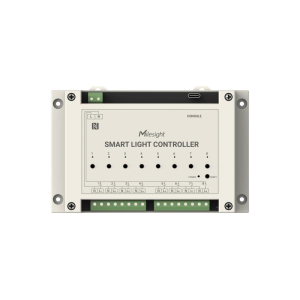 The circuit controllerMilesight WS558 Smart Light Controller
The core retrofit device: takes over lighting circuits in the void or panel, switching and metering them over LoRaWAN.
£104.74 ex VATView →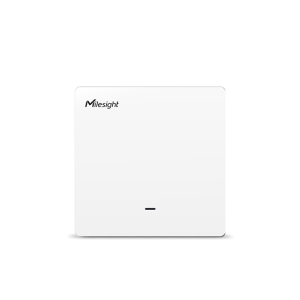 Wireless wall switchesMilesight WS501 Smart Scene Panel
Battery wall switches that mount anywhere — re-plan rooms without an electrician, ever.
£44.89 ex VATView →Scenes & zonesMilesight WS501 Smart Scene PanelScene panel for spaces with modes: hall/sports/exam lighting, meeting room presets, front-of-house scenes.
£44.89 ex VATView →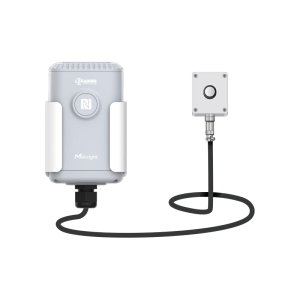 Daylight inputMilesight EM500-LGT Light Sensor
Outdoor-grade light sensor — dusk-to-dawn done properly, and daylight-off for perimeter zones.
£157.12 ex VATView →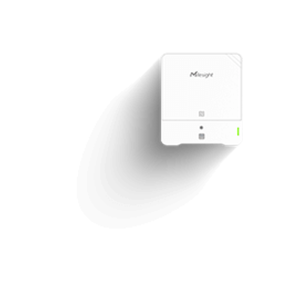 Occupancy inputMilesight AM304L Indoor Ambience Monitoring Sensor
PIR-equipped ambience sensor: lights follow presence in corridors, stores and stairwells.
£71.82 ex VATView →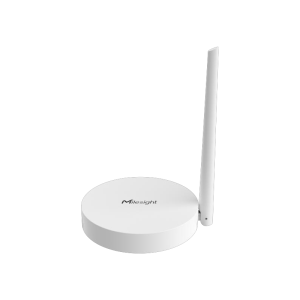 The gatewayMilesight UG63 Mini LoRaWAN® Gateway
Mini LoRaWAN gateway carrying every controller, switch and sensor in the building.
From £98.76 ex VATView →Compare components and prices
| Product | Best for | Connectivity | Price (ex VAT) |
|---|---|---|---|
| Milesight WS558 Smart Light Controller | Circuit switching + metering | LoRaWAN® | £104.74 |
| Milesight WS501 Smart Scene Panel | Wire-free wall switching | LoRaWAN® | £44.89 |
| Milesight WS501 Smart Scene Panel | Scene control | LoRaWAN® | £44.89 |
| Milesight EM500-LGT Light Sensor | Daylight sensing | LoRaWAN® | £157.12 |
| Milesight AM304L Indoor Ambience Monitoring Sensor | Occupancy sensing | LoRaWAN® | £71.82 |
| Milesight UG63 Mini LoRaWAN® Gateway | Site gateway | LoRaWAN® gateway | From £98.76 |
Where the savings actually are
Chase the always-on circuits first: stairwells, corridors, plant rooms, back-of-house and external lighting routinely burn more hours than the offices they serve. Schedules alone — off out of hours, dusk-to-dawn corrected by an actual light sensor rather than a drifting timeclock — capture most of it. Occupancy-linking then covers the genuinely intermittent spaces, with generous hold times so nobody gets plunged into darkness mid-corridor.
The WS558’s metering is the underrated feature: it measures each circuit as it controls it, so the before/after is a graph rather than a claim — useful when smart lighting control competes for budget against flashier projects. Communal housing is a sweet spot (landlord areas run on the landlord’s meter), as are schools out of hours and any site whose external lighting has quietly become a 12-hour fixture.
- Stairwells, corridors and external circuits first — the always-on offenders
- Real daylight sensing beats timeclocks that drift with the seasons
- Generous PIR hold times keep automation invisible to occupants
- Built-in metering proves the saving circuit by circuit
- Battery switches mean re-planning rooms never needs an electrician
- Emergency lighting stays on its own compliant circuits — untouched
Retrofit sequence that works
An electrician fits controllers at the panel or void (the only trade visit in the project); switches, panels and sensors then mount tool-free wherever they serve best. One UG63 gateway runs the building; schedules and scenes manage centrally with per-zone overrides.
Lighting rarely travels alone in the business case: the same network carries the energy monitoring that found the waste and the heating controls that usually follow. Housing providers pair it with damp monitoring across the same communal gateways — see the smart buildings solution.
Why buy from Indiott
We are engineers first and a shop second. Buy online in GBP from UK stock, or call us on 023 9223 3611 and we will sanity-check your device list before you spend a penny — the right frequency band (EU868), the right probe, the right gateway for the building.
Frequently asked questions
Does smart lighting control require rewiring?
No — that is the point of this architecture. The controller installs at the existing circuit (one electrician visit), and every switch, panel and sensor after that is wireless and battery-powered. Walls stay unchased, ceilings stay closed, and rooms re-plan freely afterwards.
What happens if the wireless fails — do the lights stop working?
Lights fail safe to normal operation: controllers hold their last schedule locally and physical override remains available. The wireless layer adds intelligence; it does not become a single point of failure for basic lighting.
Can it handle dusk-to-dawn external lighting properly?
Yes — the light sensor gives true ambient-level switching rather than a timeclock’s approximation, which alone typically trims external burn hours noticeably across a year. Add a schedule guard (never on between hours X–Y) for belt and braces.
Is this suitable for communal areas in housing blocks?
It is one of the best fits: landlord-metered lighting, predictable waste, and occupancy-linked corridors that keep residents feeling safe while cutting burn hours. The same gateway then serves the compliance sensors housing teams increasingly deploy anyway.
Start with the circuits that never sleep
List the always-on circuits — stairs, corridors, external — and we will spec the smart lighting control retrofit with metered-savings reporting, priced within one working day.
Next step
Scope it with an engineer.
Tell us the site, the assets and the constraint. You get a bill of materials and a straight answer within one working day.
- A bill of materials sized to your site
- Priced ex VAT, UK entity, no login wall
Rather talk it through? Call 023 9223 3611
Received. An engineer has it.
You will hear back within one working day with the parts, the prices and the lead time. A confirmation is on its way to your inbox.
If it is urgent, call 023 9223 3611.
More buying guides