BUYING GUIDE · LOGISTICS
Warehouse Temperature Monitoring & Humidity Mapping
A warehouse is not one temperature — it's a map of them. Cheap wireless points across the racking show the hot roof zones and damp corners before your stock does.
Your warehouse has microclimates
Warehouse temperature monitoring is a mapping problem: the mezzanine under the roof runs hot in July, the corner by the dock doors swings with every opening, and the racking against the north wall grows damp in winter. One thermometer in the office measures none of it — stock damage happens in the zones nobody instruments.
Battery sensors change the economics of doing it properly: at under £40 per point you can grid an entire shed, and warehouse temperature monitoring becomes continuous evidence rather than an annual thermographic survey. For pharma and food logistics working under MHRA Good Distribution Practice, that mapping and its records are not optional — they are the audit.
The warehouse temperature monitoring kit
Grid the space with low-cost points, add probe sensors for cold zones and process points, and pick the gateway by shed size. All prices ex VAT from UK stock.
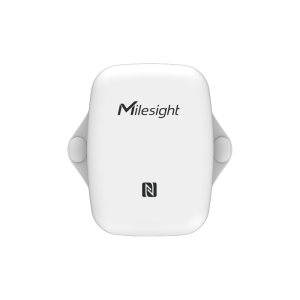 The grid workhorseMilesight EM300-TH Temperature and Humidity Sensor
Temperature and humidity per point at the price that makes a proper mapping grid affordable.
£38.90 ex VATView →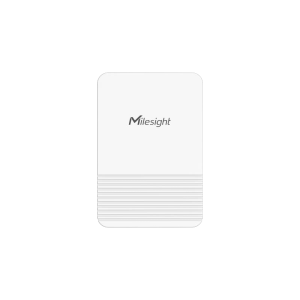 Racking & tight spotsMilesight EM320-TH Temperature and Humidity Sensor
Slim variant that tucks into racking uprights and awkward positions.
£41.90 ex VATView →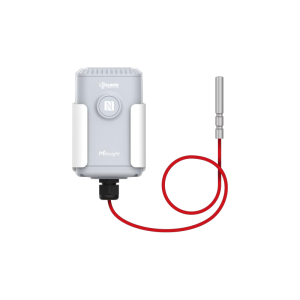 Process & probe pointsMilesight EM500-PT Industrial Temperature Sensor
Industrial PT100-probe sensor for ovens, chillers and anywhere needing a physical probe.
From £116.71 ex VATView → Overflow & remote shedsMilesight TS601 Cellular Temperature Sensor
Cellular temperature sensor for the annex with no gateway — works anywhere with mobile signal.
£74.82 ex VATView →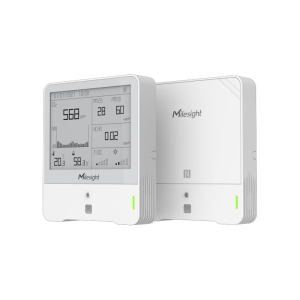 Offices & pick zonesMilesight AM307 / AM308 Indoor Ambience Monitoring Sensor
Multi-parameter unit with display for staffed areas where CO2 and comfort matter too.
From £224.45 ex VATView →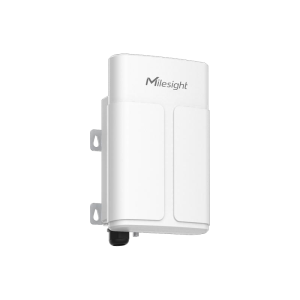 Big-shed gatewayMilesight UG67 Outdoor LoRaWAN Gateway
The outdoor-class gateway with the radio to blanket a large steel shed and the yard.
£658.39 ex VATView →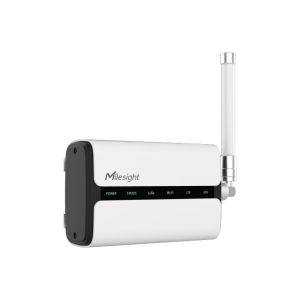 Starter bundleMilesight LoRaWAN Starter Kit — Gateway + 3 Environmental Sensors
Gateway plus three environmental sensors — a pilot zone in one box.
£619.49 ex VATView →Compare points and prices
| Product | Best for | Connectivity | Price (ex VAT) |
|---|---|---|---|
| Milesight EM300-TH Temperature and Humidity Sensor | Mapping grid points | LoRaWAN® | £38.90 |
| Milesight EM320-TH Temperature and Humidity Sensor | Racking positions | LoRaWAN® | £41.90 |
| Milesight EM500-PT Industrial Temperature Sensor | Probe/process points | LoRaWAN® | From £116.71 |
| Milesight TS601 Cellular Temperature Sensor | No-gateway annexes | LTE Cat 1 cellular | £74.82 |
| Milesight AM307 / AM308 Indoor Ambience Monitoring Sensor | Staffed areas | LoRaWAN® | From £224.45 |
| Milesight UG67 Outdoor LoRaWAN Gateway | Large-shed gateway | LoRaWAN® gateway | £658.39 |
| Milesight LoRaWAN Starter Kit — Gateway + 3 Environmental Sensors | Pilot bundle | LoRaWAN® + gateway | £619.49 |
How many points, and where
Map by risk, then by geometry. GDP-style practice puts sensors where a mapping study finds extremes — high near the roof, low near floors and doors, plus every distinct storage zone. A pragmatic grid for a general shed: one point per 500–1000 m² per level, doubled along the problem walls and at dock doors. Ambient pharma space (15–25 °C) instruments tighter than general merchandise.
Humidity deserves equal billing: cardboard collapses, metal corrodes and electronics suffer long before temperature alone flags a problem, which is why every grid point here reads both. If staff comfort is also in scope, HSE’s workplace temperature guidance applies — the same warehouse temperature monitoring grid answers that conversation too.
- Grid density: 1 point per 500–1000 m² per level, plus every risk zone
- Roof-adjacent mezzanines and dock-door zones are the classic extremes
- 15–25 °C band for ambient pharma; alarm margins inside it
- Humidity above ~65 % RH sustained = mould and cardboard risk
- Steel sheds carry LoRaWAN well — one gateway usually covers all of it
- Cellular points cover detached annexes without extending the network
Rollout across the estate
A single UG67 (or a UG65 for smaller sheds) typically covers the building and the yard; sensors zip-tie to racking in minutes. Multi-site 3PL estates roll every shed into one dashboard with per-zone alert rules and exportable audit trails.
Cold zones extend with the same probes we spec for fridge monitoring, and dock-door contacts plus tank level sensors ride the same gateway. See IoT for logistics and IoT for cold chain for the sector view.
Why buy from Indiott
We are engineers first and a shop second. Buy online in GBP from UK stock, or call us on 023 9223 3611 and we will sanity-check your device list before you spend a penny — the right frequency band (EU868), the right probe, the right gateway for the building.
Frequently asked questions
How many sensors does a 10,000 m² warehouse need?
As a starting grid: ten to twenty points per storage level, weighted toward roof-adjacent, door-adjacent and known-problem zones, then refined after the first month’s map. At the per-point prices here that is under £800 of sensors — less than the first pallet of stock the map saves.
Will LoRaWAN reach through full racking?
Steel sheds are actually good LoRaWAN environments — signals reflect and find paths, and one well-placed gateway typically covers the full footprint including yard. Dense high-bay estates sometimes add a second gateway at the far end; a coverage survey answers it definitively before you commit.
Does this satisfy a GDP audit?
It provides what auditors ask for: mapped sensor placement, continuous records, alarm history and response evidence, exportable per zone and date range. Placement should follow your own mapping exercise — we can advise on grid design against MHRA GDP expectations.
What about our freezer and chill chambers?
Instrument them with the probe-type sensors from our fridge monitoring guide — external probes with the transmitter outside the cold zone. Chambers and ambient space then share one gateway, one dashboard and one alerting scheme.
Map the shed before summer does
Send us the footprint and rack plan and we will design the warehouse temperature monitoring grid with exact pricing — normally back within one working day.
Next step
Scope it with an engineer.
Tell us the site, the assets and the constraint. You get a bill of materials and a straight answer within one working day.
- A bill of materials sized to your site
- Priced ex VAT, UK entity, no login wall
Rather talk it through? Call 023 9223 3611
Received. An engineer has it.
You will hear back within one working day with the parts, the prices and the lead time. A confirmation is on its way to your inbox.
If it is urgent, call 023 9223 3611.
More buying guides