BUYING GUIDE · AGRICULTURE
Soil Moisture Sensors for Agriculture & Grounds
Irrigation without soil data is guesswork with a water bill. Probes tell you what the root zone actually holds; valve controllers act on it automatically.
Water by measurement, not by calendar
A soil moisture sensor replaces the two most expensive words in irrigation — ‘just in case’ — with a number from the root zone. Growers, groundskeepers and vineyard managers all fight the same asymmetry: over-watering wastes water, leaches nutrients and invites disease; under-watering shows up as yield you never see. Measurement removes the gamble.
The EM500-SMTC probe reads three things that together tell the whole story: volumetric moisture, soil temperature and electrical conductivity (a nutrient/salinity proxy). Add LoRaWAN valve controllers and the loop closes — irrigation runs when the soil asks for it. Sector bodies like AHDB and Waterwise both document the savings measured irrigation delivers.
The soil moisture sensor system
Probes for the root zone, controllers for the valves, a weather station for context and a solar gateway for fields — the complete measured-irrigation stack, all ex VAT from UK stock.
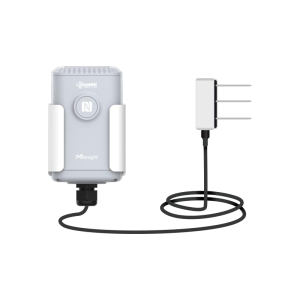 The root-zone probeMilesight EM500-SMTC Soil Moisture, Temperature and Electrical Conductivity Sensor
Moisture, temperature and EC in one buried probe — the measurement everything else acts on.
£371.09 ex VATView →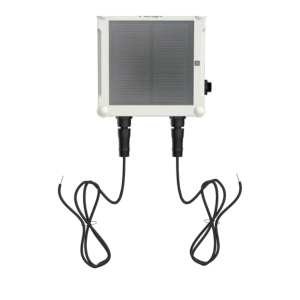 Single-valve controlMilesight UC511 Solenoid Valve Controller
LoRaWAN solenoid valve controller — opens and closes irrigation on rules or remote command.
From £119.71 ex VATView →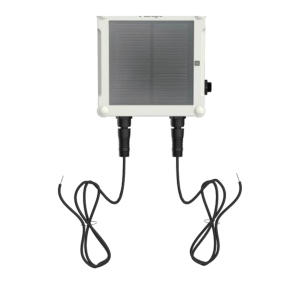 Dual-valve controlMilesight UC512 Solenoid Valve Controller
Two-channel valve controller for paired zones and mains/backup arrangements.
From £127.19 ex VATView →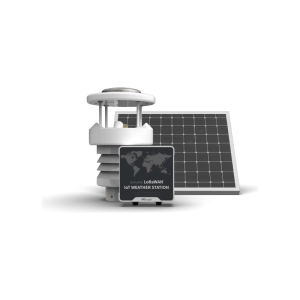 Weather contextMilesight WTS506 IoT Weather Station
Professional IoT weather station: rainfall, wind, temperature — the forecast side of the irrigation decision.
£2,244.51 ex VATView →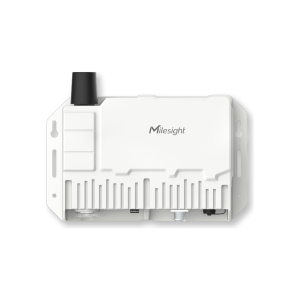 Field connectivityMilesight SG50 Ultra Low Power Solar LoRaWAN® Gateway
Solar LoRaWAN gateway brings whole fields online with zero infrastructure.
£683.83 ex VATView →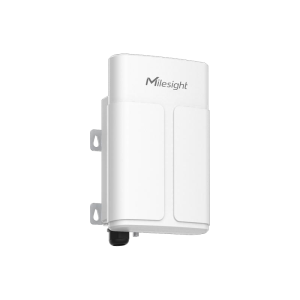 Estate coverageMilesight UG67 Outdoor LoRaWAN Gateway
Outdoor IP67 gateway for farmyards, glasshouses and grounds with power available.
£658.39 ex VATView →Compare the components
| Product | Best for | Connectivity | Price (ex VAT) |
|---|---|---|---|
| Milesight EM500-SMTC Soil Moisture, Temperature and Electrical Conductivity Sensor | Root-zone measurement | LoRaWAN® | £371.09 |
| Milesight UC511 Solenoid Valve Controller | 1-zone valve automation | LoRaWAN® | From £119.71 |
| Milesight UC512 Solenoid Valve Controller | 2-zone valve automation | LoRaWAN® | From £127.19 |
| Milesight WTS506 IoT Weather Station | Rain/wind/temp context | LoRaWAN® | £2,244.51 |
| Milesight SG50 Ultra Low Power Solar LoRaWAN® Gateway | Fields without power | LoRaWAN® gateway (solar) | £683.83 |
| Milesight UG67 Outdoor LoRaWAN Gateway | Powered estates | LoRaWAN® gateway | £658.39 |
Placement, depth and how many
Place probes where the crop drinks: in the root zone of a representative plant, not the wet corner or the headland. Depth follows rooting — shallow for turf and salad crops, deeper for vines and orchards; serious setups pair two depths per station to watch water move through the profile. One station per irrigation zone is the working minimum, because the point is to control each zone on its own soil.
EC readings are the underused output: rising conductivity flags salinity build-up or over-fertilisation before leaves do, and falling EC after irrigation shows nutrient leaching in real time. Calibrate expectations by soil type — clay holds more water than sand at the same reading — and let each soil moisture sensor trend against itself; the trend drives decisions better than any absolute threshold.
- Root-zone depth, representative position — never the headland
- One station per independently valved irrigation zone
- Two depths per station shows the wetting front move
- EC trend = early warning on salinity and nutrient leaching
- Turf and grounds teams: same kit, shallower placement
- Battery probes + solar gateway = zero field infrastructure
Closing the loop to the valves
The automation pattern is probe → rule → valve controller: when zone moisture falls below your setpoint (and the weather station shows no rain incoming), the valve opens for a metered window. Start supervised — alerts recommending irrigation — and automate once the numbers earn trust.
Fields run on the solar SG50; glasshouses and grounds with power use a UG67. The same network carries tank level sensors on irrigation reservoirs — supply and demand on one dashboard. See IoT for agriculture for the sector picture.
Why buy from Indiott
Everything here ships from UK stock with GBP pricing and a human on the end of the phone. If you are rolling out across multiple sites, ask for volume pricing — quotes normally come back within one working day.
Frequently asked questions
How deep should a soil moisture sensor be buried?
In the active root zone of the crop you are managing: typically 10–15 cm for turf and salads, 20–30 cm for field vegetables, deeper (often two staged depths) for vines and orchard crops. The probe should sit in undisturbed soil with good contact — air gaps read falsely dry.
Does it need calibration for different soil types?
The probe reads volumetric water content out of the box; what changes by soil type is interpretation — clay at 30 % is comfortable while sand at 30 % is saturated. Practical setups baseline each station against observed crop response for a season and manage on trends, which sidesteps most calibration debate.
Can it really automate irrigation end to end?
Yes — probe readings drive rules that command the UC51x valve controllers over the same LoRaWAN network, with the weather station vetoing irrigation ahead of rain. Most growers run two supervised weeks of recommendations first, then switch the rules live zone by zone.
What is the EC reading for?
Electrical conductivity tracks dissolved salts — fertiliser concentration and salinity. A rising EC trend warns of salt build-up or over-feeding before visible crop stress; a sharp fall after heavy irrigation shows nutrients leaching past the roots. It is the measurement that turns watering data into agronomy.
Measure one season, save every season after
Tell us zones, crops and water sources and we will spec the soil moisture sensor stations, valves and connectivity with pricing — normally within one working day.
Next step
Scope it with an engineer.
Tell us the site, the assets and the constraint. You get a bill of materials and a straight answer within one working day.
- A bill of materials sized to your site
- Priced ex VAT, UK entity, no login wall
Rather talk it through? Call 023 9223 3611
Received. An engineer has it.
You will hear back within one working day with the parts, the prices and the lead time. A confirmation is on its way to your inbox.
If it is urgent, call 023 9223 3611.
More buying guides