BUYING GUIDE · ENVIRONMENT
Water Level Sensors for Flood, River & Borehole Monitoring
Flooding is a data problem before it's a sandbag problem. Level sensors on culverts, gullies and watercourses buy you the hours that matter — and prove the drainage plan works.
Measure the water before it measures you
A water level sensor turns flood risk from anecdote into telemetry. Councils watch culverts that block, facilities teams watch the attenuation tank and the basement sump, farmers watch the irrigation lagoon — and all of them get hours of warning instead of a 6 a.m. phone call. Check your own exposure at the government’s flood risk service; instrumenting the risk is the next step.
Two sensing families cover everything. Submersible hydrostatic probes sit in the water and measure the column above them — rivers, boreholes, sumps, open water. Non-contact ultrasonic and radar units look down from above — culverts, tanks, channels — with nothing in the flow to foul. Every water level sensor here is battery-powered and reports over LoRaWAN, so remote watercourses need no power and no trenching.
The water level sensor options by application
Submersible for depth and open water, ultrasonic for value, radar for weather-exposed accuracy — plus the solar gateway that makes riverside deployments genuinely infrastructure-free.
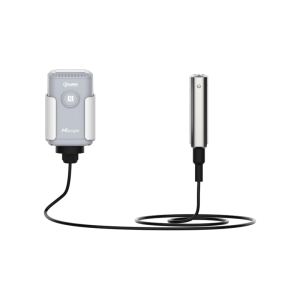 Rivers, sumps, boreholesMilesight EM500-SWL Submersible Water Level Sensor
Submersible hydrostatic probe — the reference choice for open water and deep measurement.
From £251.38 ex VATView →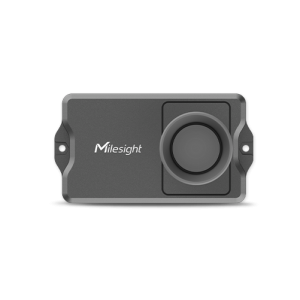 Culverts & channelsMilesight EM400-UDL Ultrasonic Distance/Level Sensor
Rugged IP-rated ultrasonic for outdoor mounting over channels and screens.
From £194.52 ex VATView →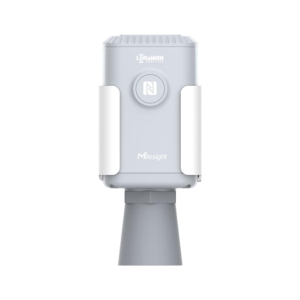 Attenuation & big tanksMilesight EM500-UDL Ultrasonic Distance/Level Sensor
Longer-range ultrasonic for deep attenuation structures and bulk storage.
From £202.01 ex VATView →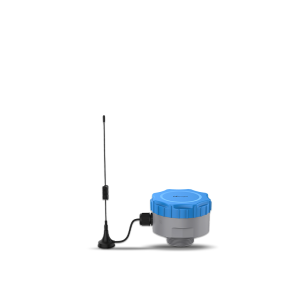 Weather-exposed sitesMilesight EM410-RDL Radar Distance/Level Sensor
60 GHz radar shrugs off rain, mist and condensation that degrade ultrasound outdoors.
From £224.45 ex VATView →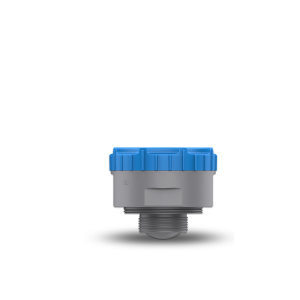 Tight chambers, radarMilesight EM411-RDL Radar Distance/Level Sensor
Compact multi-band radar for confined chambers and awkward mounts.
From £314.23 ex VATView →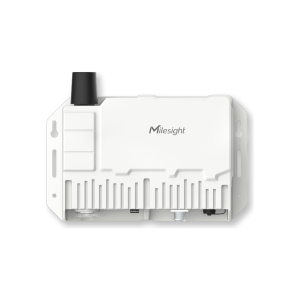 Riverside connectivityMilesight SG50 Ultra Low Power Solar LoRaWAN® Gateway
Solar LoRaWAN gateway — the piece that makes powerless riverside sites practical.
£683.83 ex VATView →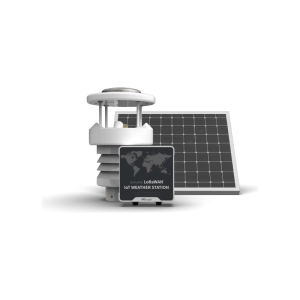 Rainfall contextMilesight WTS506 IoT Weather Station
IoT weather station adds the rainfall data that turns levels into forecasts.
£2,244.51 ex VATView →Compare sensing options
| Product | Best for | Connectivity | Price (ex VAT) |
|---|---|---|---|
| Milesight EM500-SWL Submersible Water Level Sensor | Open water, boreholes | LoRaWAN® | From £251.38 |
| Milesight EM400-UDL Ultrasonic Distance/Level Sensor | Culverts, channels | LoRaWAN® | From £194.52 |
| Milesight EM500-UDL Ultrasonic Distance/Level Sensor | Attenuation tanks | LoRaWAN® | From £202.01 |
| Milesight EM410-RDL Radar Distance/Level Sensor | Exposed outdoor sites | LoRaWAN® | From £224.45 |
| Milesight EM411-RDL Radar Distance/Level Sensor | Confined chambers | LoRaWAN® | From £314.23 |
| Milesight SG50 Ultra Low Power Solar LoRaWAN® Gateway | Off-grid gateway | LoRaWAN® gateway (solar) | £683.83 |
| Milesight WTS506 IoT Weather Station | Rainfall + weather | LoRaWAN® | £2,244.51 |
Submersible or non-contact?
Choose submersible when the water body is deep, open or turbulent — rivers, lagoons, boreholes — and the probe can live safely below the lowest expected level. Choose non-contact when the flow carries debris that would foul anything in it, or when access for maintenance is hard: an ultrasonic or radar water level sensor mounted above a culvert entrance needs a bracket, not a confined-space entry.
Outdoors, radar earns its premium: rain, mist and condensation scatter ultrasound but barely trouble a 60 GHz beam. Whichever family you pick, set two alert thresholds (rising fast and absolute level) and pair at least one site with rainfall measurement — level plus rain-rate is what turns monitoring into early warning, particularly for the rapid catchments the Met Office warns on.
- Submersible: rivers, lagoons, boreholes — depth without range limits
- Ultrasonic: best value over chambers, tanks and screens
- Radar: weather-proof accuracy for exposed outdoor mounts
- Two thresholds: rate-of-rise warning plus absolute-level alarm
- Solar gateway removes every dependency on site power
- Rain + level together = early warning, not just monitoring
Powerless sites are the normal case
The standard riverside build is sensors plus the solar SG50, backhauling over cellular — no mains, no trenching, no landowner negotiations about power. Urban gully networks instead hang off a central UG67 covering kilometres of street drainage.
Alerts route to duty officers with escalation, and data feeds dashboards your drainage engineers can subpoena later — evidence the attenuation design performs. Related reading: the flood & environment solution, tank level monitoring for closed vessels, and IoT for water utilities.
Why buy from Indiott
We are engineers first and a shop second. Buy online in GBP from UK stock, or call us on 023 9223 3611 and we will sanity-check your device list before you spend a penny — the right frequency band (EU868), the right probe, the right gateway for the building.
Frequently asked questions
How do sensors report from the middle of nowhere?
Battery sensors reach any LoRaWAN gateway within a few kilometres line-of-sight; where no infrastructure exists, the solar SG50 gateway backhauls everything over the mobile network. The whole station — sensor, gateway, alerts — runs without a single watt of site power.
What maintenance does a water level sensor need?
Non-contact units: essentially none beyond an occasional visual check of the mounting. Submersibles in silty or fouling-prone water benefit from an annual clean. Battery reporting means every device tells you its own health, so maintenance is scheduled by data rather than routine visits.
Can this integrate with our flood response plans?
Yes — thresholds map to your trigger levels, alerts go to duty rotas with escalation, and webhooks push events into whatever incident system you run. Several councils drive gully-clearing schedules straight from chamber-level trends, catching blockages before storms find them.
Which is more accurate — submersible, ultrasonic or radar?
All three resolve to centimetre-class accuracy when correctly mounted; the difference is where they stay accurate. Submersibles are immune to weather but exposed to fouling; ultrasound is superb in chambers but degraded by heavy rain in the open; radar holds accuracy in exactly those exposed conditions.
Instrument the risk this season
Tell us the sites — culverts, chambers, watercourses — and we will spec each water level sensor and the connectivity, priced within one working day.
Next step
Scope it with an engineer.
Tell us the site, the assets and the constraint. You get a bill of materials and a straight answer within one working day.
- A bill of materials sized to your site
- Priced ex VAT, UK entity, no login wall
Rather talk it through? Call 023 9223 3611
Received. An engineer has it.
You will hear back within one working day with the parts, the prices and the lead time. A confirmation is on its way to your inbox.
If it is urgent, call 023 9223 3611.
More buying guides
By industry