FACILITIES / SMART BUILDINGS
Smart Building Starter Kit (UK, Priced)
Estates teams are asked to prove air quality, cut energy and catch leaks in buildings that were never wired for it. Pulling cable is why the data never arrives.
Talk through your estate ● Answered within one working day
Live simulation of a monitored floor
Deployed for







The smart building starter kit we deploy
Full catalogue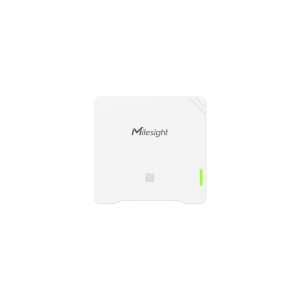 Milesight AM102L Indoor Ambience Monitoring Sensor
£38.90 ex VAT
Milesight AM102L Indoor Ambience Monitoring Sensor
£38.90 ex VAT
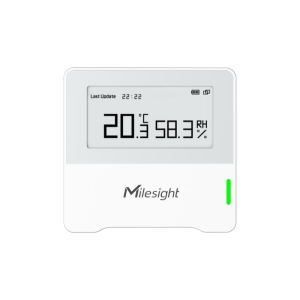 Milesight AM102 Indoor Ambience Monitoring Sensor
£47.88 ex VAT
Milesight AM102 Indoor Ambience Monitoring Sensor
£47.88 ex VAT
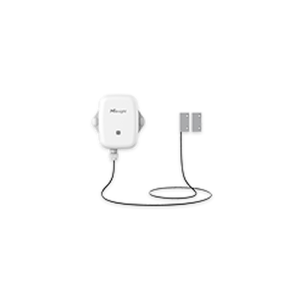 Milesight EM300-MCS Magnetic Contact Switch Sensor
£52.37 ex VAT
Milesight EM300-MCS Magnetic Contact Switch Sensor
£52.37 ex VAT
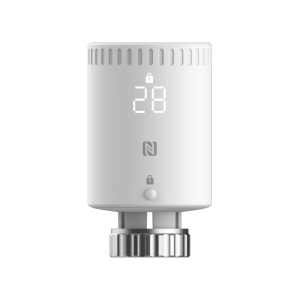 Milesight WT101 Smart Radiator Thermostat
£59.85 ex VAT
Milesight WT101 Smart Radiator Thermostat
£59.85 ex VAT
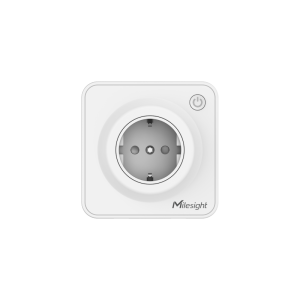 Milesight WS513 Smart Wall Socket
£62.85 ex VAT
Milesight WS513 Smart Wall Socket
£62.85 ex VAT
 Milesight WS523 Smart Portable Socket
£62.85 ex VAT
Milesight WS523 Smart Portable Socket
£62.85 ex VAT
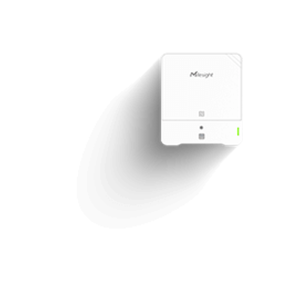 Milesight AM304L Indoor Ambience Monitoring Sensor
£71.82 ex VAT
Milesight AM304L Indoor Ambience Monitoring Sensor
£71.82 ex VAT
 Milesight TS601 Cellular Temperature Sensor
£74.82 ex VAT
Milesight TS601 Cellular Temperature Sensor
£74.82 ex VAT
Brands in this kit: Milesight
The blind spot
The building was never wired to answer the question.
- 01
Pulling cable through an occupied office or a listed building is slow and expensive, so it never happens.
- 02
Stuffy rooms get reported by complaint, not by measurement.
- 03
Water damage is found the morning after, by the ceiling rather than the sensor.
The data never arrives, so decisions stay guesswork: wasted energy, comfort complaints you cannot answer, and damage you paid for twice.
 One gateway · whole building
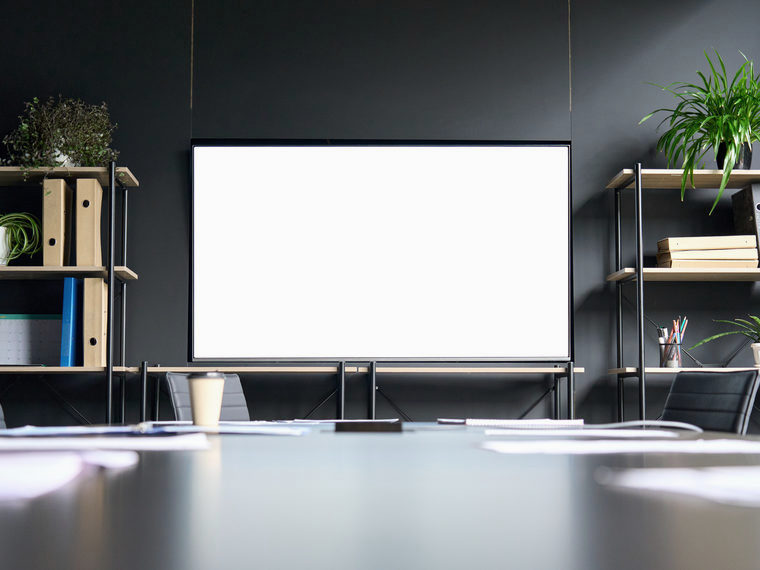
Meeting Room 2A CO2 at 1,480 ppm for 40 minutes. Ventilation raised before the first complaint.
Nothing lifted, nothing chased
A building instrumented without a cable
Battery sensors mount to a wall or ceiling and report to one indoor gateway that typically covers a multi-floor building. No floor tiles, no risers, no rewiring of occupied space.
- Multi-year battery lifeSensors are fitted once and left, so there is no maintenance round attached to the data.
- One gateway per buildingA single indoor LoRaWAN gateway typically covers the whole stack, not one per floor.
- Talks to the BMS you haveDashboards and alerting stand alone, with BACnet and BMS integration where one already exists.
What your team sees
One console for six buildings
The console an estates team actually works from, and what each part of it answers.
-
01
Air quality, room by room
Per room rather than one figure for the building, so a stuffy room is a reading.
-
02
Breaches you can act on
Counted and timestamped against Part F and BB101, which is the evidence a case needs.
-
03
Every floor on one screen
Which floors are occupied, which are drifting, and which need ventilating first.
-
04
Energy as a per-asset picture
The estate bill broken back to the plant and circuits that spent it.
Where it lands
Four questions one backbone answers
-
01
Indoor air quality
CO2, temperature and humidity per room for Part F and BB101, in schools, offices and public buildings.
-
02
Energy and plant
Per-asset consumption behind the fiscal meter, turning an estate bill into a line you can act on.
-
03
Leak and water damage
Detection under sinks, in plant rooms and risers, before a ceiling comes down rather than after.
-
04
Occupancy and comfort
Which rooms are used, how warm they are, and whether the conditioning matches the use.
The difference
Smart building starter kit: what changes the day it goes live
Nobody can show what a room breathes, what a floor costs or where the water went, so every estate decision is made on a guess.
- CO2, temperature, humidity and occupancy per room without lifting a single floor tile
- Energy and plant readings that turn an estate-wide bill into a per-asset picture
- Leak detection under sinks, plant rooms and risers before a ceiling comes down
- One LoRaWAN backbone that covers a whole building from a single gateway
- Rooms monitored
- 148–
- CO2 average
- 612 ppm–
- CO2 breaches · 24h
- 5–
- Energy now
- 84 kW–
What gets mounted, and where
One gateway, a whole building
Sensors go on walls and ceilings in occupied rooms. The only infrastructure is a single indoor gateway.
- SENSE
Wireless IAQ, occupancy, energy and leak sensors with multi-year battery life
- CONNECT
One indoor LoRaWAN gateway typically covers a multi-floor building
- CONTROL
Smart thermostats, valve and socket control for zoned response
- MANAGE
Dashboards and alerting, with BACnet and BMS integration where one exists
Evidence-grade by default. The record exists before anyone asks for it.
- Building Regs Part F
- BB101 schools ventilation
- SECR and ESG reporting
- Awaab's Law and Social Housing
The full stack, applied here
One building, every room read, heated and proven
Every Indiott build runs all five layers as one accountable system. Follow a single co2 climbing from the sensor that catches it to the report that proves it.
LoRaWAN ambience sensors read CO2, temperature, humidity, TVOC and light per room, with occupancy and energy sensors filling the picture the wall stat cannot.
Hands live room data to CONNECT ↓
A single LoRaWAN gateway carries a whole block from a handful of ceiling points, no rewiring of tenanted or occupied rooms and no SIM per sensor.
Hands a clean uplink to SECURE ↓
The stack already includes this: a managed switch VLAN-segments the BMS network from corporate IT and a VPN router is added, so building controls stay isolated with no cameras on the wire.
Hands a trusted feed to CONTROL ↓
Ready when you want monitoring to act: Load control and remote IO drive ventilation, plant and setpoints so a room that breaches CO2 gets more air, not a phone call.
Hands an action and proof to MANAGE ↓
Urban.io dashboards trend comfort, air quality and energy per room, raise BREEAM and Part F evidence, and push into your existing BMS over standard protocols.
The loop is closed ✓
How teams start
From a single pilot to the whole portfolio
You do not boil the ocean. Nearly every rollout runs the same four moves, and you own a working, evidenced result at the end of the first one.
Scope & risk map
We walk the sites, list the assets and pin the one constraint that matters, then agree what a good result looks like before a single sensor is bought.
Pilot on one site
A focused set of sensors goes onto one site or asset group, live on our telemetry and dashboards, wired to the people who need the alert.
Validate & standardise
We tune thresholds, kill false positives, confirm the integration into your SCADA, BMS or CAFM, and write the standard design down so it repeats.
Scale the portfolio
The proven design rolls out across the estate, reusing the same hardware standards and data models so every site reads the same way.
Compliance this answers to
| Standard | What it requires |
|---|---|
| Building Regulations Part F and BB101 | ventilation and indoor air quality in schools and workplaces |
| SECR and ESG reporting | per-asset energy data supports mandatory carbon disclosure |
| Awaab's Law and the Social Housing regime | damp, mould and temperature evidence for at-risk homes |
What it costs, roughly
Fitting a single floor with IAQ, occupancy and leak sensing plus one gateway is typically a few thousand pounds of hardware, installed in a day without disruption. The payback usually comes from energy tuning and a single avoided leak. We price your actual floor plan within one working day.
The short answer
What does a smart building sensor kit cost to start?
A first room costs under £140 ex VAT: a Milesight AM102L ambience monitor at £38.90 and a UG63 mini LoRaWAN gateway at £98.76, which then covers every further sensor on the site. No competitor in the UK publishes a priced starter bundle for this — most quote only on application.
Frequently asked questions
How do you monitor CO2 and air quality in an existing office?
Fit a Milesight indoor ambience sensor in each room. The AM103 (£127.19 ex VAT) reads CO2, temperature and humidity, while the AM307 and AM308 (£224.45) add TVOC, light, barometric pressure and an e-ink display staff can read on the wall. Each reports over LoRaWAN on a fixed interval, so you trend every room continuously rather than sampling with a handheld meter once a year.
Do smart building sensors need rewiring or mains power?
No. The room sensors are battery powered and screw or stick to a wall or ceiling, so nothing is chased into plaster and no socket is needed. That matters in tenanted, occupied or listed buildings where the cabling, not the hardware, is the real cost. Only the gateway and any load-control devices need mains power, and one gateway serves a whole block.
How many rooms can one LoRaWAN gateway cover?
Indoors, one UG65 semi-industrial gateway (£279.82 ex VAT) will usually carry a multi-storey block from a single riser or plant-room mounting point, because EU868 LoRaWAN passes through floors and partitions well. Capacity is set by total message rate rather than device count, so a few hundred sensors reporting every ten to fifteen minutes sit comfortably on one gateway.
Can the data go into our existing BMS?
Yes. The gateway forwards readings north over MQTT or HTTP, and Milesight UC controllers and UR routers expose Modbus TCP and Modbus RTU, so data lands in your existing BMS, CAFM or head-end rather than in a separate portal. Where you want a visual layer instead, Urban.io dashboards trend comfort, air quality and energy per room.
How do you catch a leak before it damages a ceiling?
Place EM300-SLD spot leak detection sensors (£53.87 ex VAT) under sinks, in plant rooms, risers and comms rooms. The probe detects water on the floor and raises a LoRaWAN alarm straight away, so someone is called out overnight instead of the damage being found in the morning. They share the same gateway, so adding leak cover to an air-quality rollout costs only the sensors.
How do we start without committing the whole estate?
Start with one floor or one building. The LoRaWAN Starter Kit (£619.49 ex VAT) pairs a UG65 gateway with three environmental sensors, which is enough to prove coverage and data flow in a real building. From there you add AM103 units per room, VS121 occupancy sensors (£276.82) and WS558 lighting and load control (£104.74) as the design settles.
Related
Buying this in the UK
- Smart building sensors from £38.90 ex VAT; a UG63 gateway covering the whole site is £98.76.
- Supplied by Indiott, a trading name of PSI Technologies Limited (Companies House 03689664, VAT GB 730 2340 83), Hampshire, United Kingdom.
- Every price is published ex VAT at indiott.com — no quote needed to see it.
- Typically dispatched within 14 working days from the UK, on a VAT invoice.
- Call 023 9223 3611 or request a quote.
Compare the models
Next step
Scope it against your buildings
Send the room schedule and what you need to prove. You get a sensor count, a bill of materials and a straight answer within one working day.
- Sensor mix matched to what you actually have to evidence
- Gateway coverage checked per building before anything is quoted
- Priced ex VAT, UK entity, no login wall
- Starts as a starter kit, scales to the estate
Rather talk it through? Call 023 9223 3611
Received. An engineer has it.
You will hear back within one working day with the parts, the prices and the lead time. A confirmation is on its way to your inbox.
If it is urgent, call 023 9223 3611.