BUYING GUIDE · NETWORKING
Which LoRaWAN Gateway Do You Need?
Every LoRaWAN sensor network stands on one box. Pick the right gateway and a whole estate runs on a single unit; pick wrong and you buy it twice.
One gateway, hundreds of sensors
A LoRaWAN gateway is the bridge between your battery sensors and the internet: sensors whisper over long-range radio, the gateway hears everything within range and forwards it over Ethernet, Wi-Fi or cellular. One well-placed unit serves hundreds of devices — which is why gateway choice, not sensor choice, decides your architecture.
Range in the real world: a couple of kilometres through urban clutter, ten or more with rural line of sight — a single indoor LoRaWAN gateway typically covers a whole commercial building, and an outdoor one a whole site. The standard is open and vendor-neutral (see the LoRa Alliance), so any compliant EU868 sensor joins any gateway here.
The LoRaWAN gateway range compared
Four deployment classes: plug-and-go indoor, semi-industrial for tough buildings, IP67 outdoor for sites and streets, and solar for places with no power at all. All include an embedded network server — no extra software required to start.
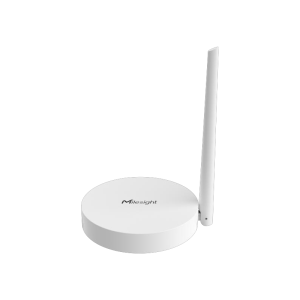 Offices, shops, kitchensMilesight UG63 Mini LoRaWAN® Gateway
Palm-sized indoor unit: plug into the router, sensors join in minutes. The right answer for most single sites.
From £98.76 ex VATView →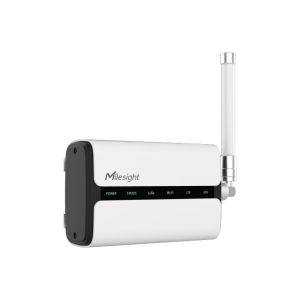 Multi-floor buildingsMilesight UG65 Semi-industrial LoRaWAN Gateway
The semi-industrial workhorse — stronger radio, PoE, cellular backhaul option. One unit does a mid-size building.
From £279.82 ex VATView →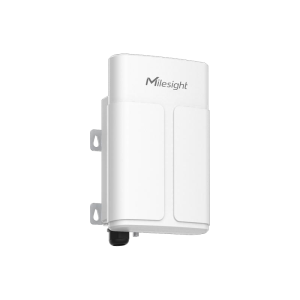 Outdoor estates & streetsMilesight UG67 Outdoor LoRaWAN Gateway
IP67, pole-mount, high capacity: farms, campuses, car parks and street furniture.
£658.39 ex VATView →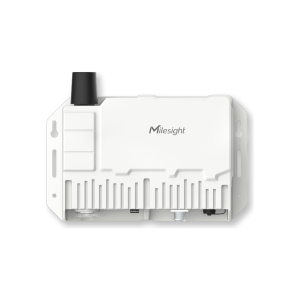 No-power locationsMilesight SG50 Ultra Low Power Solar LoRaWAN® Gateway
Solar-powered with cellular backhaul — tank farms, rivers, remote compounds. Zero site infrastructure.
£683.83 ex VATView →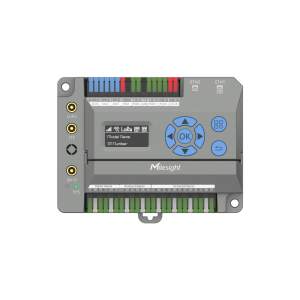 Building-automation hubMilesight EG71 Building IoT Gateway
Gateway plus building integration in one box for BMS-adjacent smart building projects.
£1,047.44 ex VATView →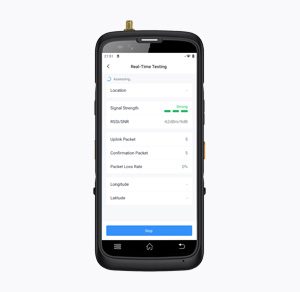 Coverage surveysMilesight FT101 Field Tester LoRaWAN®
Field tester that walks the site before you commit — measures real coverage from any gateway position.
£441.42 ex VATView →Compare models and prices
| Product | Best for | Connectivity | Price (ex VAT) |
|---|---|---|---|
| Milesight UG63 Mini LoRaWAN® Gateway | Single indoor sites | Ethernet / Wi-Fi backhaul | From £98.76 |
| Milesight UG65 Semi-industrial LoRaWAN Gateway | Buildings, semi-industrial | Ethernet / PoE / cellular | From £279.82 |
| Milesight UG67 Outdoor LoRaWAN Gateway | Outdoor, IP67 estates | Ethernet / PoE / cellular | £658.39 |
| Milesight SG50 Ultra Low Power Solar LoRaWAN® Gateway | Off-grid, solar | Cellular backhaul | £683.83 |
| Milesight EG71 Building IoT Gateway | Smart-building hub | Ethernet / cellular | £1,047.44 |
| Milesight FT101 Field Tester LoRaWAN® | Pre-deployment survey | LoRaWAN® tester | £441.42 |
How to choose (and when one isn't enough)
Choose by building fabric and geography, not device count — capacity is rarely the constraint, because even the mini gateway handles hundreds of typical sensors. Dense concrete and metallised glass eat radio: a UG63 covers most open-plan buildings, but a Victorian mill or a basement-heavy estate steps up to the UG65 for its stronger radio and external antenna options.
Go multi-gateway when geography splits the estate (two distant buildings beat one heroic antenna), when a basement or lift-motor room stays stubbornly dark in a survey, or when uptime demands overlap coverage. The FT101 field tester answers the question empirically — walk the site, read the signal margin, place the LoRaWAN gateway where the data says. Community coverage via The Things Network can supplement, but owned infrastructure is what you can rely on.
- UG63: default for single sites — router-adjacent, running in minutes
- UG65: concrete, multi-floor, PoE and cellular-failover territory
- UG67: outdoor IP67 — one pole covers a campus or car-park estate
- SG50: solar + cellular for the middle of nowhere
- EG71: when the gateway should double as the building hub
- Survey with FT101 before committing antenna positions on big sites
Backhaul, network server and what plugs into what
Every model here runs an embedded LoRaWAN network server, so a working system is gateway + sensors + dashboard — nothing else to license. Backhaul is Ethernet or Wi-Fi as standard; the UG65/UG67 add cellular, worth having as failover wherever the sensor data carries alarms (a industrial 4G router does the same job for wired infrastructure).
Mount high and central, away from thick walls and metal plant. PoE simplifies ceiling and pole mounts — one cable for power and data. Then pick your sensors: every buying guide on this site — fridges, leaks, tanks — hangs off the gateway you choose here.
Why buy from Indiott
Everything here ships from UK stock with GBP pricing and a human on the end of the phone. If you are rolling out across multiple sites, ask for volume pricing — quotes normally come back within one working day.
Frequently asked questions
How many sensors can one gateway handle?
Hundreds to thousands, depending on how often each reports. A building of typical sensors — reporting every five to fifteen minutes — sits nowhere near the ceiling of even the UG63. Buy for radio coverage, not headline capacity.
Do I need a separate network server?
No — every LoRaWAN gateway we sell ships with an embedded network server, so sensors register directly on the gateway and data flows to your dashboard immediately. Larger estates can centralise onto a cloud network server later without changing hardware.
What range should I actually expect?
Indoors: a whole floor plate easily, and usually several floors — concrete stairwells and plant rooms are the exceptions worth surveying. Outdoors: 2–3 km through urban environments and 10 km+ line-of-sight rural. The FT101 field tester turns those rules of thumb into a map of your actual site.
Can sensors indoors reach a gateway outdoors (and vice versa)?
Yes, within reason — an outdoor UG67 on a pole routinely serves sensors inside nearby buildings. The reliable pattern for basements and metal-clad structures, though, is a cheap indoor gateway inside the problem building rather than heroics from outside.
Get the architecture right first
Describe your site — buildings, floors, distances — and we will recommend the LoRaWAN gateway layout with exact pricing, normally within one working day.
Do not put an outdoor gateway in a cabinet. The UG67 and SG50 are IP67 as supplied, and a metal enclosure around either will cost you most of your radio range. LoRaWAN sensor housings and IP ratings explained.
The short answer
Which LoRaWAN gateway and starter kit suit a 20 to 50 sensor pilot?
One indoor gateway is enough. A UG63 at 98.76 pounds ex VAT handles around 2000 devices at a ten minute reporting interval, so 20 to 50 sensors is nowhere near its limit, and its embedded network server means no extra software to run. Buy for radio coverage of the building, not for device capacity.
Related
Buying this in the UK
- Supplied by Indiott, a trading name of PSI Technologies Limited (Companies House 03689664, VAT GB 730 2340 83), Hampshire, United Kingdom.
- Every price is published ex VAT at indiott.com — no quote needed to see it.
- Typically dispatched within 14 working days from the UK, on a VAT invoice.
- Call 023 9223 3611 or request a quote.
Next step
Scope it with an engineer.
Tell us the site, the assets and the constraint. You get a bill of materials and a straight answer within one working day.
- A bill of materials sized to your site
- Priced ex VAT, UK entity, no login wall
Rather talk it through? Call 023 9223 3611
Received. An engineer has it.
You will hear back within one working day with the parts, the prices and the lead time. A confirmation is on its way to your inbox.
If it is urgent, call 023 9223 3611.
More buying guides
By industry